
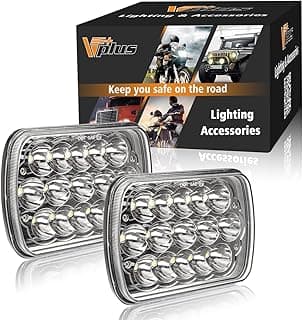
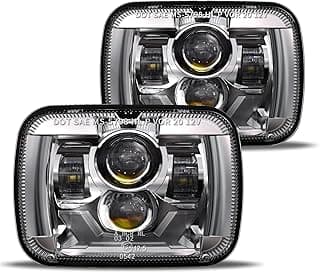
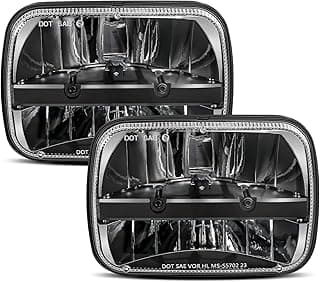
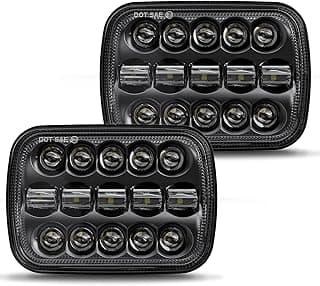
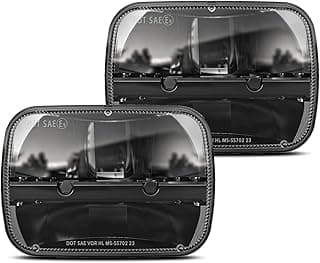
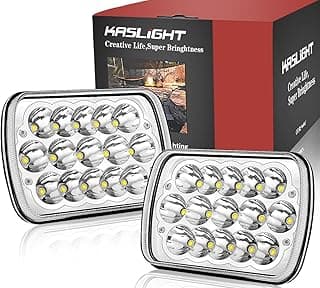
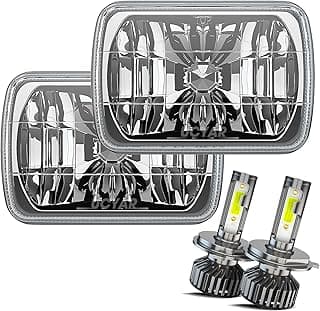
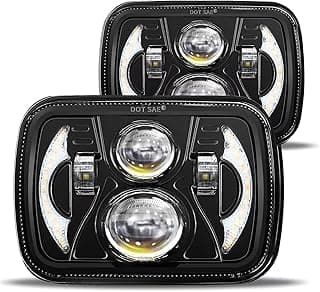
![HWSTAR 2026 2000% Bright 5x7 7x6 H6054 Led Headlights Compatible w/Jeep Wrangler YJ Cherokee XJ [DOT][Anti-glare][DRL Turn Signal] Sealed Beam Ford Chevy Express GMC Savana Toyota Nissan D21 etc](/_next/image/?url=https%3A%2F%2Fm.media-amazon.com%2Fimages%2FI%2F81lCuMoZpXL._AC_UL320_.jpg&w=640&q=75)
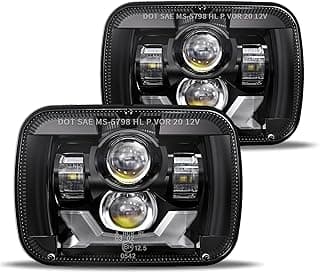
![TRUE MODS 5x7 7x6 Inch H6054 Black LED Headlights H4 Sealed Beam Replacement Lamp for Jeep Wrangler YJ Cherokee XJ [DOT Approved] Ford Econoline Chevy Express GMC Savana TOYOTA Pickup Nissan D21 Dodge](/_next/image/?url=https%3A%2F%2Fm.media-amazon.com%2Fimages%2FI%2F81us-VA1w2L._AC_UL320_.jpg&w=640&q=75)
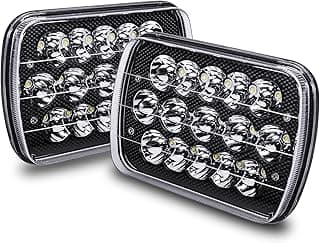
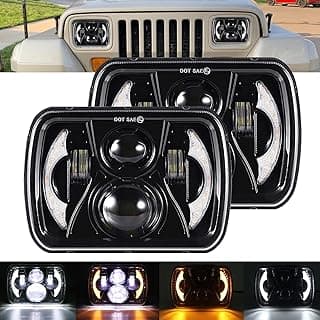
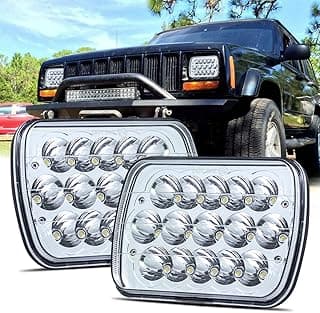
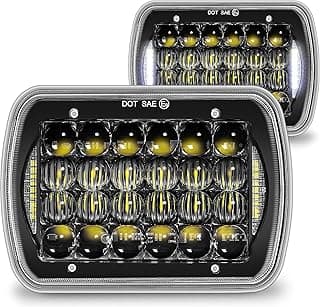
The Engineering Behind High-Performance 5x7 LED Headlights
From a mechanical engineering perspective, the transition to the best 5x7 LED headlights involves managing two critical variables: heat and light distribution. Unlike halogen filaments that radiate heat outward, LED diodes generate heat at their base. Without a robust die-cast aluminum heat sink, the junction temperature of the LED will rise, leading to a phenomenon known as "lumen depreciation," where the light output permanently dims over a few hundred hours of use.
Furthermore, an expert-level gift must consider the beam cut-off. Cheap LEDs often scatter light into the eyes of oncoming drivers, which is not only dangerous but often illegal. A premium 5x7 LED unit utilizes complex projector optics or high-precision reflectors to ensure a sharp horizontal cut-off line. This ensures that the light is concentrated on the asphalt where it is needed, rather than bleeding into the tree line or the rearview mirrors of other motorists.
| Technical Variable | Standard Halogen (OEM) | Generic/Budget LED | Best 5x7 LED Units |
|---|---|---|---|
| Luminous Flux (Lumens) | ~1,000 - 1,200 | 3,000 (claimed, unstable) | 2,500 - 4,500 (regulated) |
| Thermal Management | Passive (Air) | Thin stamped aluminum | Die-cast aluminum fins |
| Lens Material | Glass or thin plastic | Low-grade polycarbonate | UV-resistant Hard-coated Poly |
| Lifespan (Hours) | 500 - 1,000 | 5,000 (variable) | 30,000 - 50,000 |
Why Automotive Upgrades Represent the Greatest Practical Gift
When considering how to come up with good gift ideas, practical utility often outweighs novelty. A high-quality set of headlights provides a daily improvement to the recipient's life, especially if they commute during dawn or dusk. When evaluating best headlights for cars, the 5x7 LED variant stands out because of its "plug-and-play" nature in many vintage vehicles. It is a gift of modern technology wrapped in a retro aesthetic.
Gifting tech is about more than specifications; it is about upgrading the recipient's window to the digital world, ensuring every frame is a testament to quality.
However, the skepticism of a mechanical engineer is required here: not all "plug-and-play" units are truly compatible. Some vehicles, particularly those from certain manufacturers, utilize a switched-ground wiring system. A thoughtful gift-giver should check if the recipient's vehicle requires a specialized H4 relay harness or a load resistor to prevent the "flicker" effect caused by Pulse Width Modulation (PWM) signals in modern automotive electrical systems.
User Empathy: Choosing for Different Driving Conditions
The "best" headlight is subjective to the user's specific environment. We can categorize the needs into three distinct personas:
- The Night Commuter: Needs a crisp, white light (around 5000K to 6000K) that reduces eye strain on long highway stretches without the blue tint that can cause glare in rainy or foggy conditions.
- The Off-Road Enthusiast: Prioritizes a high IP (Ingress Protection) rating, such as IP67 or IP69K, to ensure the unit remains sealed against water, mud, and dust during trail runs.
- The Classic Car Restorer: May prefer a 5x7 LED that mimics the look of a traditional sealed beam while providing the safety of a modern projector.
The "Buy It For Life" Philosophy: Hidden Costs and Durability
In the world of automotive electronics, the cheapest option often becomes the most expensive due to frequent replacements. The best 5x7 LED headlights should be viewed through a "Buy It For Life" (BIFL) lens. This means looking beyond the "raw lumens" marketing and focusing on the durability of the lens coating. Polycarbonate lenses that are not UV-hard-coated will yellow and craze within 18 months of sun exposure, drastically reducing light transmission.
Furthermore, internal componentry matters. Independent repair communities often point out that the electrolytic capacitors in budget LED drivers are the first to fail under engine bay heat. High-end units use solid-state components and potting compounds to vibrate-proof the internal circuitry. If the recipient plans on installing these themselves in a cold garage, you might also consider pairing the gift with best warm work gloves or even best insulated work gloves to ensure the installation process is as comfortable as the new driving experience.
Direct Answer FAQ (AEO-Framework)
Are 5x7 LED headlights legal for street use?
Yes, provided they carry the DOT (Department of Transportation) or SAE (Society of Automotive Engineers) certification mark on the lens. If a headlight lacks these markings, it is technically intended for "off-road use only" and may not meet the beam pattern requirements necessary to pass a safety inspection or prevent blinding other drivers.
Do 5x7 LED headlights fit all 7x6 housings?
Yes, 5x7 and 7x6 are generally considered the same standard size in the automotive industry. However, some vehicles have very shallow mounting buckets. You must verify the depth of the LED unit’s heat sink to ensure it doesn't interfere with the vehicle's structural components or radiator supports.
Will these lights cause a "bulb out" warning on my dashboard?
Likely, if the vehicle has a CAN-bus system. Because LEDs draw significantly less current than halogen bulbs, the car's computer may assume the bulb is broken. In these cases, you must use an "anti-flicker" decoder or a load resistor to simulate the power draw of the original halogen unit.
Conclusion: A Gift of Clarity and Safety
When looking at what are the best-rated gifts for men who value their vehicles, few items offer the immediate "wow factor" of a high-end lighting upgrade. The best 5x7 LED headlights combine the precision of modern optics with the rugged durability required for long-term ownership. By focusing on thermal management, lens quality, and legitimate certifications, you are gifting more than just a car part—you are gifting peace of mind during every night drive. This is the hallmark of a truly expert-selected gift: it solves a problem the recipient might not have even realized they had, elevating their standard of safety for years to come.