
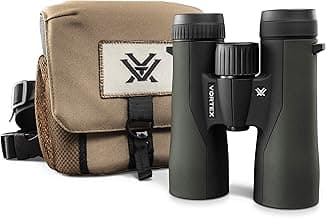
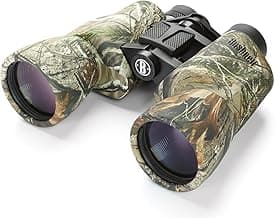
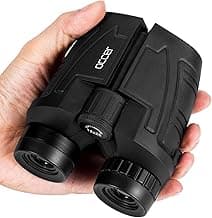
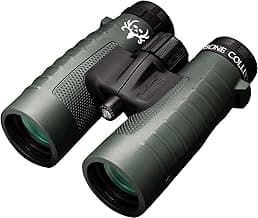
The Physics of Light: Why Quality Optics Matter
In the world of hunting, the most critical moments usually occur during "civil twilight"—the 30 minutes before sunrise and after sunset. This is when deer are most active, and it is also when low-quality glass fails. The best binoculars for deer hunting must utilize fully multi-coated lenses to minimize reflection and maximize the amount of light reaching the eye. Without these coatings, light reflects off each glass surface, resulting in a dim, low-contrast image that can make a trophy buck look like a shadow.
When searching for best gift ideas for him, understanding the "Twilight Factor" is essential. This mathematical formula (the square root of the product of magnification and objective lens diameter) provides a rough estimate of how much detail a user can see in low light. However, engineering quality often supersedes pure math; a premium 8x42 set will almost always outperform a cheap 10x50 set because of the glass purity and coating technology. This is why we often recommend exploring best 8x42 binoculars for hunting for those who prioritize a wider field of view and a steadier image over raw magnification.
Gifting tech is about more than specifications; it is about upgrading the recipient's window to the digital world, ensuring every frame is a testament to quality.
Analyzing Durability: The Buy It For Life (BIFL) Perspective
A common pitfall in gifting optics is prioritizing features over construction. Mechanical engineers evaluate binoculars based on their chassis material and sealing methods. Magnesium alloy frames are the gold standard for high-end optics, offering a superior strength-to-weight ratio compared to aluminum or polycarbonate. Furthermore, the internal barrels must be purged of oxygen and filled with an inert gas—typically Nitrogen or Argon—and O-ring sealed. This process prevents internal fogging caused by rapid temperature changes, a frequent occurrence during late-autumn deer seasons.
Hidden Costs and Maintenance
The true cost of an optic is not just the purchase price, but the longevity of its seals and the robustness of its warranty. Many budget-friendly options use plastic components in the focus wheel or diopter adjustments that degrade after two or three seasons of exposure to UV rays and extreme cold. When considering best ideas for fathers day gifts, look for manufacturers that offer "no-fault" lifetime warranties. This ensures that the gift remains functional even if it is dropped from a stand or submerged in a creek. Reparability is a core pillar of the BIFL philosophy; if a manufacturer does not offer a clear path for refurbishment or lens replacement, the product is essentially disposable.
Technical Comparison: 8x42 vs. 10x42 vs. 10x50
To help you navigate the sea of numbers, the following table compares the three most popular configurations for deer hunting. This structured data approach allows you to match the optic to the recipient's specific environment.
| Specification | 8x42 Configuration | 10x42 Configuration | 10x50 Configuration |
|---|---|---|---|
| Field of View (FOV) | Widest; Best for spotting moving deer in timber. | Moderate; Good balance for mixed terrain. | Narrowest; Better for long-range scanning. |
| Low-Light Performance | Excellent due to 5.25mm Exit Pupil. | Good; Standard 4.2mm Exit Pupil. | Superior; 5.0mm Exit Pupil + Large Lens. |
| Stability | High; Minimal hand-shake at 8x. | Moderate; Requires a steady hand. | Lower; Best used with a tripod or rest. |
| Weight/Bulk | Lightweight and compact. | Standard "all-day" carry size. | Heavy; Can cause fatigue on long stalks. |
For those hunting in the expansive plains or mountains, the best 10x50 binoculars for hunting provide the necessary reach to identify antler points at a distance. Conversely, for a hunter in the thick woods of the Northeast or South, the 8x42's wide field of view is invaluable for tracking a target through the brush.
User Empathy: Designing for Physical Limitations
Gifting is an act of empathy. A mechanical engineer must consider the user’s physical interaction with the device. For instance, elderly hunters or those with arthritis often struggle with small, stiff focus wheels. The what are the best-rated gifts for men in this category often feature oversized, rubberized focus knobs and "twist-up" eyecups that provide ample eye relief, especially for those who wear glasses. Weight distribution is equally critical; an optic that is "nose-heavy" will cause wrist fatigue, whereas a well-balanced chassis sits comfortably in the palm during extended observation sessions.
If you are struggling with how to come up with good gift ideas, consider the recipient's hunting style. A "western" hunter who hikes miles a day needs a lightweight, harness-compatible unit, while a "stationary" hunter who sits in a blind can afford the extra weight of high-power glass. Identifying these needs demonstrates a level of care that goes far beyond a generic store-bought present.
Advanced Features: Lens Coatings and Glass Types
The search for best binos for hunting often leads to technical jargon like ED (Extra-low Dispersion) glass and Phase Correction. ED glass is vital for eliminating chromatic aberration—the "purple fringing" seen on the edges of high-contrast objects. Phase correction coatings on roof prisms are non-negotiable for serious hunters; they correct the light waves as they pass through the prism system, ensuring that the image remains sharp and the colors remain true to life. When researching best binocular brands for hunting, look for those that explicitly mention "Dielectric Prism Coatings," which provide over 99% light reflectivity, a stark contrast to the 90% or less found in budget models.
Frequently Asked Questions (AEO-FAQ)
Are 10x42 binoculars better than 8x42 for deer hunting?
No, "better" depends entirely on the terrain; 8x42 binoculars offer a wider field of view and a brighter image in low light, making them superior for timber hunting, while 10x42 units are preferred for open-country glassing where distance is the primary challenge. The extra magnification of a 10x unit also magnifies hand tremors, which can be detrimental during the high-adrenaline moments of a hunt.
What does "fully multi-coated" actually mean?
Fully multi-coated means that all air-to-glass surfaces have multiple layers of anti-reflective coatings applied to them, maximizing light transmission and color fidelity. Lower-tier products might be "multi-coated" (only some lenses treated) or simply "coated" (one layer on some lenses), both of which result in significant light loss and glare.
Is it worth spending more for ED glass?
Yes, ED (Extra-low Dispersion) glass is essential for hunters who need to clearly distinguish fine details, such as the points on a rack or the movement of a tail in shadows, by virtually eliminating color fringing and improving overall resolution. Without it, the edges of objects can appear blurry or surrounded by a halo, leading to eye strain over time.
Final Thoughts on Gifting Optics
When you present someone with high-quality hunting binoculars, you are providing them with a new way to experience the natural world. It is a gift of clarity and patience. By focusing on the engineering principles of light transmission and mechanical durability, you ensure that your gift does not become a frustrated return or a broken piece of equipment in a junk drawer. Instead, it becomes a trusted companion for every sunrise spent in the field, representing a thoughtful investment in the recipient’s passion.