


The Physics of the Marsh: Optical Requirements for Waterfowlers
In the context of duck hunting, the term "optical clarity" is often misused by marketing departments. From a mechanical engineering perspective, clarity is the result of high light transmission and the minimization of chromatic aberration. Duck hunting occurs primarily at dawn and dusk. Therefore, the "Twilight Factor" and "Exit Pupil" diameter are the most critical variables. An exit pupil of 5mm or greater is necessary to match the dilation of the human eye in low-light conditions. While a higher magnification might seem appealing, it often results in a narrower field of view and a smaller exit pupil, which can render the binoculars useless during the most active hunting times.
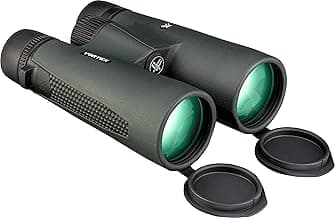
Furthermore, the environment of a duck blind is inherently hostile to precision instruments. High humidity, salt spray, and rapid temperature fluctuations can cause internal fogging in poorly sealed units. Only binoculars that are nitrogen or argon purged with O-ring seals can be considered the best binos for hunting in these specific conditions. Without these features, the internal glass surfaces will eventually succumb to fungal growth or moisture, leading to irreversible degradation of the image quality.
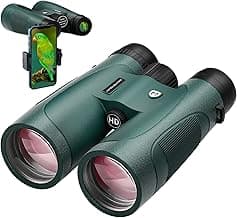
Gifting tech is about more than specifications; it is about upgrading the recipient's window to the digital world, ensuring every frame is a testament to quality.
Technical Comparison: 8x42 vs. 10x42 vs. 10x50
To assist those wondering how to come up with good gift ideas for a hunter, we have analyzed the three most common configurations used in the field. The following table breaks down the technical variables that impact real-world performance in a marsh environment.
| Variable | 8x42 Configuration | 10x42 Configuration | 10x50 Configuration |
|---|---|---|---|
| Exit Pupil | 5.25mm (Excellent low light) | 4.2mm (Average low light) | 5.0mm (Good low light) |
| Field of View | Wide (Best for tracking flight) | Narrow (Harder to find birds) | Moderate |
| Static Weight | Lightweight (~700g) | Moderate (~750g) | Heavy (>900g) |
| Image Stability | High (Less hand-shake) | Lower (Requires steady hands) | Lower (Weight adds fatigue) |
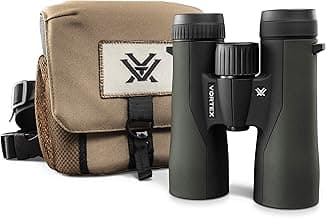
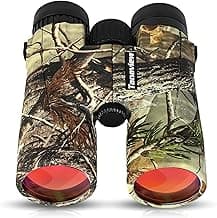
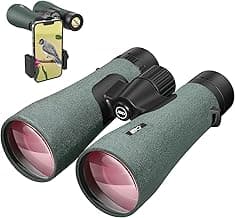
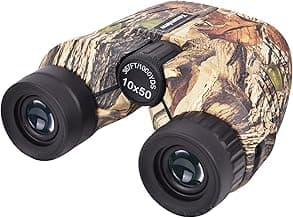
For the majority of users, the best 8x42 binoculars for hunting offer the most balanced performance. The wider field of view allows the hunter to scan large areas of the sky more effectively, and the larger exit pupil ensures the image remains bright even when the sun is below the horizon. Conversely, the best 10x50 binoculars for hunting are superior for stationary scouting from a distance but often prove too cumbersome for active use within a blind.
Empathy in Design: Catering to the Recipient's Physical Needs
When choosing the best binoculars for duck hunting as a gift, one must consider the physical limitations of the user. For elderly hunters or those with arthritis, the focus wheel's resistance and the binocular's static weight distribution are paramount. A "stiff" focus wheel can be painful to operate with cold, wet hands, while a poorly balanced unit can lead to neck strain after several hours in the field. If you are researching what to buy a father that has everything, look for models with "long eye relief" (15mm or more), which allows those who wear eyeglasses to see the full field of view without removing their spectacles.
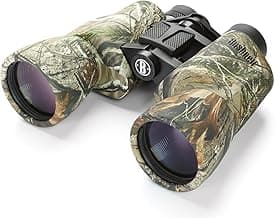
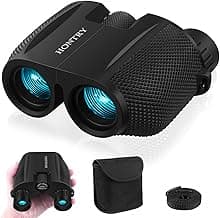
Additionally, for hunters who frequently travel to remote locations and utilize a best backpack hunting tent, weight and packability become the primary constraints. In these scenarios, roof prism designs are preferable over traditional Porro prism designs because they are more compact and typically more ruggedly armored against accidental drops on frozen ground.
The "Buy It For Life" (BIFL) Philosophy: Avoiding Fast Consumerism
Elite consumer optics should be viewed as a lifetime investment. Cheap binoculars often use BK-7 glass, which causes "vignetting" or squared-off exit pupils that reduce light gathering. Higher-end units utilize BaK-4 prisms and ED (Extra-low Dispersion) glass to ensure that colors are rendered accurately and edges remain sharp. When evaluating the best binoculars for duck hunting, check for the availability of third-party replacement eyecups and lens covers. These are the components most likely to be lost or damaged in the marsh. A brand that offers a lifetime "no-fault" warranty is not just providing a service; they are acknowledging the technical complexity and eventual wear-and-tear of the product.
Avoid units that are permanently sealed and cannot be serviced. The modularity of modern high-end optics allows specialized technicians to purge and realign prisms if the unit suffers a severe impact. This sustainability factor is what separates a thoughtful gifts for my best friend from a temporary gadget that ends up in a landfill after two seasons.
Hidden Costs of Operation
While binoculars do not require batteries, the "cost" of ownership involves maintenance. Saltwater exposure requires immediate rinsing with fresh water and cleaning with specialized lens pens to prevent the abrasive silt from scratching the multi-layer coatings. Investing in a high-quality harness rather than a simple neck strap is also a hidden necessity; it distributes the weight across the shoulders and keeps the optics from swinging and hitting hard surfaces as the hunter moves through the muck.
Direct Answer FAQ: Waterfowling Optics
Are 10x magnification binoculars better than 8x for duck hunting?
No, for most duck hunting scenarios, 8x magnification is superior. While 10x provides more detail at a distance, it significantly narrows the field of view, making it much harder to track fast-moving birds in flight. Additionally, 10x magnification amplifies hand-shake, which is often exacerbated by the cold or fatigue common in waterfowling.
What is the most important feature for a binocular used in a marsh?
Full waterproof and fog-proof certification is the most important feature. In a marsh, high humidity and temperature shifts are constant. Without nitrogen or argon purging, the internal lenses will fog up, rendering the device useless. Look for an IPX7 rating or higher to ensure the unit can withstand accidental submersion.
Why do some binoculars cost significantly more than others with the same specs?
The price difference usually reflects the quality of the glass and the precision of the coatings. Premium binoculars use "Fully Multi-Coated" lenses with proprietary coatings that increase light transmission to over 90%, whereas budget models may only coat a few surfaces, resulting in a dim, "flat" image. Furthermore, higher-priced models utilize phase-corrected prisms to ensure maximum resolution and contrast.
Ultimately, providing the best binoculars for duck hunting as a gift is about more than just the object itself. It is about acknowledging the hunter's passion and providing them with the clarity they need to respect the sport and the environment. By focusing on technical durability and optical excellence, you ensure that your gift remains a trusted companion through many seasons to come.