
The Physics of Light: Why Magnification Isn't Everything
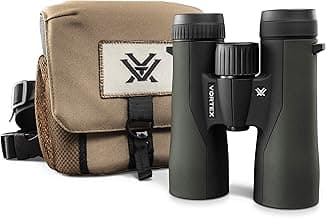
One of the most common misconceptions in the gifting world is that "more power is better." In the context of hunting, excessive magnification can actually be a hindrance. A 12x or 15x magnification narrows the field of view significantly and makes it nearly impossible to maintain a steady image without a tripod. For the vast majority of environments, the best 8x42 binoculars for hunting offer the optimal balance. They provide a wider field of view for scanning dense timber and a larger exit pupil, which is mathematically calculated by dividing the objective lens diameter by the magnification (42 / 8 = 5.25mm). This exit pupil size is crucial because it ensures the beam of light reaching the eye is larger than the human pupil in low light, resulting in a much brighter image.
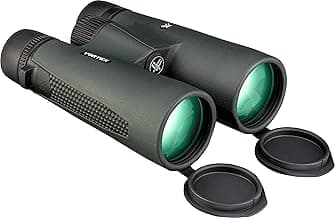
Conversely, in the wide-open landscapes of the Western plains, where long-distance glassing is the norm, the best 10x50 binoculars for hunting might be preferred. The larger 50mm objective lens compensates for the higher magnification by pulling in more ambient light, though this comes at the cost of increased weight. When considering what are the best-rated gifts for men who spend hours in the field, weight becomes a vital ergonomic factor that can lead to neck strain if not properly addressed through high-quality harness systems.
| Technical Variable | 8x42 Configuration | 10x50 Configuration | Gifting Context |
|---|---|---|---|
| Field of View (FOV) | Wide (Approx. 400ft @ 1000yds) | Narrow (Approx. 315ft @ 1000yds) | 8x is better for tracking moving game. |
| Low-Light Performance | Excellent (5.25mm Exit Pupil) | Good (5.0mm Exit Pupil) | Crucial for dawn/dusk hunting. |
| Static Weight | Lightweight (24-28 oz) | Heavy (32-40 oz) | 8x is better for mobile hunters. |
| Image Stability | High (Resistant to hand-shake) | Lower (Magnifies hand tremors) | 10x often requires a resting point or tripod. |
Multi-dimensional User Empathy: Matching Optics to the Environment
When you are trying to figure out how to come up with good gift ideas for a hunter, you must first diagnose their primary hunting style. A gift that ignores the user's physical environment is a gift that will sit in a drawer. For a stationary hunter who utilizes a best hunting chair for blind, weight is less of a concern, and they might appreciate high-magnification optics with superior edge-to-edge clarity. However, for the backcountry hunter who carries everything on their back, every ounce is a liability.
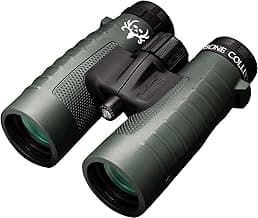
In high-altitude or wet environments, the technical requirement shifts toward sealing and internal atmosphere. Professional-grade binoculars are nitrogen-purged or argon-purged and O-ring sealed. This isn't just "waterproofing"; it is a preventative measure against internal fogging. When a hunter moves from a warm truck into a sub-zero mountainside, inferior binoculars will develop condensation inside the glass elements, rendering them useless. Only a magnesium alloy or high-grade polycarbonate chassis can maintain the structural integrity needed to prevent these seals from failing over years of thermal expansion and contraction.
The Hidden Costs of "Budget" Optics
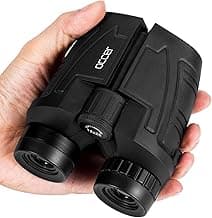
The consumer market is flooded with optics that claim "High Definition" or "Fully Multi-Coated" at suspiciously low price points. As a technical analyst, it is important to warn consumers that these terms are often used loosely. True ED (Extra-low Dispersion) glass requires complex chemical formulations to minimize chromatic aberration—the annoying purple or green fringes seen around high-contrast objects. Budget manufacturers often use cheaper glass with a single "coat" of anti-reflective material that wears off within two seasons. A BIFL approach suggests investing in brands with "No-Fault" lifetime warranties, which effectively covers the depreciation of the mechanical components over decades.
For those preparing for a long expedition, optics are just one part of the kit. The recipient may also need a best backpack hunting tent to ensure they have a lightweight, weather-resistant shelter to match their high-performance glass. Combining these items creates a holistic system that respects the technical demands of the sport.
Direct Answer Framework: Frequently Asked Questions
Is $500 enough to buy the best binoculars for hunting?
Yes, $500 is the "sweet spot" for high-performance mid-range optics. While you won't get the ultra-premium European glass found in the $2,000+ category, $500 buys you a magnesium chassis, phase-corrected prisms, and a robust lifetime warranty that satisfies 90% of dedicated hunters. Below this price point, you often sacrifice low-light clarity and mechanical durability.
Should I get 8x or 10x magnification for a gift?
8x magnification is the safest choice for a gift. It is more versatile for different terrains, provides a steadier image for the average user, and performs better in low light. 10x magnification is only recommended if you know the recipient specifically hunts in wide-open, mountainous terrain where long-distance identification is the primary challenge.
What does "Phase Coating" mean in hunting binoculars?
Phase coating is a chemical application on the roof prism that corrects "phase shift," a phenomenon where light waves get out of sync as they reflect off prism surfaces. Without this coating, the image loses contrast and resolution. Any binocular intended for serious hunting must have phase-corrected coatings to be effective in deep shadow or flat light conditions.
Are "Auto-Focus" binoculars good for hunting?
No. Most "auto-focus" or "fixed-focus" binoculars are designed for marine use or spectator sports. For hunting, where the subject is often obscured by brush or branches, a manual center-focus wheel is essential. It allows the hunter to "burn through" foreground obstructions to focus specifically on the animal hidden in the shadows.
In summary, the search for the best binoculars for hunting should be guided by a commitment to quality over flashy specifications. By focusing on the mechanical chassis, the chemical purity of the glass, and the specific ergonomic needs of the hunter, you can provide a gift that becomes a lifelong companion in the field. Whether it is a pair of best 8x42 binoculars for hunting or a larger 10x50 model, the real value lies in the clarity of the moment it provides.