

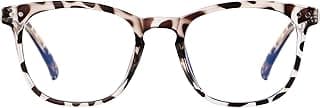
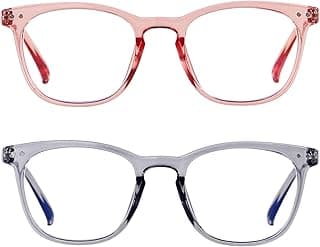
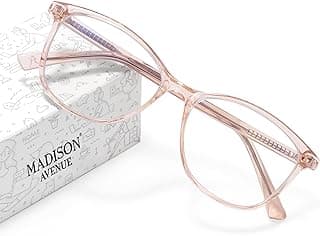
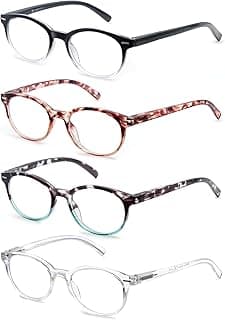
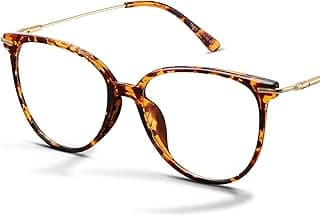
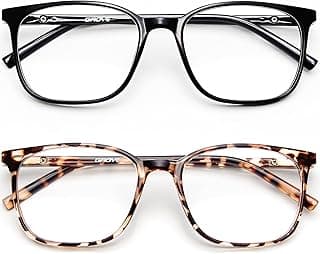
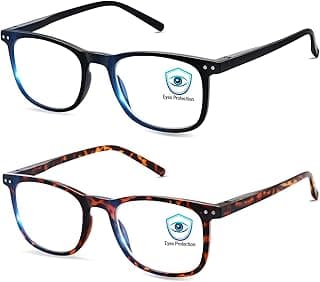
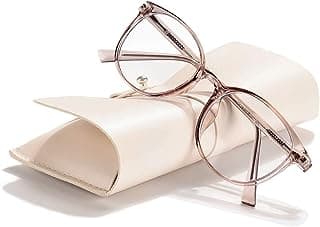
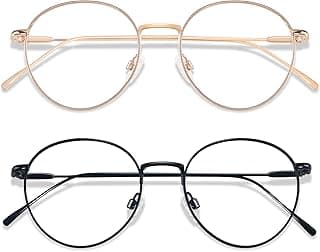
Why Face Size Makes Standard Glasses Fail
Eyewear design assumes average dimensions. Most blue light glasses ship with frames sized for medium faces—roughly 135-140mm total width, 18-20mm bridge width, 140mm temple length. These measurements work for most adults. They fail spectacularly for others.
When frames run too wide, they slide forward and down. The nose pads can't grip properly because they're spaced for a wider bridge. Temples angle outward instead of gripping behind ears. The wearer constantly pushes glasses back up, eventually abandoning them from frustration.
When frames sit too large on the face, proportions look wrong. Oversized eyewear overwhelms petite features, creating that "borrowed glasses" appearance. Even if technically functional, the aesthetic mismatch makes wearing them feel awkward. Fashion-conscious recipients might refuse to wear ill-proportioned glasses regardless of eye benefits.
The irony: people with smaller faces often need blue light glasses most. Petite women frequently work desk jobs with heavy screen exposure. Children—whose faces are definitionally small—accumulate screen time earlier and longer than any previous generation. Yet the eyewear industry treats them as afterthoughts.
"Standard sizing works for average people. But 'average' means half the population falls on either side. Those with smaller faces have been underserved by eyewear design for decades."
The Measurements That Actually Matter
Choosing blue light glasses for small face sizes requires understanding specific measurements. Here's what to look for:
Frame width (total): Measured across the entire front of the glasses. For small faces, look for 125-132mm. Standard frames run 135-145mm—that 10mm difference transforms fit dramatically.
Bridge width: The space between lenses where the nose sits. Narrow bridges (15-17mm) suit smaller faces better than standard 18-21mm bridges. Too wide and glasses slide; too narrow and they pinch.
Lens width: Individual lens measurement, typically 48-52mm for small faces versus 54-58mm for standard. Smaller lenses mean proportionally smaller frames overall.
Temple length: The arms extending to ears. Standard runs 140-145mm; petite sizing offers 135-140mm. Longer temples on small faces bend outward awkwardly or require uncomfortable adjustment.
Lens height: Vertical lens measurement. Shorter heights (30-38mm) suit smaller faces; taller lenses (40mm+) can overwhelm petite features.
These numbers might seem technical for gift-buying. They become essential when recipients have repeatedly experienced poorly fitting glasses. Knowing what measurements work—or checking measurements on frames they currently wear—transforms guesswork into informed selection.
Who Needs Small-Face Sizing
Several groups consistently struggle with standard eyewear sizing:
Petite women. Smaller overall bone structure typically correlates with narrower faces. The eyewear industry's tendency toward unisex or male-default sizing leaves many women with limited options. For gift ideas beyond eyewear, our women's gift guide offers broader inspiration.
Teenagers and young adults. Faces continue developing into early twenties. Many teens fall between children's sizing (too juvenile in style) and adult sizing (too large in fit). This gap frustrates both teenagers and parents trying to protect developing eyes from screen exposure.
Asian face shapes. Lower nose bridges and flatter facial profiles common in many Asian ethnicities cause standard frames to sit poorly. The bridge slides down; the frames sit too far from the face. Some brands now specifically design for these characteristics.
Anyone with narrow temples. Face width varies independently of overall body size. Some average-height adults simply have narrower facial structures requiring narrower frames.
Children. Obviously require smaller sizing, though children's blue light glasses represent a separate category with different considerations—durability, flexibility, and styles kids will actually wear.
The Headache Connection
Poorly fitting glasses don't just look wrong—they cause physical problems. This matters especially when considering best blue light glasses for headaches and how fit affects therapeutic benefit.
Glasses that pinch at the temples create pressure headaches directly. The constant squeezing builds tension that accumulates throughout the day, sometimes worsening the very headaches blue light filtering should help prevent.
Glasses that slide require constant readjustment. This repeated pushing-up motion causes neck strain from looking down, forehead tension from scrunching to hold glasses in place, and general frustration that contributes to stress headaches.
Glasses sitting at wrong angles position lenses incorrectly relative to eyes. This forces eye muscles to work harder, compensating for optical distortion that proper fit would eliminate. Eye strain compounds, potentially triggering or worsening headaches.
For recipients who specifically need blue light glasses for headache management, fit becomes therapeutic requirement rather than merely aesthetic preference. Glasses that don't fit properly can't deliver their intended benefit—and might make things worse.
Our expert-recommended glasses guide covers migraine-specific options in detail.
"Blue light glasses that cause headaches from poor fit defeat their entire purpose. For small-faced recipients, getting sizing right isn't optional—it's the foundation everything else depends on."
Brands That Actually Serve Small Faces
Not all eyewear brands acknowledge that small faces exist. Those that do deserve recognition:
Warby Parker
Warby Parker explicitly categorizes frames by width—narrow, medium, and wide. Their narrow selections specifically target smaller faces with appropriate measurements. The home try-on program lets recipients test fit before committing, eliminating guesswork that plagues online eyewear purchases.
Blue light filtering adds as upgrade to any frame, meaning the full narrow collection becomes available for screen protection. This variety exceeds what most blue light-specific brands offer in small sizes.
EyeBuyDirect
This budget-friendly online retailer includes face shape and size filters in their search tools. Their "narrow" and "extra narrow" categories contain dozens of options with appropriate measurements clearly listed. Blue light coating adds minimal cost to already affordable frames.
The trade-off: online-only means no try-on, so measurement precision matters more. But for budget-conscious gifting with size requirements, EyeBuyDirect delivers options other retailers lack.
Zenni Optical
Zenni publishes exact frame measurements on every listing, enabling precise size matching. Their extensive catalog includes many narrow options, though finding them requires filtering by specific measurements rather than browsing curated "small face" categories.
For recipients who know their measurements or have reference frames to compare, Zenni offers exceptional value. For uncertain situations, the measurement-heavy approach might overwhelm.
Felix Gray
The premium blue light specialist offers some frames in multiple sizes, including narrower fits. Their Nash and Turing frames specifically accommodate smaller faces while maintaining the brand's professional aesthetic.
Higher pricing reflects quality lens technology and style-conscious design. Appropriate for professional recipients who need glasses that look right in business settings.
Kids-Focused Brands
For teenagers who fall between adult and children's sizing, brands like Jonas Paul Eyewear bridge the gap with styles that don't look juvenile but fit younger/smaller faces. Blue light options exist though selection is more limited than adult-focused retailers.
Prescription Considerations for Small Faces
Many people needing blue light protection also need vision correction. The best prescription blue light glasses for small faces require addressing both needs simultaneously.
This complicates gifting significantly. Prescription information is personal—you might not have access to it. And even with prescription details, ordering involves choices (lens material, coatings, progressive vs. single vision) that recipients typically make themselves.
Several approaches work for gift-givers:
Gift cards to appropriate retailers. Warby Parker, Zenni, and EyeBuyDirect all offer gift cards. You're giving the gift of proper-fitting prescription blue light glasses while letting the recipient handle specifics. Less surprise, more practicality.
Non-prescription glasses for over contacts. If the recipient wears contact lenses, non-prescription blue light glasses work perfectly. Many contact wearers appreciate dedicated computer glasses they can wear instead of contacts during long work sessions.
Reading power combinations. For recipients with mild presbyopia (age-related near vision decline), blue light glasses with reading magnification combine functions. Powers from +0.50 to +2.50 don't require prescriptions and address both needs.
Coordinate with the recipient. Sometimes the best gift approach involves partial coordination: "I want to get you blue light glasses that actually fit—can you tell me your measurements and prescription?" This sacrifices surprise for certainty that the gift works.
For best blue light prescription glasses, retailers like Warby Parker and Zenni integrate blue light coating into their standard prescription process. Selecting frames sized for small faces, then adding prescription and blue light options, creates complete solutions.
How to Determine the Right Size
If you're buying for someone with a small face, how do you confirm appropriate sizing? Several strategies help:
Check existing glasses. Almost all glasses have measurements printed inside the temple arm—three numbers like 48-18-140, indicating lens width, bridge width, and temple length. If the recipient has glasses that fit well, these numbers guide selection. If their current glasses fit poorly, you know to go smaller.
Measure their face directly. With a flexible measuring tape: temple-to-temple across the face front gives approximate frame width needed. Bridge of nose width indicates bridge size. This works if you can take measurements without revealing the gift.
Use photo estimation. Some online retailers offer virtual try-on using photos. These tools aren't perfectly accurate but help eliminate obviously wrong choices.
Compare to known frames. If you know a specific pair of glasses fits them well, search for those exact frames' measurements online. Then find blue light glasses with similar specs.
When uncertain, choose adjustable. Some glasses include adjustable nose pads that accommodate range of bridge sizes. Spring hinges flex to fit varying temple widths. These features provide fit forgiveness that rigid frames lack.
Style Considerations That Matter
Beyond measurements, certain style elements work better for small faces:
Proportional frame thickness. Chunky bold frames that look statement-making on larger faces overwhelm smaller ones. Thinner, more delicate frames maintain proportion without dominating features.
Appropriate lens shape. Oversized round lenses trend fashionably but require facial real estate to carry. For small faces, moderately sized rectangular or soft-square shapes often flatter more. Cat-eye styles can work if proportionally scaled down.
Light colors expand visually. Dark heavy frames can look severe on small faces. Lighter colors—clear, nude, light tortoise—feel less overwhelming while still providing full eye protection.
Minimal ornamentation. Heavy embellishments, thick logos, or dramatic temple designs add visual weight that small faces may not balance well. Cleaner, simpler designs often suit better.
These aren't rules—personal style ultimately governs. But for gift-givers uncertain about recipient preferences, these guidelines reduce risk of missing the mark aesthetically while solving the fit problem mechanically.
"The perfect-fit glasses that clash with personal style still won't get worn. Solving the size problem is necessary but not sufficient—aesthetics matter too."
Gift Presentation Ideas
Because proper fit represents the core gift here, framing the present around that thoughtfulness strengthens impact:
Acknowledge the struggle. "I know you've had trouble finding glasses that fit—these are specifically sized for smaller faces." This shows you understood their frustration and addressed it directly.
Include measurements. Write down the key specs on a card included with the gift. This helps if they love the glasses and want to find similar options later—or need to exchange for slightly different sizing.
Enable easy exchange. Even careful selection sometimes misses. Including gift receipt or exchange information shows thoughtfulness extends beyond the initial purchase. Better: buy from retailers with generous return policies specifically.
Consider the try-on option. Warby Parker's home try-on program can itself be the gift—selecting several small-face options for them to try, with the promise you'll purchase whichever they love. Less dramatic reveal, but guaranteed fit.
Pair with complementary items. Quality cleaning cloth, attractive case, lens spray—these additions complete the gift while showing comprehensive thinking about actual use.
For additional gifting ideas for women specifically, our gifts for female friends guide offers broader inspiration.
Price Expectations
Small-face options exist across price ranges:
Budget ($20-$50): Zenni and EyeBuyDirect offer functional blue light glasses in narrow sizes at these prices. Quality is basic but serviceable. Appropriate for testing whether someone benefits from blue light glasses before investing more.
Mid-range ($50-$100): Better frame materials, improved lens quality, more style options. Some Felix Gray options fall here when sales align. This range delivers meaningful quality improvement over budget tier.
Premium ($100-$175): Felix Gray's standard pricing, Warby Parker with upgrades, other quality brands. Expect durable frames, superior lens technology, and styles sophisticated enough for professional settings.
Prescription additions: Add $50-$150+ depending on lens complexity. Single vision costs less; progressives cost more. Blue light coating itself typically adds $20-$50 to prescription orders.
For context on budget-friendly options generally, our guide to affordable gifts for women covers various price points.
Common Mistakes to Avoid
Gift-givers shopping for small-face recipients often stumble in predictable ways:
Assuming "unisex" means universal. Unisex frames typically default to male-average sizing—larger than many women need. Don't trust "unisex" labeling as indicator of small-face fit.
Choosing style over fit. Beautiful frames that don't fit properly won't get worn. Prioritize correct measurements; style choices narrow from there.
Ignoring bridge width. Frame width gets attention; bridge width often doesn't. But bridge fit determines whether glasses stay up or slide down constantly. A frame with correct total width but wrong bridge width still fails.
Forgetting about lens height. Two frames with identical widths can look dramatically different if one has tall lenses and the other short. Proportional lens height matters for small-face aesthetics.
Over-relying on adjustable features. Adjustable nose pads and spring hinges help but can't compensate for fundamentally wrong sizing. They provide fine-tuning, not transformation.
When to Suggest Professional Fitting
Sometimes the best gift isn't glasses themselves but professional help finding them:
If the recipient has extremely small or unusual facial dimensions, optical shop fitting might deliver better results than online guesswork. A gift card to a local optician—with note explaining it's for blue light glasses that actually fit—enables professional measurement and adjustment.
If prescription needs are complex (progressives, prism correction, strong prescriptions), professional involvement typically produces better outcomes. Blue light coating adds to any prescription lenses, so the fitting process addresses both needs.
If previous attempts at finding fitting glasses have repeatedly failed, the problem might require professional diagnosis. What seems like "small face" might be asymmetrical features, unusual bridge angle, or other characteristics requiring in-person assessment.
Final Thoughts
Giving best blue light blocking glasses for small faces solves a problem most gift-givers never consider. It demonstrates attention to detail that generic presents can't match. And it delivers practical daily benefit every time the recipient sits down at a screen.
The key lies in taking fit seriously. Not as afterthought to style selection—as primary criterion that enables everything else. Properly fitting glasses look better, feel better, and actually get worn. Improperly fitting glasses, regardless of other qualities, eventually get abandoned.
For recipients who've struggled with standard eyewear sizing, receiving glasses that genuinely fit feels almost revelatory. That revelation—that moment of "finally, these actually work"—makes this gift memorable far beyond its practical function.
Pay attention to the numbers. Match measurements to faces. Solve the problem most gift-givers overlook. That's how you give blue light glasses that become everyday essentials rather than drawer occupants.
Gifts are for making an impression, not just for the sake of it.
GiftsPick – Meticulous, Kind, Objective.