
Understanding the Thermodynamics of Ice Production
The core of any high-volume ice system lies in its condenser type. Most consumers are familiar with air-cooled units, which are the easiest to install but require significant clearance for airflow and can increase the ambient temperature of a room. In contrast, water-cooled systems are quieter and more efficient in hot environments but come with high water consumption costs. For a truly professional setup, remote condensers—where the heat-rejecting components are located outdoors—offer the pinnacle of performance, albeit at a much higher installation price point.
When evaluating these units, one must look past the "daily production" marketing numbers. A machine rated for 500 lbs of ice usually achieves that number only under ideal conditions (70°F air and 50°F water). In real-world scenarios, performance can drop by 20% or more. This reality is why an best bar ice maker or a larger commercial unit must be sized with a "buffer" to account for peak demand and environmental fluctuations.
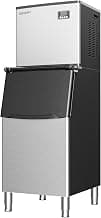
Comparison of Commercial Ice Machine Configurations
| Configuration Type | Ideal User Persona | Key Technical Constraint | Maintenance Profile |
|---|---|---|---|
| Modular Heads | High-volume restaurants, large hotels | Requires a separate storage bin | High (Requires frequent descaling) |
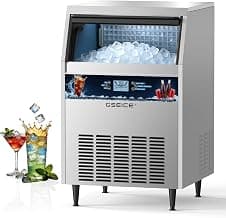
| Self-Contained Units | Small cafes, executive suites | Limited storage capacity | Moderate (Accessible filters) |
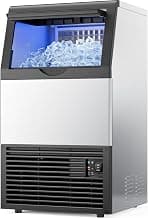
| Undercounter Models | Home bars, small offices | Strict ventilation requirements | Low to Moderate |
The "Buy It For Life" (BIFL) Philosophy in Professional Appliances
The professional repair community often warns against "throwaway" appliances that utilize unserviceable, sealed components. When searching for the best commercial ice machines, prioritize brands that offer modularity. This means the water pump, sensors, and control boards should be independently replaceable. A machine that cannot be disassembled for deep cleaning is a liability, as mineral scale and bio-film (often called "slime") are the primary causes of premature compressor failure.
If you are considering this as a professional gesture, perhaps as a what is a nice client gift for a partner opening a new venue, emphasize the importance of a comprehensive water filtration system. Without a high-quality filter to sequester minerals and remove chlorine, even the most expensive evaporator plate will pit and corrode within a few years of operation. The hidden cost of ownership is not just the electricity, but the rigorous quarterly cleaning schedule required to keep the unit within health department standards.
Selecting Ice Geometry for Specific Needs
The type of ice produced is arguably as important as the quantity. For instance, high-end healthcare facilities and boutique cafes often prefer the "sonic ice" produced by the best commercial nugget ice machine. This ice is created by an auger system that scrapes ice from a cylindrical evaporator and compresses it into small, chewable pellets. While highly popular, these auger-driven systems have more moving parts than traditional cubers, meaning they require more technical oversight.
For those looking for a smaller-scale solution for a residential kitchen or a private office, an undercounter best clear ice maker provides the aesthetic of crystal-clear "gourmet" ice without the massive footprint of a modular head. These units utilize a spray-bar system that freezes water layer by layer, pushing air and impurities out to ensure the final product is transparent and slow-melting.
The Ethics of Gifting Large-Scale Tech
Before purchasing a commercial unit as a gift, one must consider the recipient's infrastructure. These are not "plug-and-play" devices in the traditional sense. Most commercial cubers require a dedicated 20-amp circuit, a floor drain (not just a sink drain), and a consistent water supply line. Gifting such a machine without verifying these requirements can transform a generous act into a logistical burden. For smaller offices, a best-counter-ice-maker might be more appropriate, whereas a full commercial unit is a significant what is a good corporate swag gift intended for permanent installation.
The durability of a professional tool is measured by its serviceability, not just its initial performance out of the box.
Frequently Asked Questions
Is a commercial ice machine too loud for a home kitchen?
Yes, most air-cooled commercial ice machines generate noise levels between 55 and 70 decibels, which can be intrusive in a quiet residential setting. Unless the unit is installed in a garage, pantry, or acoustically treated area, the constant cycling of the fan and the sound of ice dropping into a bin may be disruptive.
What is the most common cause of commercial ice machine failure?
Poor water quality and lack of regular maintenance are the primary causes. Mineral buildup on the evaporator plate prevents the ice from releasing during the harvest cycle, which forces the compressor to work harder and eventually causes it to overheat and fail.
Can I use a commercial ice machine with a standard garden hose?
No. Commercial units require a permanent water line connection using copper tubing or reinforced plastic lines that meet local plumbing codes to ensure consistent pressure and prevent leaks.
How often should a commercial ice machine be cleaned?
At a minimum, these machines must be professionally cleaned and sanitized every six months. In environments with high airborne yeast (like bakeries) or very hard water, this frequency should be increased to every three months to prevent health hazards and mechanical strain.
In conclusion, the best commercial ice machines are those that balance high-volume output with accessible maintenance points. Whether used as a grand gesture for a business partner or a lifestyle upgrade for a dedicated entertainer, these machines stand as a testament to engineering efficiency and the enduring value of professional-grade tools.