

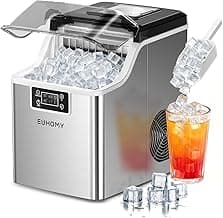
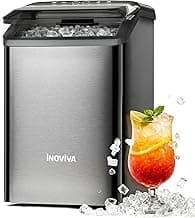
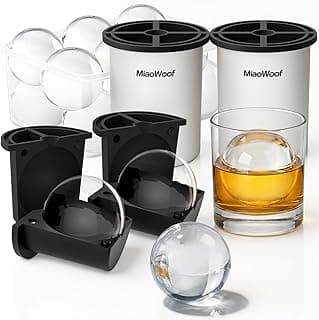
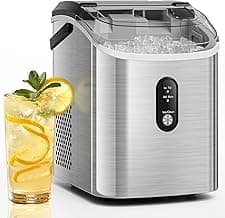
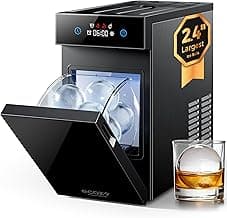
The Physics of Transparency: Why the Best Countertop Clear Ice Maker Outperforms
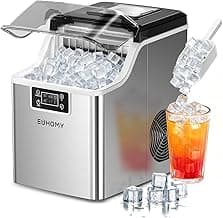
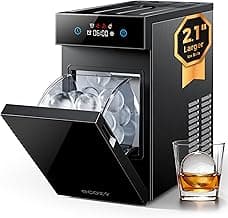
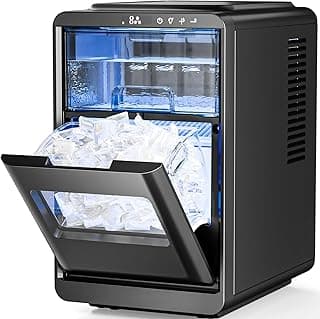
To understand why the best countertop clear ice maker is superior, one must examine the physics of the freezing cycle. Standard ice is white because water freezes from all sides simultaneously, trapping dissolved oxygen and minerals in the center. Professional clear ice makers utilize a cooling plate at the bottom or top, coupled with a recirculating pump. By keeping the water in constant motion and freezing it from one direction only, the machine ensures that only pure H2O molecules bond to the ice front. This is a critical distinction for anyone seeking best gift ideas for a woman or man who takes pride in their home bar aesthetics.
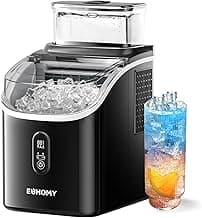
From a skepticism-driven viewpoint, consumers should be wary of marketing terms like "crystal clear" applied to machines using traditional finger-style evaporators. True clear ice requires a specific "grid" or "slab" freezing method. While these units consume more energy than a simple best countertop ice maker nugget model, the density of the ice—and its subsequent resistance to melting—is the primary technical metric of success. The slower melt rate prevents the "watering down" of complex beverages, a detail that makes it a strong contender when considering what is a nice client gift for a business partner who enjoys fine scotch.
Technical Specifications and Comparative Analysis
To assist in the decision-making process, the following table compares the mechanical variables of top-tier clear ice systems versus standard home units. These metrics are essential for evaluating long-term performance and suitability for different living environments.
| Feature | Clear Ice Maker (Premium) | Bullet Ice Maker (Standard) | Nugget Ice Maker (Specialty) |
|---|---|---|---|
| Freezing Method | Directional / Recirculating | Conductive Finger-style | Extruded Auger System |
| Average Cycle Time | 15 - 25 Minutes | 6 - 10 Minutes | Continuous Flow |
| Ice Density (g/cm³) | ~0.91 (High) | ~0.70 (Low) | ~0.50 (Aerated) |
| Compressor Noise | 45 - 55 dB | 40 - 50 dB | 50 - 60 dB |
| Maintenance Needs | High (Descaling Required) | Medium | High (Biofilm Management) |
Buy It For Life (BIFL) Philosophy: Durability and Hidden Costs
As a strategist, I must emphasize that the "Buy It For Life" philosophy is often challenged by the modern appliance industry's tendency toward sealed systems. The best countertop clear ice maker should ideally feature a modular design where the water pump and sensors are accessible for cleaning. The most common failure point in these machines is not the compressor, but the accumulation of calcium and magnesium "scale" on the internal sensors. Without regular descaling, the machine's thermal sensors will fail to detect when the ice slab is ready to harvest, leading to internal jams.
When evaluating whats a perfect romantic gift for a partner who loves hosting, consider the hidden cost of ownership: filtration. Using tap water with high Total Dissolved Solids (TDS) will force the machine to work harder and require descaling every 30 days. To ensure the machine lasts 5-10 years, it should be paired with a dedicated water filtration pitcher or an under-sink RO system. This technical foresight separates a thoughtful gift from a future chore.
User Empathy: Designing for Different Environments
The analysis of the best countertop clear ice maker must also consider the user's physical environment. For small apartment dwellers, decibel levels and heat exhaust direction are paramount. A machine that vents from the rear may damage kitchen cabinetry over time if not given proper clearance. Conversely, for elderly users or those with limited hand dexterity, the weight of the ice basket and the ease of the drainage system are vital. Many high-end models now include a "self-cleaning" mode, though as experts, we note this is a rinse cycle rather than a substitute for manual scrubbing with citric acid.
For those looking for a best bar ice maker, portability is often an afterthought until the first party. A unit weighing over 30 pounds is difficult to move between a kitchen and a patio. Therefore, checking for integrated handles and a robust power cord is essential for any product intended for a multi-room entertainment lifestyle.
Frequently Asked Questions (FAQ)
Is clear ice actually better for drinks than regular ice?
Yes, clear ice is superior because its higher density and lack of internal air pockets result in a significantly slower melt rate. This means your drink stays cold for longer with less dilution, which is essential for preserving the flavor profile of premium spirits. Additionally, the removal of impurities during the directional freezing process ensures that no "freezer taste" or odors are transferred to the beverage.
How often does a countertop ice maker need to be cleaned?
Every two to four weeks, depending on the hardness of your water supply. Even if you use filtered water, mineral buildup and biofilm can accumulate on the cooling plate and inside the water lines. Using a specialized ice machine cleaner or a solution of water and citric acid is recommended to maintain the efficiency of the compressor and ensure the clarity of the ice stays consistent.
Can I leave my countertop ice maker running all the time?
No, most countertop units are not designed as long-term storage freezers. While they can run for several hours to fill the basket, the insulation is typically not sufficient to keep the ice frozen indefinitely. Once the basket is full, the machine will stop. As the ice melts, the water is recycled back into the reservoir to be frozen again. To save energy and prevent wear on the compressor, it is best to turn the unit off once you have the desired amount of ice.
What is the difference between "self-cleaning" and manual cleaning?
A "self-cleaning" function is a programmed rinse cycle that circulates water through the internal plumbing to dislodge loose debris. It is not a replacement for manual cleaning, which involves scrubbing the reservoir, basket, and sensors to remove stubborn scale and mold. For a truly BIFL experience, you must manually descale the machine at least once a month to prevent sensor failure.