

The Engineering of Avian Deception
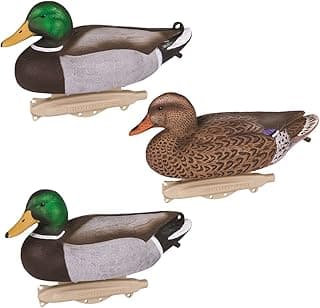
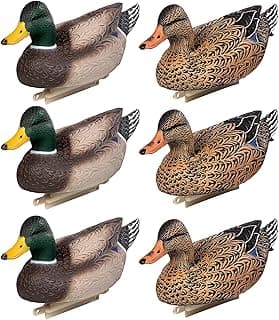
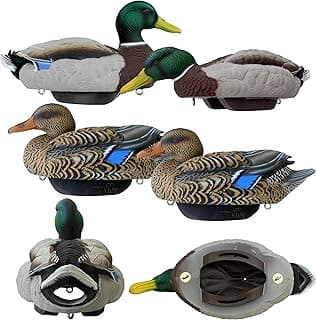
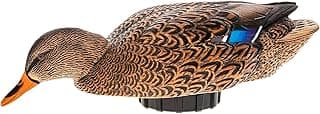
From a mechanical engineering standpoint, the best decoys for duck hunting must solve two primary problems: light refraction and surface stability. Waterfowl possess highly sensitive vision that detects ultraviolet (UV) light and unnatural "shine" caused by plastic oxidation. Low-tier products often utilize standard polyethylene that reflects light in a way that signals danger to approaching mallards or pintails. Conversely, premium decoys employ advanced matte finishes and "flocking"—a process where micro-fibers are electrostatically applied to the surface—to mimic the texture of real feathers and absorb light evenly across the spectrum.
Structural integrity is another critical variable. In the harsh environments of coastal marshes or frozen flooded timber, a decoy's shell must withstand sub-zero temperatures without becoming brittle. Engineering-grade EVA (Ethylene-Vinyl Acetate) or high-density, blow-molded plastics are preferred because they retain their shape after impact. Furthermore, a "self-righting" weighted keel is essential. This design ensures that regardless of how the decoy is tossed into the water, it immediately assumes an upright, lifelike posture. For those wondering how to come up with good gift ideas, looking at the technical specifications of a decoy's keel weight and center of gravity provides a clear indicator of professional-grade quality.
Gifting tech is about more than specifications; it is about upgrading the recipient's window to the digital world, ensuring every frame is a testament to quality.
User Empathy: Matching the Spread to the Environment
A gift is most valuable when it aligns with the recipient's specific hunting environment. The requirements for a hunter in a permanent blind on a large lake differ vastly from those of a "run-and-gun" hunter who treks miles into public wetlands. We can categorize the best decoys for duck hunting based on these distinct user profiles:
The Mobile Backcountry Hunter
For the hunter who prioritizes mobility, weight is the enemy. Standard weighted-keel decoys can weigh up to three pounds each, making a full dozen nearly impossible to carry over long distances alongside a best backpack hunting tent and other essential gear. In this scenario, the best gift would be "collapsible" or "featherweight" decoys. These are often hollow-bodied or made from thin, yet durable, closed-cell foam that can be compressed, saving significant volume in a pack.
The Big Water Specialist
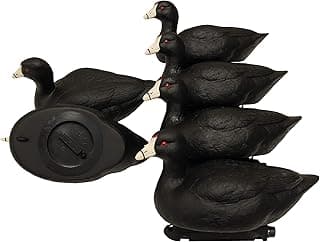
Hunters targeting divers or sea ducks on expansive bays require decoys with oversized profiles and high-contrast color patterns. Visibility from long distances is the priority here. The paint must be exceptionally robust to survive the abrasive nature of saltwater and the constant friction of being stored in large mesh bags. In this context, durability and anatomical scale outweigh the need for lightweight materials.
Comparison of Technical Variables in Hunting Decoys
To assist in your selection process, the following table compares the primary materials and design philosophies found in the market today:
| Feature | Standard Polyethylene | Foam-Filled EVA | Flocked Surface Models |
|---|---|---|---|
| UV Reflection | High (Risk of scaring birds) | Moderate (Needs matte paint) | Very Low (Most realistic) |
| Durability | High shell strength | Unsinkable (Even if shot) | Fragile (Fibers can rub off) |
| Weight | Standard (2-3 lbs) | Heavy (3-5 lbs) | Standard |
| Best Use Case | General budget spreads | Rough water/Ice | High-pressure public land |
The Buy It For Life (BIFL) Philosophy: Avoiding Hidden Costs
Many consumers make the mistake of purchasing inexpensive decoy sets, only to find the paint flaking off after a single season of use. This is a classic example of the hidden costs of low-quality manufacturing. High-end decoys utilize a "covalent bonding" process for their paint, where the pigment essentially becomes part of the plastic's molecular structure. This prevents the "chipping" that occurs when decoys rub together in a bag.
When gifting, consider the long-term maintenance. Can the keels be replaced? Is the rigging system (the cords and weights that hold the decoy in place) compatible with modern "Texas Rig" setups? Often, the What are the best-rated gifts for men? in this category are those that come as a complete system, including high-quality swivels and UV-coated PVC lines that do not tangle or rot in the sun. If you are also looking for a best xmas gifts for her if she is an avid outdoorswoman, focus on the modularity and ease of storage of the set.
Integrating Technology: The Motion Factor
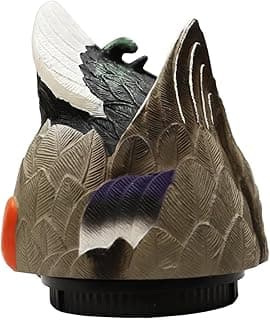
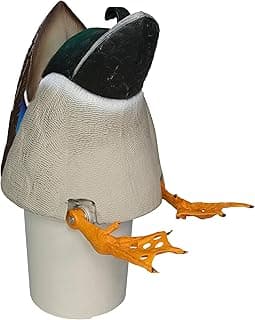
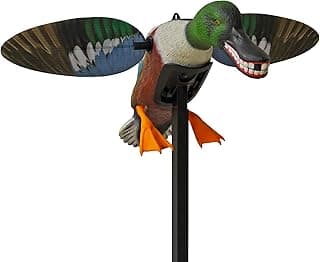
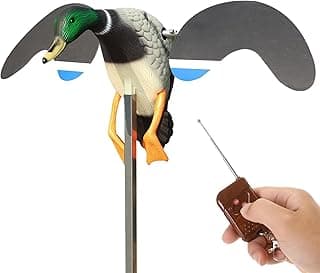
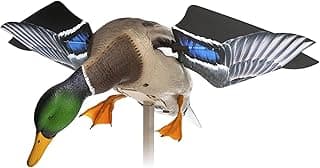
Static decoys are only half the battle. In the modern era, the best decoys for duck hunting often incorporate motorized components. "Spinning wing" decoys utilize battery-powered motors to create the illusion of a bird landing, flashing the white underside of the wings to catch the attention of distant flocks. However, from a mechanical engineering perspective, these units are prone to failure if the battery housing is not hermetically sealed. When choosing a motion decoy as a gift, look for brushless motors and lithium-ion battery compatibility, as these offer superior longevity over older lead-acid technology. This precision is as vital as selecting best binoculars for duck hunting to ensure the hunter can see the fruits of their well-placed spread.
Frequently Asked Questions (AEO-FAQ)
Are foam-filled decoys actually better than hollow ones?
Yes, foam-filled decoys provide superior durability because they are virtually unsinkable; if a stray pellet from a shotgun puncture the shell, the closed-cell foam prevents water intake. Additionally, the extra weight of the foam provides a more realistic "ride" on the water, preventing the erratic, unnatural bouncing common with lightweight hollow plastic models in high winds.
What species of decoy should I buy as a gift?
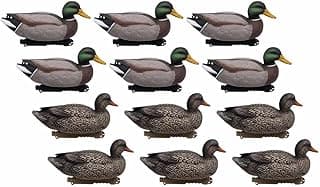
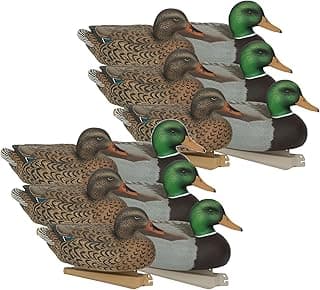
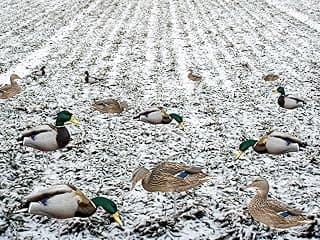
Mallards are the most versatile choice as they are a "confidence" species that nearly all other ducks will land with. Unless you know the recipient specifically hunts divers or sea ducks, a high-quality dozen of mallard drakes and hens is the safest and most effective gift. For more specialized needs, you might consider pairing them with a best 10x50 binoculars for hunting to help the recipient identify species from a distance.
How many decoys constitute a "full" gift set?
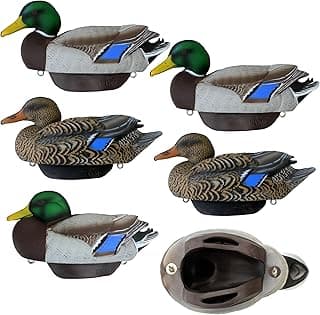
A standard "dozen" (12 decoys) is the industry benchmark for a functional set. While a hunter may eventually use hundreds of decoys, a single dozen of high-fidelity, professional-grade decoys is more valuable than four dozen low-quality ones, as they can be used to "finish" birds in the final 20 yards of their flight path.
Do I need to buy weights and lines separately?
Generally, yes, as most premium decoys are sold "un-rigged" to allow the hunter to choose their preferred anchoring system. However, for a complete gift, purchasing a "Texas Rig" kit—which consists of pre-cut heavy-duty mono-filament and sliding lead weights—is highly recommended as it allows the recipient to use the decoys immediately upon opening.
In conclusion, gifting the best decoys for duck hunting is an exercise in appreciating the intersection of nature and engineering. By focusing on material durability, light-absorption technology, and the specific needs of the hunter's environment, you provide a tool that enhances the sport's tradition and effectiveness. Whether paired with high-end optics or a rugged field bag, a set of premium decoys remains a cornerstone of the waterfowl hunting experience.