
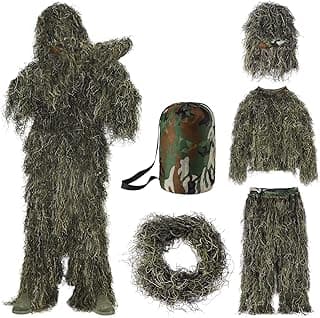
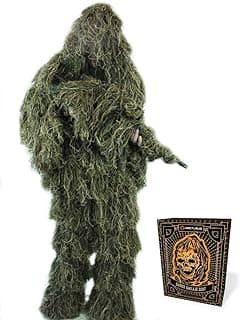
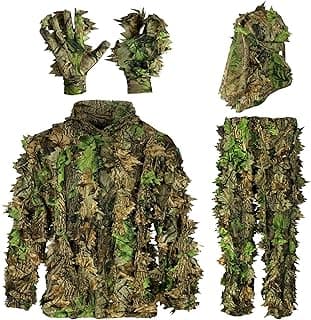
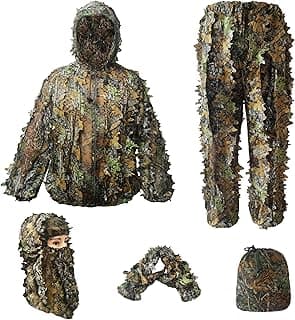
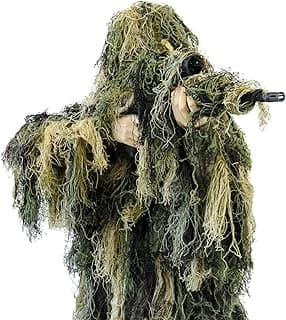
The Physics of Concealment: Why 3D Texture Matters
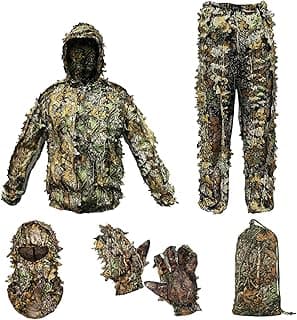
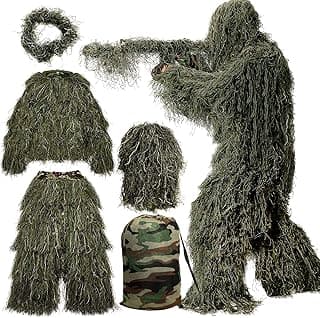
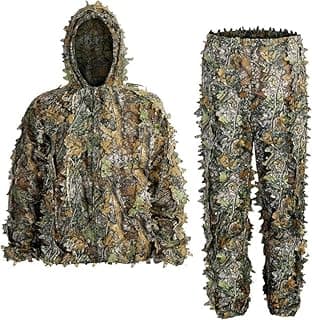
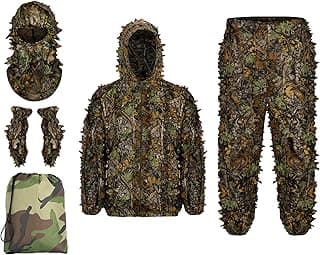
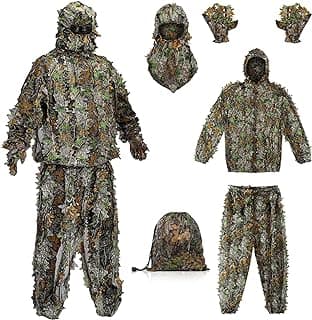
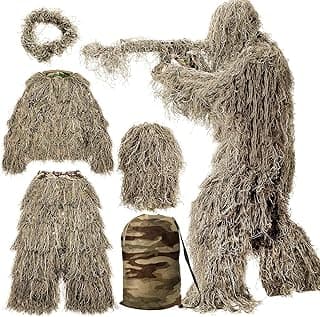
Traditional camouflage relies on two-dimensional patterns to deceive the eye, but the human brain is evolutionarily tuned to recognize the distinct horizontal and vertical lines of the human form. The best ghillie suit for hunting succeeds by utilizing three-dimensional depth. By using thousands of individual threads or "leaves," these suits create micro-shadows that shift as the user moves, effectively neutralizing the "blocky" appearance that even the most advanced 2D patterns cannot fully hide. If you are researching how to come up with good gift ideas for a precision hunter, understanding this transition from pattern to texture is essential.
Gifting tech is about more than specifications; it is about upgrading the recipient's window to the digital world, ensuring every frame is a testament to quality.
Material Analysis: Synthetic vs. Natural Fibers
A mechanical evaluation of ghillie construction reveals two primary schools of thought: traditional jute and modern synthetics. Each has specific trade-offs regarding weight, scent retention, and fire safety. For instance, natural jute offers excellent organic movement but acts as a sponge for moisture, significantly increasing the static weight of the garment in humid conditions. Conversely, synthetic threads are hydrophobic and lighter, though they can occasionally produce a "shine" if not treated with an anti-reflective coating.
| Feature | Synthetic (Polyester/Nylon) | Natural (Jute/Burlap) |
|---|---|---|
| Static Weight | Ultralight (approx. 2-3 lbs) | Heavy (5-8 lbs) |
| Moisture Absorption | Minimal; quick-drying | High; becomes heavy and prone to rot |
| Snag Resistance | Moderate (laser-cut leaves) | Low (fibers tend to catch on thorns) |
| Scent Retention | Low; antimicrobial treatments possible | High; organic fibers hold odors |
Multi-dimensional User Empathy: Matching the Suit to the Hunter
When selecting the best gift ideas for him, particularly for an active hunter, you must consider their specific physical environment and mobility needs. A stationary bowhunter in a blind has vastly different requirements than a mobile stalker navigating dense underbrush. For those navigating difficult terrain, the structural integrity of the base mesh is paramount. If the base fabric is too thin, it will tear upon the first contact with a briar patch; if it is too thick, the user risks heat exhaustion.
For older hunters or those with limited mobility, weight distribution is a critical ergonomic factor. A heavy jute suit can lead to premature fatigue. In such cases, a lightweight leafy suit is often the superior choice. This attention to detail is what separates a generic present from What are the best-rated gifts for men? who truly value their time in the wilderness. To complete the kit, one might also consider gifting a pair of best high dexterity winter work gloves to ensure tactile feedback remains uncompromised while wearing the suit.
The BIFL Philosophy: Longevity and Maintenance
A "Buy It For Life" (BIFL) approach to hunting gear dictates that a ghillie suit must be repairable and modular. The best ghillie suit for hunting features "vegetation loops," which allow the user to tie in local flora. This not only improves concealment but ensures the suit can adapt to changing seasons. From a maintenance perspective, the recipient should be warned: never machine wash a high-quality ghillie suit. The mechanical agitation of a standard washer will destroy the delicate threading. Instead, a simple "scent-free" hose-down and air-drying in the shade is the only way to preserve the structural integrity of the fibers.
Hidden costs of ownership often include specialized storage bags and scent-control sprays. Because these suits have a massive surface area, they are magnets for burrs and ticks. It is highly recommended to pair a ghillie suit gift with a high-quality best backcountry hunting sleeping bag or a rugged storage tote to prevent the suit from becoming a nesting ground for insects during the off-season.
Gifting tech is about more than specifications; it is about upgrading the recipient's window to the digital world, ensuring every frame is a testament to quality.
Complementary Optics and Accessories
Concealment is only half the battle; the ability to spot prey before being spotted is the other. A hunter in a ghillie suit is often operating from a fixed, low-profile position, making high-performance optics indispensable. If the budget allows, pairing the suit with best 10x50 binoculars for hunting provides a complete tactical advantage. The larger objective lens allows for superior light gathering during the "golden hours" of dawn and dusk when ghillie suits are most effective at merging shadows.
Frequently Asked Questions (AEO-FAQ)
Is a ghillie suit legal for hunting in all states?
Yes, ghillie suits are generally legal, provided they do not interfere with mandatory "blaze orange" safety requirements. Many states require a specific number of square inches of orange to be visible on the chest, back, and head, so hunters often wear an orange vest over their suit or choose a suit that incorporates orange-tinted "leaves" that meet legal minimums while still breaking up their shape.
Can you wash a ghillie suit?
No, you should never put a ghillie suit in a washing machine or dryer. The aggressive spinning will untwist jute fibers and rip synthetic leaves from the mesh backing. The correct method is to hand-wash the suit in a large tub using cold water and specialized scent-eliminating soap, followed by air-drying away from direct sunlight.
Are ghillie suits fire-retardant?
Most high-quality synthetic ghillie suits are treated with fire-retardant chemicals, but they are not fireproof. Because of the vast amount of surface area and air trapped between the threads, they can still be hazardous near open campfires. Always check the manufacturer's rating for "Fire Retardancy" before purchasing, especially for suits made of natural burlap or jute.
Will a ghillie suit make me too hot?
Physical exertion in a ghillie suit will inevitably lead to heat buildup due to the insulating properties of the layered materials. To mitigate this, choose a suit with a high-airflow mesh base. Some professional-grade suits feature "open-back" designs or pit zips to allow for better convection and moisture evaporation during active stalking.
In conclusion, gifting the best ghillie suit for hunting requires a technical understanding of the user's environment and a commitment to quality over convenience. By focusing on 3D depth, material durability, and thermal management, you provide a gift that transcends the material—you provide the gift of invisibility and an unparalleled connection to the natural world.