
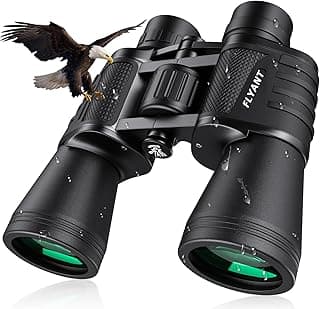
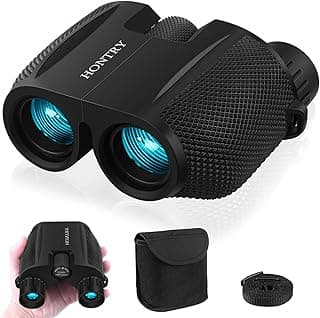
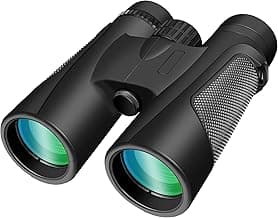
The Engineering of Budget Optics: Glass, Prisms, and Coatings
The performance of any hunting optic is dictated by the laws of physics. Light must travel through several layers of glass before reaching the eye, and at each interface, some light is reflected away. In the sub-200 market, the difference between a mediocre gift and a professional-grade tool lies in the "Fully Multi-Coated" (FMC) designation. Only a system where every air-to-glass surface is treated with multiple layers of anti-reflective compounds can provide the contrast necessary to spot a stationary animal against a dark forest background. Lenses labeled simply as "coated" or "multi-coated" often fail to deliver a usable image during the critical twilight hours when game is most active.
Bak-4 vs. BK7 Prisms: Why the Material Matters
The internal prisms responsible for inverting the image are often where budget manufacturers cut corners. A gift that utilizes BK7 (borosilicate) glass will often show "squared-off" exit pupils, leading to light fall-off at the edges of the view. Conversely, opting for high-density Bak-4 (barium crown) glass ensures a perfectly round exit pupil and superior light transmission. While this component adds to the manufacturing cost, it is a non-negotiable requirement for any hunter who plans to use their gear in low-light conditions. When you investigate what are the best-rated gifts for men who spend time in the wilderness, you will find that optical clarity is consistently rated higher than electronic features that may fail in the cold.
Gifting tech is about more than specifications; it is about upgrading the recipient's window to the digital world, ensuring every frame is a testament to quality.
Multi-dimensional Empathy: Selecting for the Recipient's Needs
An elite analyst must consider that not all hunters share the same physical capabilities or environmental constraints. A gift for an older hunter with arthritis should prioritize a large, textured focus wheel and a lightweight chassis to reduce hand fatigue. For these users, an ergonomic design that balances the weight over the center of the hand is more important than raw power. On the other hand, a younger, mobile hunter might require a compact design that fits easily into a harness alongside a best backpack hunting tent, allowing for miles of trekking without unnecessary bulk.
Environmental conditions also play a role. If the recipient hunts in the humid Southeast or the rainy Northwest, the binoculars must be nitrogen-purged and O-ring sealed. Without these internal safeguards, a sudden temperature drop can cause the internal lenses to fog, rendering the device useless. This "hidden" technical requirement is often overlooked by casual gift-shoppers who focus only on the exterior look of the product.
Technical Comparison: 8x42 vs. 10x42 vs. 12x50
To help you navigate the various configurations available, the following table compares the physical variables that impact real-world performance. This data architecture is designed to help you decide which setup matches your recipient's specific hunting style.
| Specification | 8x42 Configuration | 10x42 Configuration | 12x50 Configuration |
|---|---|---|---|
| Field of View (FOV) | Widest - Best for tracking movement. | Balanced - Good for all-around use. | Narrow - Harder to locate targets. |
| Image Stability | High - Minimal hand-shake jitter. | Moderate - Requires steady hands. | Low - Often requires a tripod. |
| Low Light Performance | Excellent - 5.25mm Exit Pupil. | Good - 4.2mm Exit Pupil. | Good - Large objectives help offset power. |
| Weight/Bulk | Lightest - Highly portable. | Standard - Average weight. | Heaviest - Bulky for long treks. |
As indicated in the table, the best 8x42 binoculars for hunting are often the superior choice for a gift because they offer a brighter image and a wider field of view, making them more forgiving for the user. While 10x or 12x magnification sounds more impressive on a box, the increased shake and decreased brightness often lead to buyer's remorse for the recipient.
BIFL Philosophy: Hidden Costs and Long-Term Durability
The "Buy It For Life" (BIFL) philosophy is difficult to achieve under $200, but not impossible. The primary threat to longevity in budget optics is the degradation of the rubber armoring and the loosening of the internal hinges. Experts in the repair community often warn against "fast consumerism" optics that use cheap glues instead of mechanical fasteners. When selecting best dad gift ideas, look for brands that offer a lifetime "no-fault" warranty. This provides a layer of protection against the inevitable accidents that occur in the field.
Furthermore, consider the availability of replacement parts. A modular system where the eyecups can be easily unscrewed and replaced by the user is significantly better than a design where a lost eyecup means the entire unit must be discarded. Educating yourself on how to come up with good gift ideas involves looking past the initial price tag to the operational life of the product. Investing $180 in a pair of best 10x50 binoculars for hunting with a solid warranty is far more economical than buying a $90 pair twice.
Direct Answer Framework: Frequently Asked Questions
Is a $200 pair of binoculars actually good enough for hunting?
Yes, provided you stick to reputable brands that prioritize optical coatings over high magnification numbers. At this price point, you are paying for the quality of the glass and the integrity of the weatherproofing seals. While they will not have the edge-to-edge sharpness of professional optics, they are more than adequate for identifying game within 500 yards.
Should I choose 8x or 10x magnification for a gift?
Choose 8x magnification for most hunters, especially those who hunt in wooded areas or are prone to shaky hands. The 8x power provides a more stable image, a wider field of view, and a brighter picture in the dim light of dawn and dusk. 10x is only recommended for those in wide-open plains who are comfortable using a rest to stabilize their view.
Why do some cheap binoculars fog up inside?
Fogging occurs when moist air is trapped inside the optical barrels during manufacturing. To prevent this, the air must be purged and replaced with a dry gas like nitrogen or argon. If a pair of binoculars is not specifically labeled as "nitrogen-purged" or "fog-proof," it will eventually fail when used in varying temperatures, leading to permanent internal mold and clarity loss.
Can binoculars in this price range be repaired?
Generally, the internal prisms of sub-$200 binoculars are not cost-effective to repair if they go out of alignment. However, the best manufacturers avoid this issue by using a robust "polycarbonate" or magnesium chassis that holds the optics in a rigid frame. This is why selecting a brand with a strong replacement warranty is essential for a budget-friendly gift.