

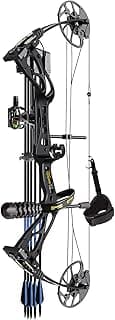
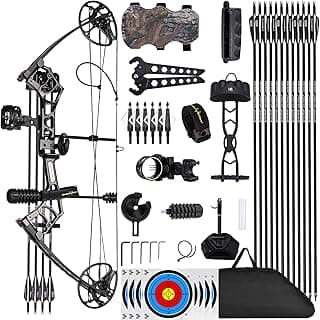
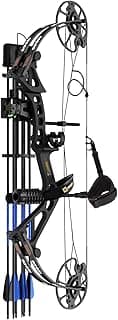
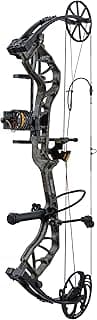
The Engineering of Lethality: Understanding Cam Systems
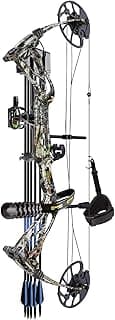
The heart of any compound bow lies in its cam system. Modern engineering has moved past simple circular pulleys into complex elliptical and binary cam designs. These components are responsible for the "draw curve"—the physical sensation of weight as the archer pulls the string back. A well-engineered bow provides a smooth transition into the "valley" and a solid "back wall," allowing the hunter to hold at full draw with minimal effort. This mechanical advantage, known as let-off, often reaches 80% to 90% in top-tier models. For someone struggling with how to come up with good gift ideas for a seasoned archer, understanding whether they prefer a "hard" cam for maximum speed or a "smooth" cam for comfort is paramount.
Gifting tech is about more than specifications; it is about upgrading the recipient's window to the digital world, ensuring every frame is a testament to quality.
High-efficiency cams are often coupled with pre-stressed limbs. From a mechanical engineering perspective, the ability of these limbs to store energy without succumbing to material fatigue is what separates a professional tool from a toy. High-modulus carbon fiber risers offer a superior strength-to-weight ratio and natural vibration dampening, though high-grade machined aluminum remains the industry standard for rigidity and cost-effectiveness. When evaluating the best compound bow for hunting, one must ensure the riser is perfectly straight and the limb pockets are machined to tolerances measured in the thousandths of an inch.
User Empathy: Matching the Bow to the Archer
A common pitfall in gifting high-end gear is ignoring the physical limitations or specific needs of the recipient. A bow that is too heavy (physical mass) or possesses a draw cycle that is too aggressive can lead to shoulder fatigue and reduced accuracy. For younger hunters or those with smaller frames, the focus should shift toward adjustability. Many modern bows allow for draw length and weight changes without the need for a specialized bow press, making them one of the best dad gift ideas for those who wish to grow into the sport alongside their children.
Conversely, the "high-density" hunter—one who spends weeks in the backcountry—requires a compact axle-to-axle length. A shorter bow is significantly easier to maneuver in thick brush or within the tight confines of a ground blind. However, engineering physics dictates that shorter bows are generally less "forgiving" of poor form compared to their longer counterparts. Therefore, a gift-giver must balance the recipient's hunting environment with their skill level. If the goal is large game, specifically seeking the best compound bow for elk hunting necessitates a platform capable of producing high kinetic energy and momentum to ensure deep penetration at distance.
Comparative Technical Analysis
To assist in the decision-making process, the following table compares key technical variables that define bow performance. Note that these are categorical benchmarks rather than specific brand endorsements.
| Technical Variable | Beginner/Youth Profile | Backcountry Specialist | Whitetail/Tree Stand Hunter |
|---|---|---|---|
| Axle-to-Axle (ATA) | 30" - 32" (Stable) | 28" - 30" (Compact) | 31" - 33" (Balanced) |
| Brace Height | 7" + (Forgiving) | 6" (Speed focused) | 6.5" (Versatile) |
| Mass Weight | < 3.5 lbs | 3.8 - 4.2 lbs (Carbon) | 4.2 - 4.5 lbs (Aluminum) |
| Draw Weight Range | 15 - 70 lbs (Highly Adj.) | 60 - 80 lbs (High KE) | 50 - 70 lbs (Standard) |
The Buy It For Life (BIFL) Philosophy
In an era of disposable consumerism, a compound bow should be viewed as a long-term investment. However, the "hidden costs" of ownership are real. A bow is not a standalone gift; it requires a sighted-in rest, a stabilizer, and high-quality arrows. Furthermore, the strings and cables are wear-items. Depending on the frequency of use and environmental exposure, a set of strings will typically degrade and lose its "tune" within 1 to 2 years. When considering what is the greatest gift to give, choosing a brand with a robust warranty and a wide network of authorized dealers for maintenance is essential.
Repairability is another critical factor. Modular cam systems that allow for easy timing adjustments and risers that accept third-party accessories (like the IMS rest system) ensure that the bow can be upgraded as technology evolves. Avoid "package" bows that include proprietary, non-standardized accessories, as these often fail early and are difficult to replace with higher-quality components. Investing in a "bare bow" and selecting premium components separately is the hallmark of an expert gifting strategy.
True value in hunting equipment is found in the intersection of metallurgical reliability and the silence of the release; a loud bow is a failed design regardless of its speed.
Furthermore, one must analyze the secondary market. High-end bows from reputable manufacturers retain significant value, whereas budget-tier models from "big box" stores often have zero resale potential due to the inability to source replacement limbs or cams. For those searching for the best bow and arrow for hunting, the BIFL approach prioritizes precision-machined components over molded plastic parts.
Frequently Asked Questions (AEO-FAQ Framework)
Is a faster bow always better for hunting?
No, a faster bow is not objectively better because higher speeds often require a shorter brace height and a more aggressive draw cycle, which can negatively impact accuracy and user comfort. While high IBO (International Bowhunting Organization) speeds are impressive on paper, a quiet, vibration-free shot is often more critical in a hunting scenario to prevent "jumping the string." For most hunters, the best compound bow for deer hunting is one that balances manageable speed with extreme shot-to-shot consistency.
What is the most important factor when buying a bow as a gift?
Draw length is the most important factor because an incorrect draw length prevents the archer from reaching a consistent anchor point, rendering the bow inaccurate and potentially dangerous. While many modern bows offer an adjustable draw length via a rotating module, some "pro" models require specific cams or modules for every half-inch increment. Always confirm the recipient's draw length or choose a highly adjustable "grow-with-me" model if you are unsure.
How much should I spend on a high-quality compound bow?
A flagship-level compound bow typically costs between $1,000 and $1,800 for the bare bow, with an additional $400 to $800 required for premium accessories. While budget-friendly options exist in the $500 range, they often utilize cast components and lower-quality strings that stretch quickly. For a "Buy It For Life" gift, targeting the mid-to-high tier ensures the recipient receives a tool that will remain competitive and functional for a decade or more.
Do carbon risers really make a difference?
Yes, carbon risers provide a significant advantage in cold-weather hunting because carbon does not draw heat away from the hand like aluminum does. Additionally, carbon's inherent molecular structure absorbs high-frequency vibrations more efficiently than metal. However, these benefits come at a steep price premium. If the recipient primarily hunts in mild climates or from a stationary blind where weight is less of an issue, a high-quality aluminum riser remains a top-tier choice.