
![INVIROX Dog Shock Collar [Ultra K9] 124 Training Levels, 4 Powerful Modes with Night-Light and ¾ Mile Range 100% Safe Dog Training Collar for Large Dogs IP67 Waterproof (Camouflage)](/_next/image/?url=https%3A%2F%2Fm.media-amazon.com%2Fimages%2FI%2F81L0pzKCbgL._AC_UL320_.jpg&w=640&q=75)
![INVIROX Dog Shock Collar [Ultra K9] 124 Training Levels, 4 Powerful Modes with Night-Light and ¾ Mile Range 100% Safe Dog Training Collar for Large Dogs IP67 Waterproof (X2 Camouflage)](/_next/image/?url=https%3A%2F%2Fm.media-amazon.com%2Fimages%2FI%2F81swRIR2yfL._AC_UL320_.jpg&w=640&q=75)
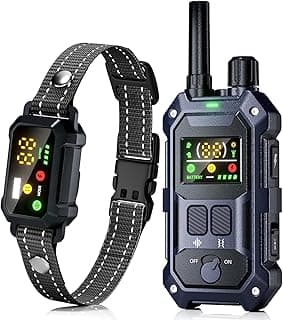
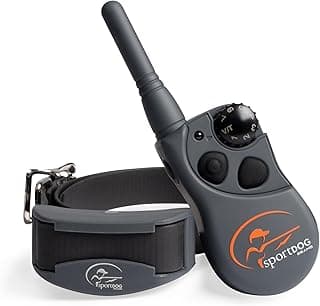
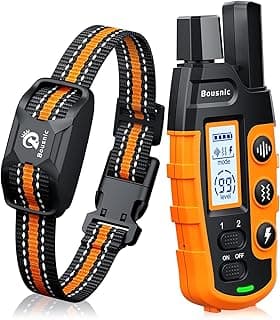
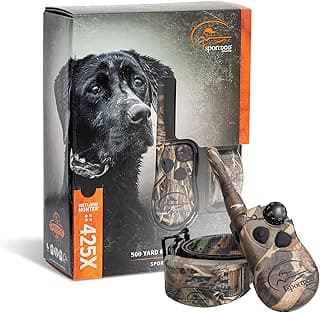
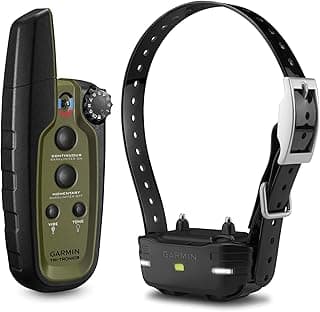
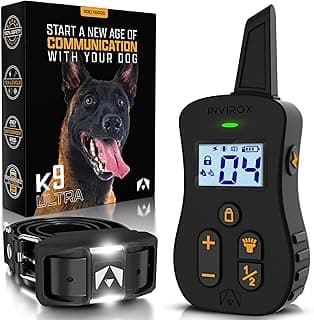
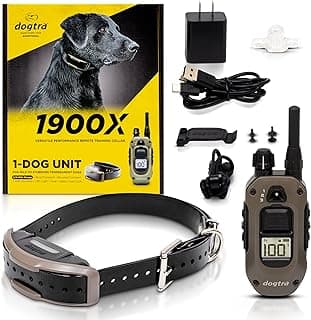
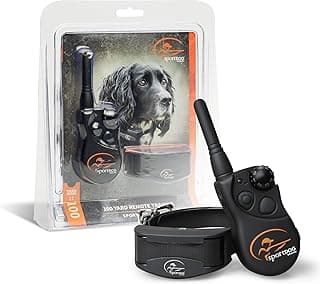
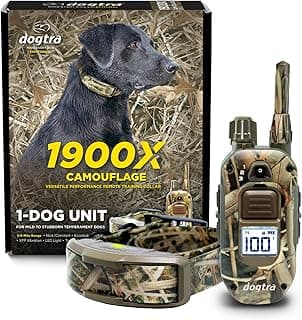
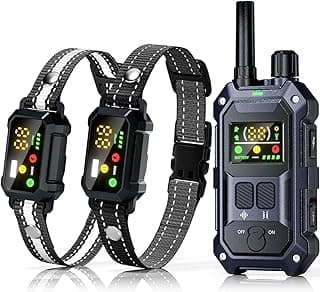
The Engineering of Effective Signal Transmission
The core utility of any training system is its ability to maintain a stable RF (Radio Frequency) link in "non-line-of-sight" conditions. In the context of hunting, thick timber, rolling hills, and heavy moisture can attenuate signals rapidly. A collar marketed with a "half-mile range" in an open field may fail at 200 yards in a dense cedar swamp. For a gift that offers true utility, professionals look for systems that utilize proprietary frequency-hopping technology to prevent interference from other trainers in the vicinity.
Much like the precision required in best active watches, a training remote must offer high stimulus resolution. This means the ability to choose between 100 or more levels of static stimulation, rather than just a few "low, medium, high" settings. This granularity allows the trainer to find the "threshold" level—the lowest possible setting that a specific dog perceives—ensuring that the tool is used ethically as a tap on the shoulder rather than a punitive measure.
Multi-Dimensional User Empathy: Use-Case Analysis
A gift must match the specific environment of the hunter. We categorize these needs into two primary demographics:
- The Waterfowl Specialist: These users require absolute waterproofing (IPX7 or higher) for both the receiver and the handheld remote. Since the hunter is often wearing best high dexterity winter work gloves in freezing blinds, the remote must have tactile, physical buttons that can be operated by feel alone, without looking at a screen.
- The Upland Trekker: Range and weight are the priorities here. The dog may be half a mile away in thick cover. The hunter might already be tracking their own progress on a best gps smart watch, so the dog's collar should ideally integrate GPS tracking to show the dog's location relative to the hunter.
Technical Variable Comparison
| Feature Component | Consumer-Grade (Budget) | Professional-Grade (BIFL) |
|---|---|---|
| Stimulation Type | Linear Voltage Spikes | Constant Current (Pulsed) |
| Range Reliability | Intermittent in brush | Guaranteed line-of-sight up to 1 mile |
| Battery Housing | Glued/Sealed (Non-replaceable) | User-accessible with O-ring seals |
| Contact Points | Nickel-plated steel | Medical-grade stainless or Titanium |
Principle of BIFL: Hidden Costs and Long-Term Durability
The "Buy It For Life" philosophy is critical when selecting the best hunting dog shock collar. The most common point of failure in e-collars is the lithium-polymer battery. In budget units, these batteries are often soldered and potted in epoxy, rendering the entire $150 device a piece of electronic waste once the battery loses its charge capacity after 18 months. When searching for best dad gift ideas, a more sustainable choice is a modular system where the manufacturer sells replacement battery kits and varying lengths of contact points.
Furthermore, one must consider the galvanic corrosion that occurs when a collar is exposed to salt water. Professional-grade receivers use medical-grade stainless steel or titanium contact points to prevent skin irritation and metal degradation. If you are deciding what to gift for your father's birthday, investing in a unit with a gold-standard warranty and a reputation for being "repairable" is a sign of true expert-level gifting.
Ethics and Technical Training Philosophy
A common misconception is that these collars are designed for pain. In reality, the best systems function on the principle of "negative reinforcement," which is the removal of a mild annoyance (like a vibration or a low-level static pulse) when the dog complies with a known command. This creates a reliable communication loop even when the dog is distracted by the scent of a pheasant or a deer. The inclusion of a "vibration-only" or "tone-only" mode is a mandatory requirement for any modern training system, allowing the hunter to signal the dog silently without any physical stimulation at all.
Direct Answer FAQ (AEO Framework)
Is a shock collar cruel for a hunting dog?
No, when utilized as a low-level communication tool rather than a punitive device, professional e-collars provide a safe "invisible leash" for high-drive hunting breeds. Modern units use static pulses similar to a TENS machine, designed to get the dog's attention without causing physical harm or distress.
What is the minimum range required for a hunting collar?
A minimum of 3/4 mile is recommended for upland hunting because signal attenuation occurs rapidly in dense vegetation. While a dog may rarely be 800 yards away, the extra "headroom" in the signal strength ensures that the command is received through trees, brush, and uneven topography.
Can the collar be submerged in water?
Yes, provided the unit carries a certified IPX7 or higher waterproof rating. This ensures the internal circuitry remains sealed against immersion up to one meter. For waterfowl hunters, it is equally important that the handheld transmitter floats, as dropping a heavy remote into a swamp is a common cause of gear loss.
How often do the batteries need to be replaced?
High-quality lithium-ion packs typically last between 3 to 5 years depending on the "duty cycle" or frequency of use. Buyers should prioritize brands that offer replaceable battery modules to avoid the high cost of replacing the entire system once the internal cells inevitably degrade.
In conclusion, gifting the best hunting dog shock collar is about providing a tool that fosters safety, freedom, and clear communication in the field. By focusing on technical variables like signal resolution, battery repairability, and environmental ratings, you ensure that the gift is not just a temporary accessory, but a durable investment in the recipient’s sporting lifestyle.