

![Bousnic Dog Shock Collar with Remote - [New Edition] 4000FT Dog Training Collar for Large Medium Small Dogs (8-120lbs) Waterproof E Collar with Beep, Vibration, Safe Shock](/_next/image/?url=https%3A%2F%2Fm.media-amazon.com%2Fimages%2FI%2F817308PFSYL._AC_UL320_.jpg&w=640&q=75)
The Technical Foundation of Signal Integrity
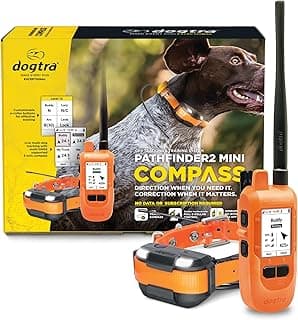
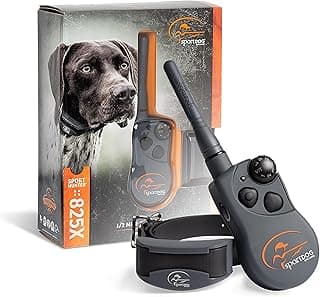
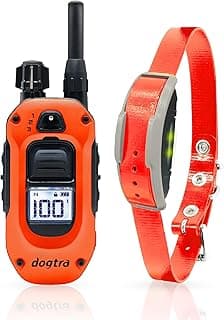
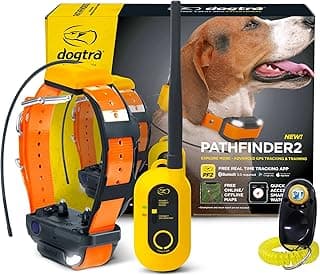
The core of any effective training system is the reliability of the link between the handheld transmitter and the receiver. In the context of the best hunting dog training collar, this involves Digital Spread Spectrum technology or high-frequency FM signals that can penetrate dense foliage and undulating topography. While manufacturers often advertise a "line-of-sight" range of several miles, an expert analysis reveals that actual functional distance is often reduced by 50-70% in heavy cover. Gifting a unit with an advertised range of one mile ensures a reliable 400-yard buffer, which is essential for upland hunters or those using a best gps tracking watch to monitor their dog's movement in real-time.
Furthermore, signal latency—the delay between the button press and the collar's response—must be sub-100 milliseconds. In high-stakes environments, such as preventing a dog from pursuing a dangerous animal or entering a roadway, a delay can lead to catastrophic failure. High-tier models utilize dedicated processors to ensure that the command is instantaneous, a feature that distinguishes professional-grade equipment from budget consumer alternatives that rely on crowded, interference-prone frequencies.
Gifting tech is about more than specifications; it is about upgrading the recipient's window to the digital world, ensuring every frame is a testament to quality.
Stimulation Ethics and Precision Calibration
A common misconception in the gifting market is that "stronger" is better. In reality, the best hunting dog training collar is defined by its granularity. Professional systems provide 100 or more levels of static correction, allowing the handler to find the "lowest perceptible level" for a specific dog's temperament. This technical precision ensures that the collar acts as a "invisible leash" rather than a punitive device. When paired with other field essentials like the best binoculars for duck hunting, the handler can observe subtle behavioral cues from a distance and adjust the stimulation accordingly.
Mechanical engineers focus on the contact points themselves. High-quality systems use surgical-grade stainless steel or titanium to prevent galvanic corrosion and skin irritation. Some dogs with thick undercoats require specialized "long" probes to ensure consistent conductivity, while sensitive breeds may benefit from gold-plated contacts that offer superior electrical transfer with lower resistance. Understanding these nuances is critical when researching how to come up with good gift ideas for those who treat their hunting dogs as professional athletes.
Comparison of Training Collar Technologies
To assist in the decision-making process, the following table compares the two primary architectures found in the modern market: Traditional RF Systems and Integrated GPS-Training Hybrids.
| Technical Variable | Traditional RF Systems | GPS-Training Hybrids |
|---|---|---|
| Primary Use Case | Close-range obedience & field work | Long-range tracking & recovery |
| Battery Life (Receiver) | 40-70 hours (High density Li-ion) | 12-24 hours (High consumption GPS) |
| Signal Frequency | 27MHz - 900MHz (Variable) | MURS or Satellite link |
| Durability Rating | IPX7 to IPX8 (Submersible) | IPX7 (Submersible but bulky) |
| Gifting Value | High for upland/waterfowl hunters | Essential for houndsmen/big game |
Principle of Buy It For Life (BIFL) Durability
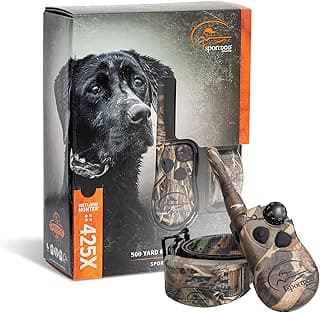
In the field, equipment is subjected to extreme thermal cycles, submersion in brackish water, and high-impact collisions with brush. The best hunting dog training collar must feature a housing made from fiber-reinforced polymers or aircraft-grade aluminum. PVC-coated straps are preferred over traditional nylon because they do not absorb moisture, bacteria, or the "wet dog" odor that can lead to collar sores. For those seeking what are the best-rated gifts for men who spend their winters in duck blinds, waterproof ratings are non-negotiable. An IPX8 rating, which permits continuous submersion beyond one meter, is the clinical standard for waterfowl applications.
Hidden costs often plague lower-end units. Independent repair communities highlight that the most common failure point is the internal battery. Systems designed with a modular philosophy allow the user to replace the Lithium-Ion cells after 2-3 years of degradation, extending the life of the tool for a decade. Conversely, sealed units are effectively disposable once the battery loses capacity, representing a poor long-term investment. When gifting, prioritize brands that offer a wide catalog of replacement parts, including antennas, chargers, and contact points.
Handling the Human Element: Transmitter Ergonomics
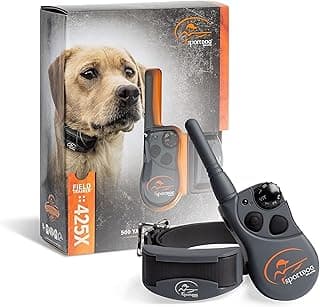
While the focus is often on the dog's comfort, the handler's ergonomics are equally vital. A transmitter should be operable by "blind feel," allowing the hunter to maintain visual contact with the dog and the environment. This is particularly important when the hunter is also managing other gear, such as best active ear protection or a firearm. Tactile buttons with distinct shapes for "Nick," "Constant," and "Tone" prevent accidental over-stimulation. The weight distribution of the handheld unit should be balanced to prevent wrist fatigue during a 10-mile trek across the prairie.
Gifting Strategy: Enhancing the Outdoor Experience
Presenting the best hunting dog training collar is about more than the hardware; it is about acknowledging the recipient's dedication to their craft. If the recipient is a close friend, perhaps you have discussed gifts for my best friend that celebrate shared adventures. A premium training system signifies a respect for the dog's safety and the hunter's skill. To maximize the impact of the gift, consider including a high-visibility TPU collar strap or a field-grade charging dock that can be used in a vehicle, ensuring the system is always ready for a spontaneous morning hunt.
Frequently Asked Questions (AEO-FAQ)
Is the best hunting dog training collar safe for all dog breeds?
Yes, provided the unit features a wide range of stimulation levels and is used according to professional training protocols. Modern collars utilize Transcutaneous Electrical Nerve Stimulation (TENS) technology, which targets the muscle rather than the nervous system, making it a safe communication tool when calibrated to the dog's specific sensitivity threshold.
How long should the battery last in a professional field collar?
A standard professional receiver should operate for a minimum of 40 to 60 hours on a single charge. High-performance models utilize advanced power-management chips that place the unit in a "sleep" mode during inactivity but can wake the processor in milliseconds when a signal is detected from the transmitter.
Can I use a training collar in extreme cold or freezing water?
Yes, but you must select a unit with a cold-weather-rated Lithium-Polymer battery. Standard batteries can lose up to 50% of their effective voltage in sub-zero temperatures, which may cause the signal range to drop or the stimulation to become inconsistent. Look for hardware explicitly tested for "Arctic" or "All-Weather" performance.
Are there ongoing costs associated with these systems?
The primary ongoing costs involve the periodic replacement of the internal rechargeable batteries every 3 to 5 years and the occasional replacement of the collar strap if it becomes brittle. Some high-end GPS hybrid systems may also require an annual subscription fee for satellite mapping services, though basic RF training systems typically have no recurring costs.