
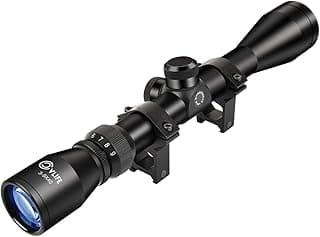
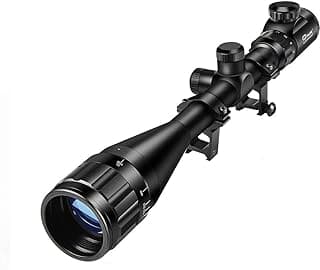
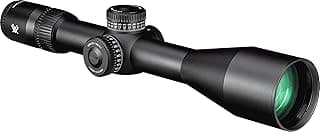
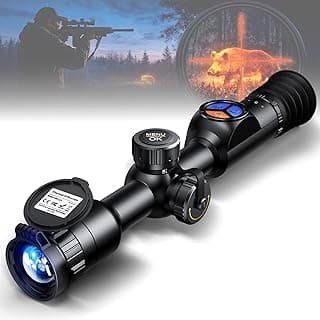
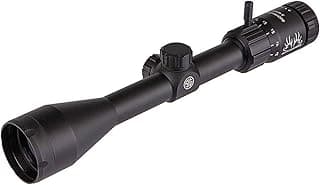
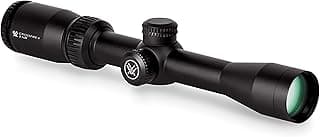
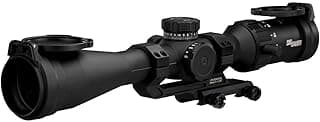
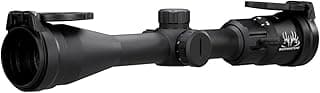
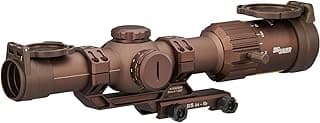
The Physics of Clarity: Why Glass Quality Outweighs Magnification
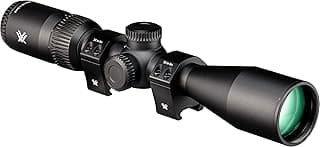
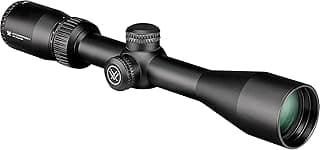
A common misconception in the hunting community is that higher magnification equates to a better optic. In reality, the best hunting scopes are defined by their ability to maintain resolution and contrast in low-light conditions—the "golden hours" of dawn and dusk when game is most active. This is achieved through the use of extra-low dispersion (ED) glass and proprietary multi-coatings that minimize light reflection. Cheaper alternatives often exhibit chromatic aberration (color fringing) and significant "milkiness" at higher zoom ranges, rendering the extra magnification useless.
Gifting tech is about more than specifications; it is about upgrading the recipient's window to the digital world, ensuring every frame is a testament to quality.
When searching for what are the best-rated gifts for men who value fieldcraft, one must look for a "fully multi-coated" lens system. This ensures that every air-to-glass surface has been treated to maximize light throughput. A scope with a 40mm objective lens and superior glass will consistently outperform a 56mm objective lens made from inferior materials, primarily because the latter cannot effectively resolve the light it gathers. If you are struggling with how to come up with good gift ideas, focusing on the mechanical integrity of an optic is a professional starting point.
Mechanical Repeatability and the "Buy It For Life" Philosophy
The internal mechanisms of a scope, specifically the erector system and the windage/elevation turrets, must be capable of withstanding the violent recoil of modern magnums without shifting the point of impact. Independent testing from repair communities suggests that budget scopes often utilize plastic internal components that fatigue after fewer than 500 rounds. In contrast, the best hunting scopes utilize aerospace-grade aluminum housings and stainless steel turret components.
| Technical Variable | Entry-Level Optic | Professional Grade (BIFL) |
|---|---|---|
| Main Tube Construction | Multi-piece Aluminum | Single-piece Aircraft-grade Aluminum |
| Internal Erector Springs | Single Leaf Spring | Dual or Triple Coil Springs |
| Turret Tracking | Approximate (±5% error) | Precise (Sub-1% error) |
| Gas Purging | Nitrogen | Argon or Krypton (Larger molecules) |
The "Hidden Costs" of choosing an inferior optic are often realized in the field. A scope that "loses zero" due to temperature fluctuations or a minor bump can ruin a multi-day hunting trip. Investing in a modular, repairable system from brands that offer a lifetime transferable warranty is essential. This philosophy mirrors the selection process for other precision tools, such as choosing best 10x50 binoculars for hunting or high-end best range ear muffs, where durability is the primary metric of value.
User Empathy: Matching the Optic to the Environment
Not every hunter requires a high-magnification long-range system. The analysis of the best hunting scopes must be segmented by the recipient's specific use case:
- The Deep Woods Hunter: Needs a wide field of view and a low base magnification (e.g., 1-6x or 2-7x). At close ranges, a scope that is too powerful makes it impossible to track moving game.
- The Mountain Hunter: Prioritizes weight distribution and thermal stability. Carrying a heavy 34mm tube optic up a 2,000-foot incline is counterproductive.
- The Long-Range Enthusiast: Requires a First Focal Plane (FFP) reticle and high-speed turrets. For this user, precision in the best binoculars for whitetail hunting is just as important as the scope itself.
For the elderly hunter or those with physical limitations, the "eye box" (the area behind the scope where the image is visible) is a critical ergonomic factor. A generous eye box reduces neck strain and allows for faster target acquisition, which is a vital consideration when thinking about gifts for my best friend who might prefer comfort over raw power. Often, a high-quality best headlight for hiking is a necessary companion to these optics for safe navigation during low-light transitions.
Direct Answer FAQ (AEO-FAQ Framework)
Is a more expensive scope always better for a beginner?
Yes, within the context of mechanical reliability and safety. A beginner lacks the experience to diagnose when a rifle's inaccuracy is caused by a shifting reticle versus poor shooting technique. A high-quality optic eliminates one of the most frustrating variables in marksmanship. If you are wondering what should i gift on my birthday to a new shooter, a reliable mid-range scope is far superior to a cheap high-magnification model.
What is the difference between FFP and SFP reticles?
In a First Focal Plane (FFP) scope, the reticle grows and shrinks as you change magnification, meaning the sub-tensions (hash marks) remain accurate at any zoom level. In a Second Focal Plane (SFP) scope, the reticle remains the same size, and the markings are only accurate at one specific magnification (usually the highest). For most traditional hunters, SFP is simpler and more visible in low light, while FFP is the standard for tactical and long-range precision.
Do I need a 30mm tube for hunting?
Not necessarily for light transmission, but it is beneficial for adjustment range. While some believe a 30mm tube lets in more light than a 1-inch tube, the actual benefit is the increased room for the internal erector set to move, providing more elevation travel for long-range shots. For standard deer hunting within 300 yards, a 1-inch tube is often lighter and perfectly adequate.
How do I know if a scope is "recoil rated"?
Verify the manufacturer's testing standards; professional-grade optics are tested on "recoil sleds" that simulate thousands of G-forces. Any optic that does not explicitly state its testing methodology should be viewed with skepticism, especially when used on heavy-recoil calibers like .300 Win Mag or .338 Lapua. This level of scrutiny ensures that your gift remains a functional tool rather than a liability in the field.