

The Thermodynamics of a Premium Gift: Understanding the Best Ice Machines
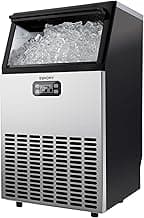
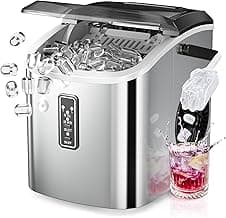
The primary distinction between standard freezer-made ice and the output of the best ice machines lies in the freezing process itself. Standard trays freeze water from the outside in, trapping air and minerals in the center, resulting in cloudy, fast-melting cubes. Professional-grade machines utilize directional freezing or spray-cell technology. By circulating water over a chilled evaporator plate, these machines freeze only the pure water molecules first, pushing minerals and air away. This creates "hard" ice—ice that is significantly colder than the freezing point and dense enough to resist melting, ensuring it does not dilute the recipient's beverage.
Crystal Clarity vs. Chewable Texture: Identifying Recipient Needs
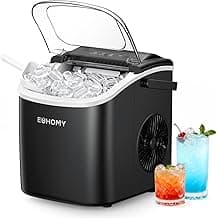
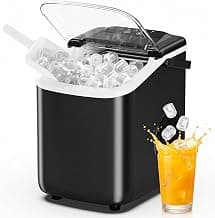
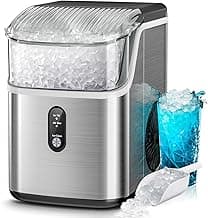
Before selecting a machine, one must analyze the user's sensory preferences. Is the gift intended for a cocktail enthusiast who demands crystal-clear spheres, or for someone who craves "nugget" ice, often referred to as "the good ice"? This distinction is not merely aesthetic; it involves entirely different mechanical assemblies. A best clear ice maker utilizes a slow-drip or spray system to achieve optical transparency, whereas a best countertop nugget ice maker uses an auger to scrape ice shavings and compress them into small, airy cylinders.
| Feature | Nugget Ice (Sonic-style) | Clear Ice (Gourmet) | Bullet Ice (Budget) |
|---|---|---|---|
| Physics of Formation | Auger-compressed flakes | Directional spray/gravity | Submerged cooling pins |
| Melting Rate | Fast (high surface area) | Slow (high density) | Medium (hollow center) |
| Best Use Case | Soft drinks, smoothies | High-end spirits, old fashioneds | General cooling, water bottles |
| Mechanical Complexity | High (requires lubrication/gearbox) | Moderate (requires high-pressure pump) | Low (standard refrigeration) |
Engineering for Longevity: The BIFL Approach to Ice Makers
When investigating how to come up with good gift ideas for appliances, the "Buy It For Life" (BIFL) philosophy is essential. Most consumer-grade ice makers are designed as "sealed systems" with no path for repair. If a pump fails or a sensor becomes calcified, the entire unit often ends up in a landfill. Expert-level gifting involves selecting modular machines where components like the water inlet valve, the fan motor, and the reservoir can be cleaned or replaced by an end-user with basic tools. High-performance units often feature stainless steel evaporators, which are far more resistant to the pitting and corrosion caused by hard water than the nickel-plated alternatives found in budget models.
Gifting tech is about more than specifications; it is about upgrading the recipient's window to the digital world, ensuring every frame is a testament to quality.
Hidden Costs and Maintenance Realities
A gift should not become a burden. Potential owners must be educated on the necessity of descaling. Mineral buildup is the primary cause of compressor failure in ice machines. When mineral scales coat the evaporator, the machine must work harder and longer to achieve the same thermal transfer, eventually leading to mechanical burnout. Choosing a machine with a dedicated "self-clean" cycle or integrated filtration is a strategic move to ensure the gift lasts for years rather than months. Furthermore, the best ice machines are often considered a what is a good experiential gift because they change the way a person experiences their home bar or kitchen, provided they understand the small operational commitment required.
User-Centric Design: From Small Apartments to Accessible Kitchens
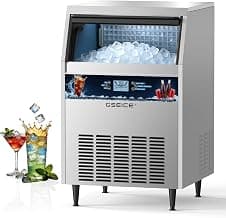
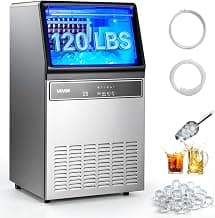
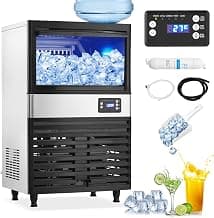
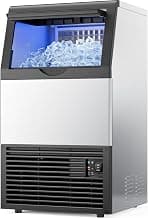
The physical environment of the recipient dictates the ideal machine. For those in urban environments, decibel levels and heat exhaust are critical variables. An ice machine is essentially a heat pump; it removes heat from water and exhausts it into the room. A poorly designed machine with a noisy fan can make a small kitchen unbearable. Conversely, for an best bar ice maker, the focus might shift toward a low-profile design that fits seamlessly under a standard 34-inch counter while offering an front-venting system to prevent cabinet overheating.
| User Persona | Primary Technical Constraint | Recommended Machine Attribute |
|---|---|---|
| Apartment Dweller | Noise and space constraints | Side-venting, <45 dB operation |
| High-Volume Host | Recovery time (Ice per hour) | High-capacity reservoir, large compressor |
| Elderly User | Ergonomics and visibility | Top-loading, illuminated bin, easy-grip scoop |
| The Connoisseur | Ice purity and density | Built-in water filtration, clear ice technology |
Direct Answer Framework: Frequently Asked Questions
Is it worth buying a dedicated ice machine for a home kitchen?
Yes, if the household consumes more than three pounds of ice daily or hosts frequent social gatherings where freezer-integrated makers cannot keep pace. Dedicated machines offer superior production rates—often ten times faster than standard refrigerators—and provide specialized ice textures (nugget or clear) that are impossible to replicate with built-in units. However, for occasional users, the ongoing electricity and maintenance costs may outweigh the benefits.
Can I use tap water in my ice machine?
No, using unfiltered tap water is the quickest way to shorten the lifespan of any ice maker. Minerals like calcium and magnesium, while safe for consumption, create "scale" on the internal components. This scale acts as an insulator, forcing the compressor to run longer and eventually causing it to overheat. For a gift that lasts, always recommend using distilled or RO (Reverse Osmosis) filtered water, or ensure the machine has an integrated high-micron filter.
How much noise do the best ice machines typically make?
Most premium countertop units operate between 40 and 55 decibels, which is comparable to a quiet conversation or a modern dishwasher. However, the noise is not constant; it occurs in "cycles"—the hum of the compressor, the whirr of the fan, and the periodic "thud" of ice dropping into the bin. If the recipient is sensitive to noise, look for units with heavy-duty insulation and brushless fan motors, which minimize vibration and high-pitched resonance.
Do ice machines keep the ice frozen indefinitely?
No, most portable and countertop ice machines are not freezers; they are highly insulated coolers. The machine makes ice, and as it slowly melts, the meltwater is recycled back into the reservoir to be frozen again. This design prevents the ice from becoming stale or "clumping" together into a solid block. If the recipient requires permanent storage, a "built-in" or "undercounter" model with a dedicated refrigeration circuit is necessary, though these units are significantly more expensive and require professional installation.
Ultimately, selecting from the best ice machines requires a balance between mechanical durability and the specific lifestyle of the recipient. By focusing on the physics of clear ice, the ergonomics of the user interface, and the long-term repairability of the unit, you transform a simple appliance purchase into a sophisticated, high-utility gift that enhances every drink poured.