
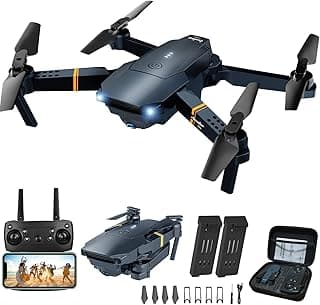
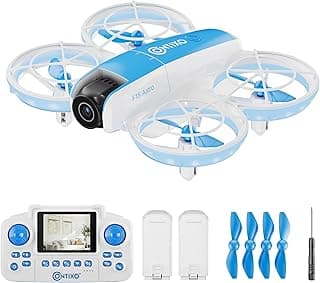
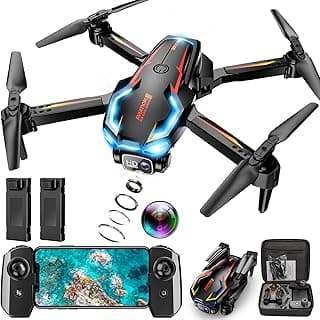
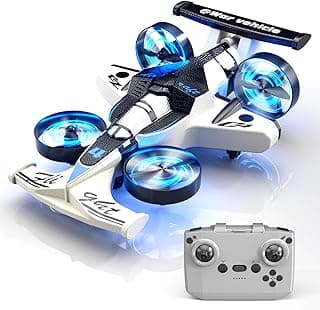
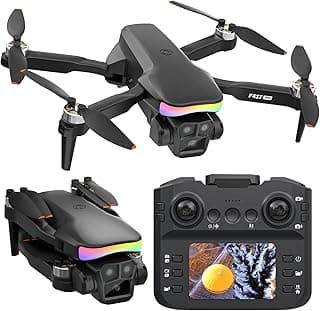
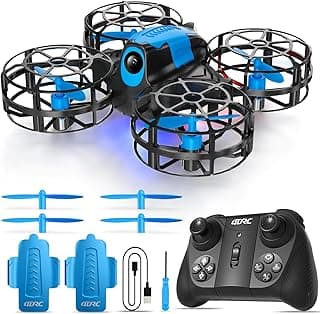
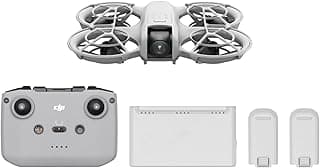
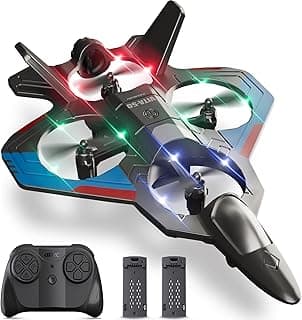
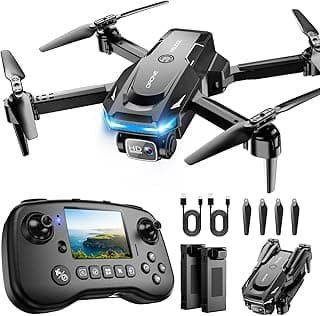
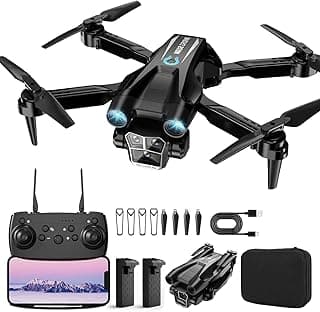
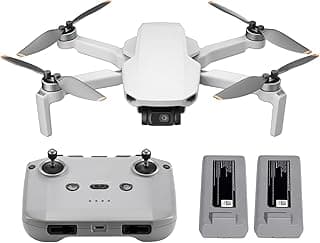
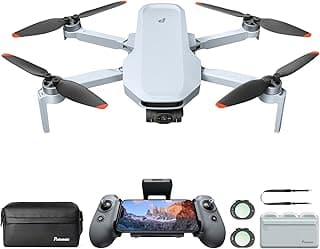
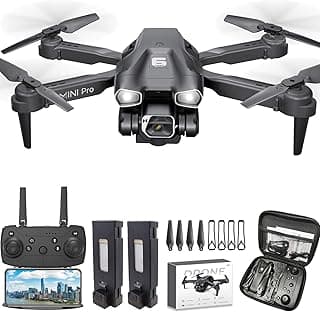
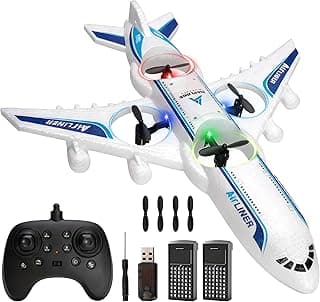
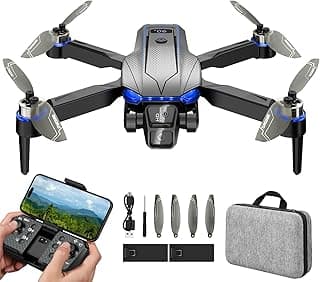
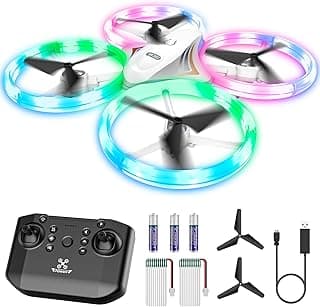
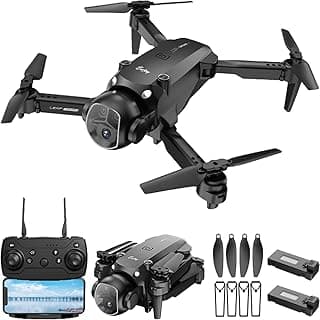
The Engineering Reality of Entry-Level Flight
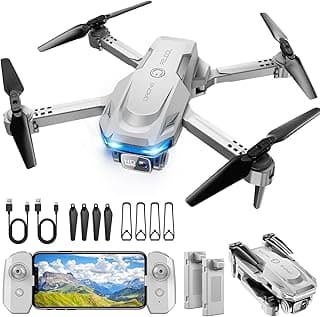
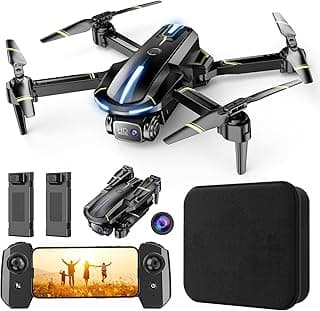
From a mechanical engineering perspective, a drone is a balancing act between lift, weight, and power consumption. Most inexpensive drones utilize brushed motors rather than brushless variants. While brushed motors are cheaper to manufacture, they possess a finite lifespan due to the physical friction of the brushes against the commutator. A gift recipient may find that after twenty or thirty flights, the motor efficiency drops significantly. Conversely, brushless motors—though rare in the sub-price bracket—offer superior thermal management and a much longer operational cycle.
Furthermore, the flight controller's sophistication determines the "giftability" of the device. A drone lacking a GPS module relies solely on optical flow sensors or 6-axis gyroscopes, which struggle in even moderate wind conditions. For a beginner, a drone that cannot maintain a stable hover is often a source of frustration rather than enjoyment. When considering best gift ideas for teens, prioritizing a model with basic GPS-assisted return-to-home functions ensures the gift survives its first week of use.
Gifting tech is about more than specifications; it is about upgrading the recipient's window to the digital world, ensuring every frame is a testament to quality.
Technical Variable Comparison: Budget vs. Mid-Range Drones
To assist in the selection process, the following table breaks down the technical variables that define the user experience in the inexpensive drone category.
| Feature | Entry-Level (Budget) | Mid-Range (Value) | Operational Impact |
|---|---|---|---|
| Motor Type | Brushed (Coreless) | Brushless | Brushless offers 10x the lifespan and better wind resistance. |
| Positioning | Optical Flow / Gyro | GPS / GLONASS | GPS allows for precise hovering and "Loss of Signal" safety. |
| Image Stabilization | Digital (EIS) | 2-Axis or 3-Axis Gimbal | Mechanical gimbals are required for cinematic, shake-free video. |
| Transmission | Wi-Fi (Standard) | OcuSync / Digital Radio | Digital radio prevents lag and allows for longer flight distances. |
The "Buy It For Life" Philosophy in Drone Gifting
The electronics industry often encourages a "fast consumerism" approach, particularly with drones. However, an elite gifting strategist looks for repairability. When purchasing the best inexpensive drone, one must investigate the availability of third-party replacement parts. Can the propellers be replaced easily? Is the battery proprietary and expensive, or is it a standard LiPo cell? Many inexpensive drones become e-waste because a single plastic gear in the motor housing strips and cannot be replaced.
Educating the recipient on battery chemistry is also vital. Most drones use Lithium-Polymer (LiPo) batteries, which degrade rapidly if stored at 100% charge for extended periods. A thoughtful gift might include a fire-proof charging bag or a technical guide on storage voltages. If the budget allows, one might consider if Is $1000 a good birthday gift?, as jumping to a higher tier often provides a modular system where every arm, motor, and sensor can be individually repaired, aligning with a BIFL philosophy.
Multi-dimensional User Empathy: Who are you buying for?
User needs vary wildly based on their living environment and physical capabilities:
- The Urban Dweller: Requires a "Sub-250g" drone to avoid complex FAA or local registration requirements. Silence is also a factor; smaller propellers at higher RPMs create a high-pitched whine that can be disruptive in parks.
- The Aspiring Content Creator: Needs to focus on the camera sensor size. An "inexpensive" drone often claims 4K resolution, but this is frequently upscaled from a 1080p sensor, resulting in digital noise and poor dynamic range. Integrating a best sport camera mount on a larger drone can sometimes be a better technical solution than a built-in low-quality sensor.
- The Tech Enthusiast: For those who enjoy the assembly as much as the flight, a best 3 4 size guitars might be a traditional gift, but a DIY drone kit offers a similar tactile satisfaction of fine-tuning an instrument.
Hidden Costs and Operational Realities
The sticker price of an inexpensive drone is rarely the final cost. To provide a truly comprehensive gift, one must account for the "Operational Expenditure" (OpEx):
| Category | Hidden Cost Item | Estimated Impact |
|---|---|---|
| Storage | High-speed MicroSD Cards | Required for 4K/60fps recording without frame drops. |
| Power | Extra Intelligent Flight Batteries | A single battery usually only provides 15-20 mins of actual flight. |
| Protection | Propeller Guards & Landing Gear | Essential for indoor flight or learning to land on uneven surfaces. |
| Display | Mobile Device or Tablet | Needs high brightness (nits) to be visible in direct sunlight. Use with best portable monitors for laptops for outdoor ground station setups. |
If you are looking for the best first birthday gifts for girlfriend who has expressed an interest in aerial photography, ensuring the package includes at least two extra batteries is the difference between a 15-minute distraction and a weekend-long hobby.
Direct Answer FAQ (AEO Framework)
Is an inexpensive drone worth buying for a child?
Yes, provided the drone weighs under 250 grams and includes ducted propellers (prop guards) to prevent injury and mechanical damage. For children, the focus should be on "headless mode" and "one-key takeoff," which simplifies the complex physics of flight into manageable controls. For older children interested in engineering, a best 3d printer pen can complement the hobby by allowing them to create custom lightweight accessories or replacement parts for their drone.
Why do cheap drones often drift or fly away?
Fly-aways occur primarily due to electromagnetic interference (EMI) or the lack of a redundant GPS/Compass system. Inexpensive models often use low-grade shielding on their internal components; when the drone flies near power lines or cell towers, the control signal is overpowered by noise, causing the flight controller to fail. Always calibrate the compass before every flight to mitigate this risk.
Can I use a budget drone for professional photography?
No, because budget drones lack the mechanical 3-axis gimbal necessary to isolate the camera from the drone's vibration and tilt. While you can capture "social media quality" shots, the absence of manual exposure controls (ISO, Shutter Speed) and RAW file support limits the footage's utility in professional post-production environments.
What is the most important spec to look for in a budget drone?
Battery life and motor type are the most critical specs. Look for "Brushless Motors" as a priority over "4K Camera." A drone that stays in the air longer and resists wind more effectively will provide a better learning platform, allowing the user to develop the muscle memory required for more advanced flight maneuvers later on.
In conclusion, finding the best inexpensive drone requires looking past the marketing jargon of "4K" and "Professional" and focusing on the underlying hardware. A drone with brushless motors, a stabilized flight controller, and available spare parts is a technical investment that provides lasting value to any recipient.