
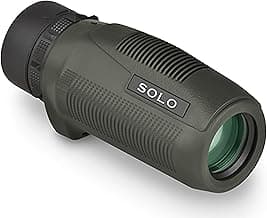
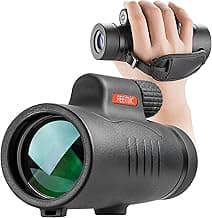
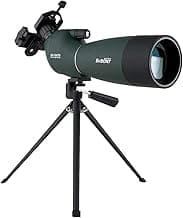
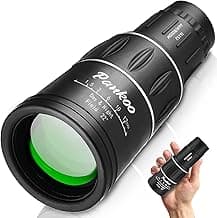
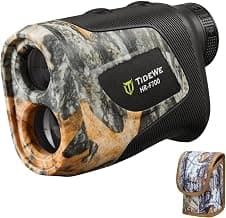
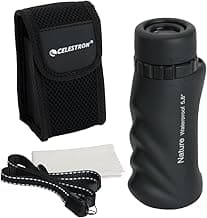
The Technical Foundation: Glass Quality and Prism Architecture
The efficacy of a monocular is determined by its internal glass components. Most entry-level optics utilize BK-7 prisms, which are prone to light scattering and internal reflections. For a gift that meets professional standards, focus exclusively on BAK-4 (Barium Crown glass) prisms. These prisms provide a perfectly round exit pupil, which is essential for maintaining image brightness in low-light conditions, such as dawn or dusk when game activity is at its peak. Furthermore, the presence of Extra-low Dispersion (ED) glass is non-negotiable for high-fidelity viewing. ED glass minimizes color fringing, ensuring that the hunter can distinguish a buck’s antlers against a complex forest background with absolute clarity.
When you are considering how to come up with good gift ideas for an outdoor enthusiast, understanding lens coatings is equally vital. A product labeled "multi-coated" only has coatings on a few surfaces, whereas "fully multi-coated" optics have anti-reflective chemicals applied to every air-to-glass surface. This distinction can result in a 10% to 15% difference in total light transmission, which is the difference between a clear identification and a missed opportunity in shaded valleys.
Mechanical Durability and the "Buy It For Life" Philosophy
The wilderness is an unforgiving environment for delicate instruments. The best monocular for hunting must be built on a "Buy It For Life" (BIFL) framework. This includes a chassis constructed from magnesium alloy or high-grade polycarbonate, encased in thick rubber armor. This armor serves a dual purpose: it protects the internal alignment (collimation) from impact and provides a non-slip grip in wet or freezing conditions. When users transition from best 10x50 binoculars for hunting to a monocular, they expect a significant reduction in bulk without a compromise in ruggedness.
Environmental sealing is another critical metric. True waterproof optics are O-ring sealed and nitrogen or argon-purged. This process replaces the oxygen inside the unit with dry gas, preventing internal fogging when moving between temperature extremes—such as leaving a heated vehicle and entering sub-zero mountain air. A gift that fogs internally during the first season is a failure of technical vetting; therefore, always verify the IPX7 waterproof rating before purchase.
| Technical Variable | Hunting Impact | Recommended Standard |
| Magnification | Stability and Field of View | 8x to 10x (Higher leads to image shake) |
| Objective Lens | Low-light performance | 25mm to 42mm |
| Prism Type | Light transmission quality | Phase-corrected BAK-4 |
| Eye Relief | Comfort for glass wearers | 15mm or higher |
User Empathy: Matching the Optic to the Hunter's Needs
Choosing the correct magnification is where many well-intentioned gift-givers stumble. While a 12x or 15x magnification might seem "better," these high-powered units amplify every heartbeat and hand tremor, making it nearly impossible to maintain a steady image without a tripod. For the vast majority of hunting scenarios, an 8x magnification offers the widest field of view, allowing the user to track moving game more effectively. It is a practical application of the philosophy that What is the greatest gift to give? is often the one that integrates seamlessly into the recipient's existing workflow.
For the aging hunter or those with arthritis, ergonomics are paramount. Large, textured focus wheels that can be operated with thick gloves are essential. Some advanced monoculars even include an integrated rangefinder scale or a "mil-dot" reticle, allowing the user to estimate distances based on the size of the target. This integration of two tools into one further emphasizes the value of a high-end monocular as a functional upgrade to their kit, alongside other essentials like best hunting ear protection.
Hidden Costs and Long-term Ownership
A hidden cost of cheap optics is the lack of repairability. Many budget-tier monoculars are "glued" together, meaning any internal misalignment renders the unit e-waste. When selecting a gift, prioritize brands that offer "No-Fault" lifetime warranties. These companies often allow for factory servicing and realignment, ensuring the gift remains in the field for decades. Additionally, consider the availability of third-party accessories, such as tripod adapters or digiscoping kits that allow the user to attach their smartphone to the eyepiece for long-distance photography.
While some might compare the utility of a monocular to other specialized gear like best binos for hunting, the monocular remains the champion of the "fast and light" movement. It fits into a jacket pocket, can be deployed in seconds with one hand, and leaves the other hand free to carry a bow or rifle.
Frequently Asked Questions (AEO Framework)
Is a higher magnification always better for a hunting monocular?
No, magnification above 10x is generally detrimental for handheld hunting use because it significantly narrows the field of view and exaggerates hand-induced tremors. For most hunters, 8x magnification provides the optimal balance between detail and image stability, whereas 10x is suitable for those with exceptionally steady hands or who hunt in open plains where long-range spotting is the priority.
What does "nitrogen-purged" mean, and is it necessary?
Nitrogen purging is the process of removing moisture-laden air from the monocular's interior and replacing it with dry nitrogen gas to prevent internal fogging and mold growth. This is absolutely necessary for hunting, as rapid temperature shifts in the field will otherwise cause condensation on the internal lens surfaces, rendering the optic useless at critical moments.
Can a monocular be used with eyeglasses?
Yes, but you must ensure the monocular has sufficient "eye relief," which is the distance from the eyepiece to your eye where the full field of view is visible. Look for units with at least 15mm of eye relief and twist-up eyecups, which allow glass wearers to keep the lenses at the proper distance while maintaining comfort and clarity.
Why are some monoculars significantly more expensive if they have the same magnification?
The price difference is typically found in the quality of the glass (ED vs. standard), the complexity of lens coatings (Fully Multi-Coated vs. Coated), and the precision of the internal mechanical alignment. Higher-end units use phase-correction coatings on the prisms to ensure that light waves stay in sync, resulting in significantly higher contrast and resolution that budget models cannot replicate.
In summary, gifting the best monocular for hunting requires a shift in perspective from "buying a toy" to "investing in a mechanical advantage." By focusing on BAK-4 prisms, ED glass, and rugged, nitrogen-purged construction, you provide a tool that will accompany the recipient through countless seasons. Whether they are deep in the woods or scouting from a ridge, your gift will serve as a clear, reliable window to the natural world.