

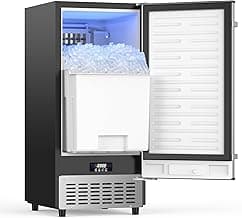
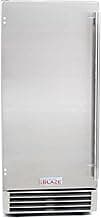
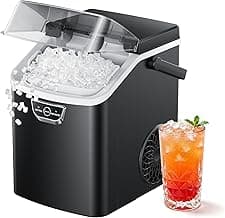
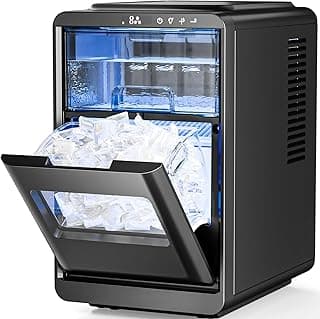
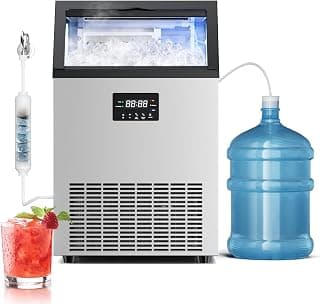
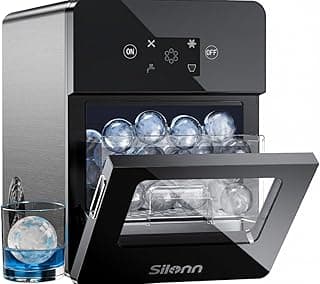
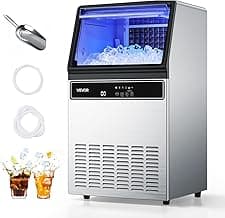
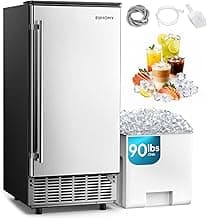
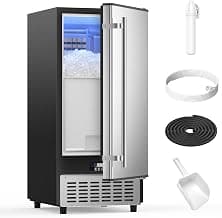
Engineering for the Elements: What Defines the Best Outdoor Ice Maker
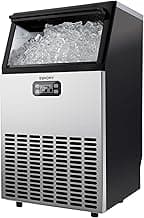
The primary differentiator for any "outdoor-rated" appliance is its ability to maintain a consistent internal temperature despite external thermal loads. A standard indoor unit utilizes insulation and compressor duty cycles optimized for a stable 70°F environment. In contrast, the best outdoor ice maker must utilize high-density closed-cell foam insulation and a reinforced compressor capable of operating efficiently when ambient temperatures exceed 90°F. Without these specific engineering upgrades, a machine will suffer from premature compressor failure and excessive energy consumption.
Material choice is equally critical. For coastal environments or areas with high humidity, only 304-grade stainless steel offers the necessary chromium and nickel content to resist "tea staining" or pitting corrosion. Many budget-friendly models utilize 430-grade steel, which lacks the molybdenum necessary for true outdoor durability. When evaluating options, it is helpful to compare these specifications against other high-end beverage solutions, such as the best bar ice maker, to see how insulation thickness varies between indoor and outdoor designs.
Gifting tech is about more than specifications; it is about upgrading the recipient's window to the digital world, ensuring every frame is a testament to quality.
The Logistics of Ice Production and Drainage
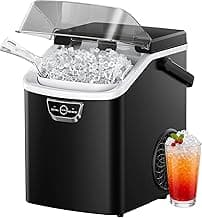
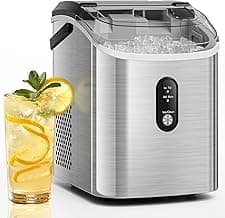
From a mechanical engineering perspective, ice production is only half the battle; the other half is melt management. Most high-capacity outdoor ice makers are "clear ice" machines. They work by cascading water over a sub-zero plate, freezing only the pure water molecules while allowing impurities and air bubbles to wash away. This results in dense, slow-melting cubes that do not dilute premium spirits—a feature often sought after in the best clear ice maker for home bar setups.
Because these machines do not function like freezers—they are essentially "coolers" that constantly melt and replenish ice to maintain freshness—a drainage solution is mandatory. You must determine if the gift recipient's patio has a gravity drain or if they require a model with an integrated condensate pump. A pump-equipped model allows for more flexible placement but introduces an additional mechanical point of failure that requires periodic descaling.
| Feature | Gravity Drain Models | Pump-Integrated Models |
|---|---|---|
| Installation Complexity | High (requires floor drain) | Moderate (can pump to a sink) |
| Maintenance Needs | Low (no moving drain parts) | High (pump requires descaling) |
| Placement Flexibility | Limited | High |
| Reliability | Maximum (physics-based) | Variable (mechanical pump) |
Multi-dimensional User Empathy: Matching the Machine to the Host
When selecting the best outdoor ice maker, one must consider the specific living conditions and physical limitations of the recipient. For example, the needs of a high-traffic party host differ significantly from those of an elderly couple who simply enjoys a nightly cocktail on the porch.
For the "Power Host," production volume is the primary metric. A unit that produces less than 30 pounds of ice per day will likely result in a mid-party trip to the convenience store. Conversely, for users in smaller urban dwellings or townhomes, the decibel rating of the compressor and the harvesting cycle becomes the most important factor. In a quiet backyard setting, the rhythmic "clink" of ice dropping can be disruptive if the machine is not properly sound-dampened. This attention to detail is what separates a generic gift from one that shows true consideration, much like choosing the best gift ideas for him based on his specific hobbies rather than a broad category.
The BIFL Philosophy: Hidden Costs and Repairability
The "Buy It For Life" (BIFL) movement emphasizes modularity and the ability to service internal components. Many modern appliances are built with "planned obsolescence" in mind, featuring sealed systems that cannot be repaired once the refrigerant leaks. When gifting the best outdoor ice maker, prioritize brands that offer accessible replacement parts, such as water valves, sensors, and cutting grids.
The hidden cost of ownership often lies in water filtration and electricity. A clear ice machine is a "water-wasting" device by design, as it flushes away mineral-heavy water during every cycle. Furthermore, without a high-efficiency compressor, the electricity costs of running a cooling unit in a 100°F garage or patio can be substantial. Educating the recipient on the importance of an inline water filter will not only improve the taste of the ice but will also extend the life of the machine by preventing scale buildup on the evaporator plate. This long-term perspective is essential when answering What is a good housewarming gift?—the best answer is one that doesn't become a financial burden to the new homeowner.
Assessing Gifting Value and Budget
High-quality outdoor appliances represent a significant investment. Potential givers often wonder What's a good housewarming gift amount? when looking at items that can range from several hundred to several thousand dollars. While budget models exist, they often fail within two seasons due to rust or compressor strain. It is often better to pool resources among several friends to purchase a mid-tier best commercial ice makers variant that is certified for outdoor use rather than buying a cheap consumer-grade unit that lacks a weather-proof rating.
Frequently Asked Questions
Can I use an indoor ice maker in my outdoor kitchen if it is under a roof?
No. Indoor units are not designed to handle the thermal loads of an outdoor environment, and their electronics lack the moisture-protection coatings required to prevent short-circuiting in humid conditions. Using an indoor unit outdoors typically voids the manufacturer's warranty immediately.
What is the difference between "nugget ice" and "clear ice" for outdoor use?
Nugget ice (soft, chewable) is produced by scraping ice off a cold cylinder, while clear ice is created through a cascading spray system. Nugget ice machines are generally more mechanically complex and prone to failure in high-heat outdoor environments compared to traditional clear ice makers.
How often does an outdoor ice maker need to be cleaned?
At minimum, a deep descaling and sanitization cycle should be performed every six months. In areas with hard water or high pollen counts, quarterly cleaning is recommended to prevent bacterial growth and maintain the efficiency of the freezing plate.
In conclusion, the best outdoor ice maker is a sophisticated intersection of refrigeration engineering and hospitality. By focusing on 304-grade stainless steel, proper drainage logistics, and a commitment to repairable components, you can provide a gift that truly elevates the recipient's outdoor living experience for years to come.