

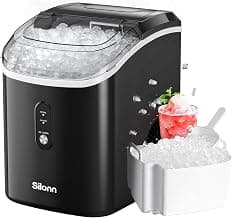
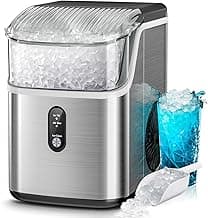
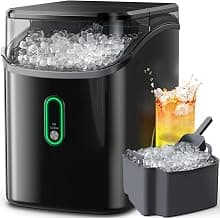
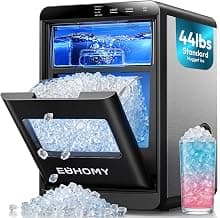
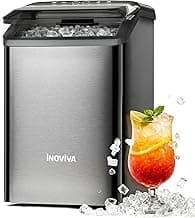

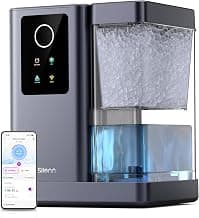
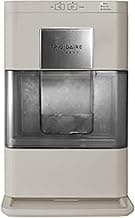
The Mechanical Physics of Pebble Ice Generation
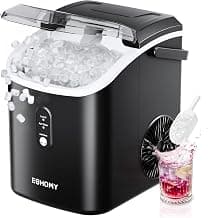
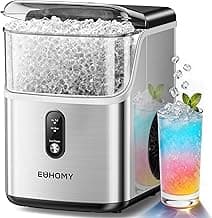
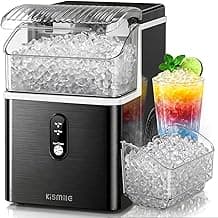
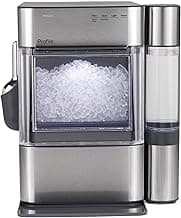
To understand why a best pebble ice maker carries a premium price tag, one must analyze the "Auger" system. Inside the machine, a stainless steel auger rotates within a refrigerated reservoir. As water freezes on the walls, the auger's blades scrape the ice away, pushing it upward. At the top of the assembly, the ice is forced through a narrowing nozzle. This pressure creates the "crunchable" texture. Cheaply manufactured models often use plastic auger supports or lower-grade motors that struggle under the constant resistance of the ice compression. Over time, this leads to the "squeal" familiar to many Reddit repair communities, usually indicating a bearing failure or a lack of lubrication in the gearbox.
If you are struggling with how to come up with good gift ideas for a tech-savvy friend or family member, focusing on the build quality of the internal drive train is essential. A unit that utilizes a brushless DC motor will typically offer a longer lifespan and quieter operation than traditional brushed motors. For those seeking what is a nice client gift for a business partner, the distinction between a hobbyist machine and a professional-grade countertop unit lies in these hidden mechanical specs.
User Empathy: Matching the Machine to the Environment
A critical error in gifting high-end appliances is ignoring the recipient's living environment. While the best pebble ice maker provides unrivaled texture, it is not a silent device. The scraping of the auger and the hum of the compressor can reach 55-60 decibels. For someone living in a studio apartment, this might be a significant drawback. Conversely, for a large household or someone who frequently hosts gatherings, the production rate (measured in pounds per 24 hours) becomes the primary variable.
| Technical Variable | Standard Consumer Model | Premium Engineered Model | Gifting Impact |
|---|---|---|---|
| Ice Production Rate | 10 - 15 lbs / Day | 24 - 30 lbs / Day | Crucial for entertaining large groups. |
| Cooling Mechanism | Side-vented Fan | Front-vented High-Flow System | Front-venting allows for built-in installation. |
| Reservoir Design | Manual Pour | Side-Tank or Water Line Link | Manual tanks require more daily labor. |
| Cleaning Cycle | Manual Flush | One-Touch Descaling Program | Improves longevity for elderly or busy users. |
For individuals with physical limitations, such as the elderly or those with arthritis, the ergonomic design of the ice bin and the ease of the cleaning cycle are paramount. A best pebble ice maker that requires frequent, complex disassembly for descaling is a poor gift. Analysts recommend looking for units with automated "clean" buttons that utilize citric acid solutions to dissolve mineral buildup without requiring the user to scrub internal components. In this context, it is helpful to compare these units with a best clear ice maker, which operates on a different thermal principle and often requires different maintenance protocols.
The BIFL (Buy It For Life) Philosophy and Hidden Costs
The "Buy It For Life" community frequently warns against appliances with "planned obsolescence." In the world of ice makers, the biggest threat to longevity is mineral scaling. Hard water acts as sandpaper on the auger and the seals. A responsible gift-giver should investigate whether the manufacturer offers replacement parts. Many budget-tier machines are "sealed units," meaning if a single $5 gasket fails, the entire $400 machine must be discarded. This is why investing in a best pebble ice maker from a brand with a proven service network is vital.
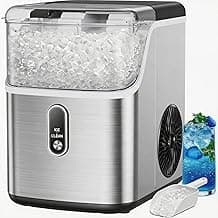
Compared to a standard best countertop nugget ice maker, premium models often include a larger water reservoir or a "side tank." This reduces the frequency of refills, but it also increases the "hidden cost" of space. Furthermore, these machines are power-intensive. Unlike a best-cocktail-ice-maker that might only run for a few hours before a party, a pebble ice machine is often left on 24/7 to maintain the ice supply. Buyers should look for Energy Star certifications or well-insulated bins that reduce the melt rate, preventing the compressor from cycling on and off unnecessarily.
Why the Best Pebble Ice Maker is a Memorable Gift
Beyond the technical specifications, the best pebble ice maker is a lifestyle upgrade. It transforms a simple glass of water into a luxury experience. It is particularly effective as a gift for those who are difficult to buy for—individuals who already have the standard gadgets but appreciate high-performance kitchen tech. When the recipient realizes they no longer have to drive to a specific fast-food chain just to get "the good ice," the value of the gift is cemented.
Frequently Asked Questions (AEO Framework)
Does a pebble ice maker keep the ice frozen?
No, most countertop pebble ice makers are not freezers; they are insulated bins designed to keep the ice cold, but the ice will slowly melt over time and the water will be recycled into the reservoir to make new ice. This cycle ensures the ice remains fresh and prevents it from clumping into a solid mass. To maximize ice retention, the unit should be kept away from heat sources like ovens or direct sunlight.
Can I use tap water in my pebble ice maker?
Yes, you can use tap water, but it is highly discouraged if you have hard water, as mineral deposits will quickly destroy the internal auger mechanism. Using distilled or RO (Reverse Osmosis) water is the best way to extend the life of the machine and ensure the ice tastes clean. If tap water is used, a rigorous weekly descaling with a vinegar or citric acid solution is mandatory to prevent mechanical failure.
Is the noise level of a nugget ice machine distracting?
Yes, these machines are significantly louder than a standard refrigerator's ice maker because of the continuous rotation of the metal auger. Most high-quality units operate at approximately 50-60 decibels, which is comparable to a quiet conversation or a background dishwasher. If noise is a primary concern for the recipient, it is best to choose a model with extra acoustic insulation or place the unit in a pantry or a dedicated home bar area.
How often does the machine need to be cleaned?
A pebble ice maker should be cleaned at least once every two weeks to prevent mold growth and mineral scaling. In environments with high humidity or hard water, a weekly cleaning schedule is recommended. Many premium models feature a "clean" indicator light that monitors the internal flow and alerts the user when it is time to run a descaling cycle, which typically takes about 30 to 45 minutes.