

Why Women Abandon Traditional Fitness
Women's lives don't accommodate gym schedules. Work hours vary. Kids need pickups. Elderly parents require care. Energy levels fluctuate with cycles. The gym model assumes consistent availability that most women's realities never provide. So they pay monthly fees while making it to the gym maybe twice, feeling guilty about wasted money while still not exercising.
Home equipment solves the scheduling problem but creates new ones. Treadmills dominate rooms. Weight sets cost hundreds and need dedicated space. Exercise bikes become expensive coat racks. For women in apartments or homes where every square foot serves multiple purposes, bulky equipment isn't practical regardless of intentions. The space requirements alone eliminate most home fitness options before motivation even factors in.
Resistance bands bypass all of this. They fit in drawers. Cost less than two months of gym membership. Work for complete strength training routines without occupying permanent floor space. For mothers trying to maintain health while managing households, this accessibility removes the barriers that make fitness theoretical rather than actual.
The best exercise equipment is the kind you'll actually use, which usually means the kind that removes reasons not to use it.
The Gift That Enables Rather Than Pressures
Giving someone gym membership feels like assignment. Join this gym, follow their schedule, commit to their system. Resistance bands communicate something different: here are tools for whenever you're ready, however you want to use them. That respect for autonomy while providing capability matters enormously to women who already field enough shoulds about their bodies.
There's no implied criticism in bands. You're not saying she needs to lose weight or isn't fit enough. You're providing equipment that supports strength goals she's mentioned, energy improvements she wants, or just the general desire to feel better that most people have but struggle to act on. The gift meets her where she is without demanding she become something else.
For friends navigating life transitions—new jobs, new cities, new responsibilities—resistance bands offer portable consistency. The equipment travels, so fitness routines can persist through changes that typically derail exercise habits. That stability during upheaval often matters more than the actual workout benefits.
Understanding Resistance Levels and Progression
Light resistance bands aren't just for beginners. They're for rehabilitation, mobility work, and muscle groups that don't need heavy load. Medium resistance serves most general strength work for women not training for specific athletic performance. Heavy bands challenge even strong women during certain exercises, providing intensity that builds real strength rather than just going through motions.
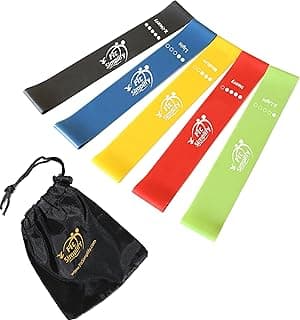
Sets typically include 3-5 bands at varying resistances. This variety matters because different exercises and different muscle groups require different challenges. Your legs can handle significantly more resistance than your shoulders. Bicep work needs lighter bands than squats. Having options prevents the too-easy or too-hard problem that makes single-resistance equipment useless.
Progression happens by changing bands, not buying new equipment. As you get stronger, move to heavier resistance. Need more challenge? Stack two bands together. This scalability means the gift grows with her capabilities rather than being outgrown within months, making the investment valuable across years of fitness development.
What Bands Actually Do
Resistance training builds muscle that metabolism depends on. Cardio burns calories during activity, but muscle burns calories constantly, even at rest. For women concerned about metabolism slowing with age, resistance work directly counteracts that decline in ways cardio alone never does. This matters especially as hormonal changes make maintaining muscle mass progressively harder.
Bone density improves through resistance exercise. Women face higher osteoporosis risk than men, particularly post-menopause. Weight-bearing exercise that stresses bones signals them to maintain and build density. This isn't vanity fitness—it's injury prevention and mobility preservation that determines quality of life in later decades.
Joint stability develops through controlled resistance movement. Knees that ache, backs that hurt, shoulders that click—these often stem from weak stabilizing muscles. Bands allow strengthening these smaller muscles safely, with resistance that challenges without overwhelming. For women managing age-related joint issues, this targeted strengthening enables maintained independence.
Strength isn't about appearance—it's about capability. Being able to lift, carry, move, function without assistance or pain.
Space and Storage Reality
Bands store anywhere. Drawer, basket, closet shelf—they require almost no dedicated storage. This matters enormously for women in smaller living spaces where every item needs justification. Equipment that folds to nothing when not in use doesn't compete with other space needs the way permanent equipment does.
Using them requires minimal area. Enough room to lie down or stand with arms extended—that's it. No dedicated workout room needed. Living room floor works. Bedroom corner works. Hotel rooms work during travel. This flexibility means exercise becomes possible in whatever space you have available right now rather than requiring special circumstances.
The portability enables consistency during disruption. Visiting family, business travel, moving between residences—life events that typically halt exercise routines don't affect resistance bands. Throw them in a bag and workout capability travels with you. That continuity prevents the "fell off the wagon" spiral that often ends fitness efforts completely.
Building Actual Routines
Bands enable full-body strength routines without additional equipment. Chest presses, rows, shoulder raises, bicep curls, tricep extensions, squats, lunges, leg lifts—every major muscle group can be targeted. This completeness means you're not investing in partial solutions that require supplementing with other equipment to build balanced strength.
Online resources provide unlimited workout guidance. YouTube channels, fitness apps, PDF guides—thousands of resistance band workouts exist free, covering every fitness level and goal. This removes the "I don't know what to do" excuse while allowing women to find instruction styles that actually resonate rather than being locked into one trainer's approach.
Short sessions deliver results that long gym visits don't always match. Twenty focused minutes of resistance work challenges muscles effectively. You don't need hour-long sessions to see improvement. For women constantly time-crunched, knowing that real progress happens in manageable timeframes removes the "not worth starting since I don't have enough time" excuse.
What Consistent Strength Work Enables
Daily tasks become noticeably easier. Carrying groceries, lifting children, moving furniture, hauling luggage—the strength gained through band work directly translates to real-world capability. New mothers especially benefit from this functional strength that makes the physical demands of childcare less exhausting.
Energy levels improve through activity that seems like it should deplete you. Regular resistance work actually increases energy throughout the day, reduces fatigue, and improves sleep quality. Women expecting to feel more tired from exercise often discover the opposite—they have more capacity for everything else when they're consistently active.
Confidence shifts when you feel strong. Not because of how you look—because of what you can do. Knowing you're capable, that your body responds to challenge, that strength is something you build rather than something you lose—this mindset change affects how women approach everything else requiring effort and persistence.
Pairing With Complete Fitness Systems
A fitness tracker for strength training adds data that motivates continued effort. Seeing workout frequency, tracking progress, recording achievements—this quantification appeals to women who respond to measurable improvement. The bands provide the tool; the tracker provides the feedback loop that encourages consistent use.
Yoga mats create defined workout spaces even in shared living areas. The mat signals "this is exercise time" to both you and others sharing space, establishing boundaries that make home workouts feel legitimate rather than squeezed into corners. Comfortable footwear for various activities completes the system by ensuring all movement feels supported rather than punishing.
Quality bands cost $20-50 for complete sets—less than one month of budget gym membership. That accessibility removes financial barriers that prevent many women from attempting fitness at all. You're not asking someone to make major investment; you're providing low-risk entry into strength training that might transform their health trajectory.
Why This Gift Keeps Working
Resistance bands don't break, wear out, or need replacement barring damage from misuse. Quality latex or fabric bands last years of regular use. That longevity means the gift provides value continually rather than briefly, supporting health across seasons and years rather than just initial enthusiasm periods.
They work regardless of starting fitness level. Complete beginners can use light bands for basic movement. Athletic women can challenge themselves with heavy resistance and advanced exercises. This universal applicability means you're not gambling on matching gift to ability—bands adapt to whoever uses them.
The simplicity removes learning curves that complex equipment requires. Pull, press, extend—the movements are intuitive even without instruction. While guidance helps maximize results, you can experiment and figure out effective exercises independently. This low barrier to entry means actually starting becomes easier than with equipment requiring tutorials before first use.
Fitness happens through accumulated small efforts over time, not dramatic gestures that fade. The equipment that enables those small efforts matters more than expensive solutions promising transformation.
What You're Really Giving
Resistance bands say: your health and strength matter independently of appearance or anyone else's standards. You're supporting capability, not conformity to aesthetic ideals. That focus on function over form resonates with women exhausted by fitness culture's emphasis on looking certain ways rather than feeling strong and capable.
The gift acknowledges that her time is limited and valuable. You're not suggesting she find hours for gym commutes—you're providing tools that work within the time she actually has. That practical respect for her real constraints demonstrates understanding that grand gestures requiring life rearrangement lack.
For wives managing households while trying to maintain their own health, bands enable the incremental progress that's actually sustainable. Not transformation promises that require unsustainable effort, but steady improvement that fits between everything else demanding attention. That realistic support for long-term wellbeing often means more than expensive equipment gathering dust.
Years from now, if she's consistently stronger, more capable, and healthier than when she started, she might not consciously connect it to receiving resistance bands. That's fine. The best fitness gifts succeed by enabling habits that become invisible routines rather than remaining conscious efforts. The bands just sit there, ready, removing barriers until working out stops being something you do and becomes just what you do.
Gifts are for making an impression, not just for the sake of it.
GiftsPick - Meticulous, Kind, Objective.