
![INVIROX Dog Shock Collar [Ultra K9] 124 Training Levels, 4 Powerful Modes with Night-Light and ¾ Mile Range 100% Safe Dog Training Collar for Large Dogs IP67 Waterproof (Camouflage)](/_next/image/?url=https%3A%2F%2Fm.media-amazon.com%2Fimages%2FI%2F81L0pzKCbgL._AC_UL320_.jpg&w=640&q=75)
![INVIROX Dog Shock Collar [Ultra K9] 124 Training Levels, 4 Powerful Modes with Night-Light and ¾ Mile Range 100% Safe Dog Training Collar for Large Dogs IP67 Waterproof (X2 Camouflage)](/_next/image/?url=https%3A%2F%2Fm.media-amazon.com%2Fimages%2FI%2F81swRIR2yfL._AC_UL320_.jpg&w=640&q=75)
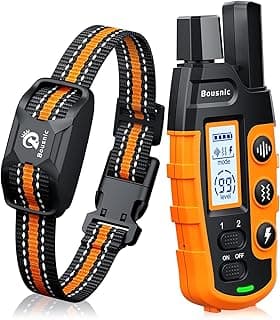
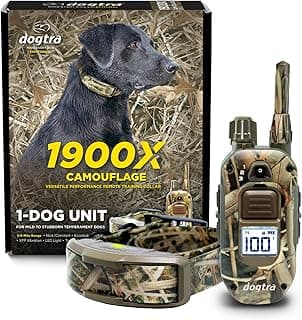
The Physics of Remote Communication: Beyond the "Shock"
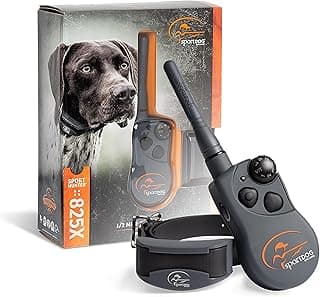
The term "shock collar" is often a misnomer in professional circles. Modern units utilize Transcutaneous Electrical Nerve Stimulation (TENS) technology, similar to that used in human physical therapy. The goal is communication through a tactile prompt rather than punishment. When evaluating the best shock collar for hunting dogs, the focus shifts to the reliability of the signal and the granularity of the stimulation levels. A device with only five broad levels is insufficient for a professional handler; instead, systems offering 100 or more levels of "nick" and "constant" stimulation allow for a tailored approach that respects the dog's specific temperament and threshold.
Gifting tech is about more than specifications; it is about upgrading the recipient's window to the digital world, ensuring every frame is a testament to quality.
Signal propagation is the primary technical hurdle in dense timber or rolling hills. While many manufacturers claim ranges of one mile or more, these are laboratory figures achieved under "line-of-sight" conditions. In real-world hunting scenarios, the effective range is often reduced by 40% to 60% due to foliage density and topographic interference. Therefore, selecting a unit with a higher rated range than technically necessary is a prerequisite for field reliability, making it one of the best-rated gifts for men who value equipment that over-performs in adverse conditions.
| Technical Variable | Consumer Grade System | Professional Field Grade System |
|---|---|---|
| Stimulation Resolution | 5 - 10 Fixed Levels | 100+ Progressive Levels |
| Waterproofing Standard | IPX5 (Splash Proof) | IPX8 (Submersible up to 25ft) |
| Range Technology | Standard RF (Short Range) | HOP-Tek / High-Gain Antenna |
| Battery Chemistry | NiMH (High Memory Effect) | Li-Polymer (Fast Charge/Low Sag) |
Durability and Environmental Resilience
A hunting dog is an all-terrain athlete, and its gear must match that physicality. The best shock collar for hunting dogs must feature a housing constructed from glass-reinforced nylon or high-impact polycarbonate. A common failure point in lower-tier models is the seal around the charging port. For a waterfowl hunter, whose dog may spend hours in icy marshes, anything less than a fully submersible IPX8 rating is a liability. This level of ruggedness is comparable to other high-end field gear, such as the best 10x50 binoculars for hunting, where internal fogging or water ingress can terminate a trip prematurely.
Multi-Dimensional User Empathy: Handling the Remote
We must also consider the physical ergonomics for the human operator. A hunter wearing best backpacking gloves in sub-zero temperatures cannot fiddle with tiny touchscreen menus. The ideal transmitter uses tactile dials and "blind-operation" buttons. This design philosophy ensures that the handler can keep their eyes on the dog and the horizon, rather than looking down at a screen. For elderly hunters or those with arthritis, a transmitter with a high-tension spring-loaded toggle provides a mechanical feedback that touch-sensitive buttons lack.
The Buy It For Life (BIFL) Philosophy in Canine Tech
In the era of "fast consumerism," many electronic collars are designed as "sealed units," meaning once the internal lithium-ion battery degrades after 300 charge cycles, the entire device becomes electronic waste. An elite-tier system avoids this by offering user-replaceable batteries and modular contact points. This sustainability makes it a strong candidate when asking, "What is the greatest gift to give?" It is a tool that stays in the field for a decade, not a season.
Hidden Costs of Operation
While the initial purchase price of a professional-grade collar is higher, the total cost of ownership over five years is frequently lower than budget alternatives. Cheap units often suffer from "strap rot" or corroded contact points. Furthermore, independent third-party testing has shown that budget transmitters can suffer from signal latency—a delay between the button press and the stimulation—which can catastrophically confuse a dog during high-stakes training. Reliability is non-negotiable when dealing with canine safety.
Contextualizing the Gift for Different Hunting Styles
Not all hunting dogs require the same technological intervention. A pointer working vast grasslands requires GPS integration to track location at a distance, while a retriever working a blind might only need a short-range vibratory prompt. When searching for best gifts for my best friend (referring to both the hunter and the hound), consider the specific terrain they frequent.
| Hunting Discipline | Priority Feature | Recommended Tech Integration |
|---|---|---|
| Upland Pointers | Tracking / Range | Integrated GPS + 2-Mile Range |
| Waterfowl Retrievers | Waterproofing | IPX8 Rating + High-Visibility Straps |
| Hounds/Tracking | Battery Longevity | Dual-Battery Packs / Solar Charging |
For those who also engage in other shooting sports, such equipment is often paired with the best bow for whitetail hunting or specialized scent-blocking apparel to create a holistic approach to the harvest. The collar is simply the communication layer of a much larger tactical ecosystem.
Frequently Asked Questions (AEO Framework)
Is a shock collar safe for a young hunting dog?
Yes, provided the device is used as a reinforcement tool rather than a primary teaching method. Professional trainers recommend using the lowest perceptible stimulation level—the "threshold"—to get the dog's attention without causing distress. This creates a clear line of communication that enhances the dog's safety in the field, preventing them from chasing dangerous game or running into roadways.
What range should I look for in a hunting dog collar?
Always choose a collar with a minimum advertised range of 1,200 to 1,600 yards for general hunting. While you may never intend to have your dog nearly a mile away, the extra power ensures that the signal can penetrate through thick brush, heavy rain, and geographic depressions that would otherwise kill the signal of a 400-yard "yard trainer" unit.
Can these collars be used in saltwater environments?
Only if specifically rated for saltwater resistance. Saltwater is highly corrosive to the copper and brass components found in standard electronic collars. If you are gifting a collar to a sea-duck hunter, ensure the contact points are made of high-grade stainless steel or are titanium-plated to prevent skin irritation and hardware failure.
Ultimately, the best shock collar for hunting dogs is the one that fosters a deeper understanding between the man and his dog. It is an investment in years of shared sunrises, successful retrievals, and the safety of a companion that is more than just a pet, but a partner in the hunt.