
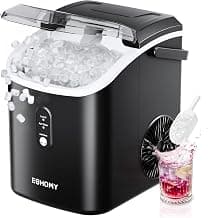
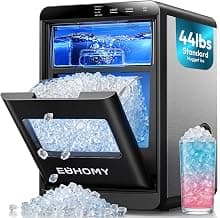
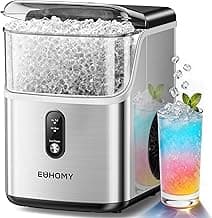
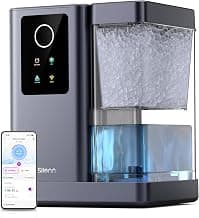
The Physics of the Best Sonic Ice Maker: Why Quality Varies
From a mechanical engineering perspective, the longevity of an ice maker is dictated by the quality of its compressor and the material of its auger. Budget-tier models often utilize plastic gears that degrade under the constant torque required to compress ice. In contrast, a high-performance system uses stainless steel components to ensure the internal friction does not lead to premature mechanical failure. When scanning best countertop ice maker reviews, consumers should prioritize units that emphasize "sealed systems" to prevent refrigerant leaks—a common point of failure in cheaper imports.
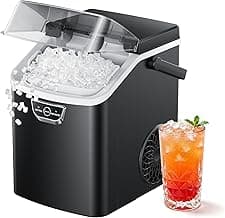
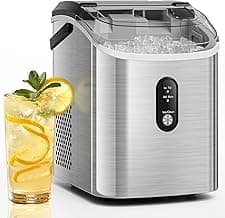
Furthermore, noise level is a critical variable. Because these machines operate with a moving auger and a cooling fan, they can generate significant decibel levels. A machine intended for a quiet kitchen or an open-concept living room should ideally operate below 55 decibels. This is why a best countertop nugget ice maker is often evaluated not just on how much ice it makes, but how unobtrusively it does so.
Gifting tech is about more than specifications; it is about upgrading the recipient's window to the digital world, ensuring every frame is a testament to quality.
For those looking for best gift ideas for a woman who enjoys hosting or has a penchant for specialized coffee and cocktail culture, the nuance of ice texture cannot be overstated. Sonic-style ice is functionally superior for blended drinks and iced lattes because its surface area-to-volume ratio provides rapid cooling without the dilution associated with larger, harder cubes.
Strategic Comparisons: Technical Specifications for Gift Buyers
To help you navigate the marketplace, the following table breaks down the core technical variables found in leading models. Remember that production capacity is often measured in an ideal environment (70°F ambient temperature); real-world performance in a warm kitchen may vary by 10-15%.
| Feature | Entry-Level Consumer Model | Premium Residential Model | Small Commercial Unit |
|---|---|---|---|
| Daily Output | 20 - 24 lbs | 30 - 38 lbs | 50+ lbs |
| Auger Material | Hardened Plastic / Composite | Stainless Steel | High-Grade Stainless Steel |
| Cleaning Cycle | Manual / Periodic | Automated One-Touch | Sensor-Based Descaling |
| Drainage Requirement | Manual (Internal Reservoir) | Internal Recirculation | External Gravity/Pump Drain |
| Average Decibels | 60 - 65 dB | 50 - 55 dB | 55 - 60 dB |
While the data suggests that more expensive units are superior, the "best" choice depends heavily on the recipient's space. A best commercial nugget ice machine might provide endless ice, but it often requires a dedicated water line and a floor drain, making it an impractical gift for a standard apartment dweller. Conversely, a portable unit fits on any counter and requires no plumbing, though the owner must manually refill the water reservoir.
Buy It For Life: Maintenance and the Hidden Costs of Ownership
One of the most significant oversights when purchasing an ice maker is the "hidden cost" of maintenance. Because these machines rely on water, they are susceptible to mineral buildup (scale) and microbial growth. If the recipient lives in an area with hard water, the internal sensors and cooling coils can become encrusted in months, leading to a "squealing" noise or total motor seizure. When you are trying to figure out how to come up with good gift ideas, consider including a high-quality water filtration pitcher or a specialized descaling kit alongside the machine.
A true "Buy It For Life" (BIFL) philosophy suggests avoiding machines with integrated touchscreens that cannot be repaired. Instead, look for models with tactile buttons and modular internal components. If a pump fails after two years, a modular machine allows for a $30 replacement part, whereas a non-repairable unit becomes e-waste. This level of foresight is what is a good gift for someone moving into a new house—something that adds value without eventually becoming a maintenance burden.
Gifting Empathy: Tailoring the Machine to the Recipient
The best sonic ice maker for a family of five is drastically different from the one suitable for a solo professional.
- The Socialite: Needs high production speed. Look for units that can produce the first batch of ice in under 15 minutes.
- The Health Conscious: Nugget ice is a favorite for those who use it for hydration throughout the day. Ease of cleaning is the top priority here to ensure ice remains sanitary.
- The Tech Enthusiast: Modern units offer Bluetooth or Wi-Fi connectivity, allowing the user to schedule ice production from their phone, ensuring the bin is full just as they arrive home from work.
Frequently Asked Questions
Is sonic ice just crushed ice?
No. Crushed ice is simply a large block of ice that has been mechanically fractured into smaller, sharp pieces. Sonic ice, or nugget ice, is created by compressing fine ice flakes into a small cylinder, resulting in a soft, airy texture that is gentle on teeth and absorbs drink flavors.
Do nugget ice makers need a dedicated water line?
No, not all of them do. Many of the most popular consumer models are "side-tank" or "reservoir-fed," meaning you manually pour water into a tank. However, premium built-in models do require professional plumbing to ensure a constant supply of filtered water.
How often do I need to clean a sonic ice maker?
Every two to four weeks is the recommended interval. Even with filtered water, biofilm and mineral deposits can accumulate. Most high-quality machines have a "clean" mode that circulates a citric acid or vinegar solution through the internal auger and lines to prevent mold and ensure the ice tastes fresh.
Why are sonic ice makers so much more expensive than bullet ice makers?
The price difference is due to the complexity of the mechanism. A bullet ice maker simply dips a freezing element into water. A nugget ice maker requires a motor, an auger, a freezing cylinder, and high-pressure extrusion points, all of which require tighter tolerances and more durable materials to function correctly over time.
Ultimately, choosing a sonic ice maker as a gift is an investment in the recipient's daily comfort. By focusing on mechanical durability, noise output, and ease of maintenance, you ensure that your gift remains a centerpiece of their kitchen for years to come, rather than a fleeting novelty.