

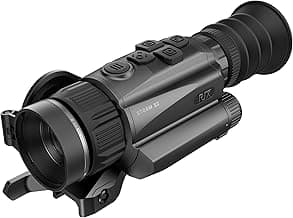
The Technical Foundations of Thermal Performance
To identify a truly high-performance thermal device, a mechanical and electrical assessment of the internal components is required. The core of any unit is the microbolometer, the sensor that converts thermal radiation into an electrical signal. For those who prioritize best gift ideas for him, understanding these specifications ensures the gift remains functional and relevant for years rather than becoming obsolete after a single season.
Sensor Resolution and Pixel Pitch
Sensor resolution is the primary driver of image clarity. A standard entry-level sensor typically offers 384x288 pixels, whereas professional-grade units utilize 640x480 or higher. However, the resolution must be viewed alongside pixel pitch, measured in microns (µm). A smaller pixel pitch (e.g., 12µm vs. 17µm) allows for higher magnification without the image becoming overly pixelated. In technical terms, a smaller pitch provides a higher angular resolution, which is critical for identifying specific species at long ranges.
Thermal Sensitivity (NETD)
Noise Equivalent Temperature Difference (NETD) measures the sensor's ability to distinguish between minute differences in temperature. It is expressed in millikelvins (mK). A device with an NETD of <25mK can detect thermal variations even in low-contrast environments, such as during a rainstorm where all objects are at a similar temperature. High NETD values result in "flat" images where the background blends into the target, rendering the device less effective for precise identification.
| Technical Variable | Standard Utility Grade | Professional Precision Grade |
|---|---|---|
| Microbolometer Resolution | 384 x 288 px | 640 x 480 px or 1024 x 768 px |
| Pixel Pitch | 17 µm | 12 µm |
| Refresh Rate | 30 Hz | 50 Hz - 60 Hz |
| NETD (Sensitivity) | <40 mK | <25 mK |
| Objective Lens Material | Chalcogenide Glass | Germanium (Ge) |
Gifting Strategy: Matching Tech to the Hunter
Choosing the best thermal imaging for hunting requires a deep understanding of the recipient's environment and physical needs. It is often helpful to consider how to come up with good gift ideas by analyzing the specific challenges they face in the field. For instance, a hunter in the vast plains of the Midwest requires high base magnification and a narrow field of view, while a hog hunter in the dense woods of the South needs a wide field of view and a fast refresh rate to track moving targets.
Ergonomics and Accessibility
For older hunters or those with limited manual dexterity, the physical interface is as important as the sensor. Large, tactile buttons that can be felt through gloves are mandatory. Furthermore, for those who might ask what do engineers like for gifts, the answer often lies in the elegance of the menu system. A "trigger-free" design—where the device does not require constant manual calibration (NUC)—is a major ergonomic advantage. The weight distribution of the device also matters; front-heavy units can cause wrist fatigue during prolonged glassing sessions.
Gifting tech is about more than specifications; it is about upgrading the recipient's window to the digital world, ensuring every frame is a testament to quality.
The Buy It For Life (BIFL) Philosophy
In the world of high-end optics, fast consumerism is a common pitfall. Many budget thermal units use integrated lithium-ion batteries that cannot be serviced. Once the battery loses its capacity to hold a charge—usually after 300 to 500 cycles—the entire unit becomes a "brick." A sustainable, BIFL-compliant thermal device should ideally utilize modular power systems, such as replaceable 18650 or CR123A batteries. This design ensures that the electronic longevity of the device is not limited by the chemical degradation of a single cell.
Maintenance and Hidden Costs
Prospective buyers must consider the "total cost of ownership." This includes firmware updates that optimize sensor algorithms and the availability of third-party repair services. Devices housed in magnesium alloy are significantly more durable than those in reinforced plastics, offering better thermal dissipation for the internal electronics. If the recipient already owns a best compound bow for hunting, they likely appreciate the value of high-quality, modular gear that requires periodic maintenance rather than replacement.
Advanced Features: Beyond the Image
Modern thermal units often come with integrated Laser Rangefinders (LRF). In total darkness, depth perception is non-existent. A thermal image might show a bright heat signature, but without an LRF, it is nearly impossible to tell if that signature is a small animal at 50 yards or a large animal at 200 yards. This integration is far more valuable than auxiliary features like Wi-Fi streaming or internal video recording, which often drain battery life without adding to the primary utility of the hunt. While some might opt for a best night vision game camera to scout, thermal optics are for the actual engagement, providing a live, high-fidelity feed of the thermal landscape.
Optics and Aperture
The lens material for thermal devices is almost exclusively Germanium, as standard glass is opaque to long-wave infrared radiation. A larger objective lens (e.g., 50mm vs. 35mm) with a lower f-number (e.g., f/1.0) allows more thermal radiation to reach the sensor, resulting in a crisper image. This is a critical distinction for those who have previously used best 10x50 binoculars for hunting and expect a similar level of light-gathering performance in their night-time gear.
Frequently Asked Questions
Is thermal imaging better than night vision for hunting?
Yes, for the purpose of target detection, thermal imaging is superior because it highlights heat signatures against a cool background, making it impossible for animals to remain camouflaged. While digital night vision provides better topographical detail, it requires an infrared illuminator that can act as a beacon to other animals and can be blocked by fog or light rain.
Can thermal imaging see through glass?
No, thermal imaging cannot see through glass because glass reflects long-wave infrared radiation. If you point a thermal camera at a window, you will see a thermal reflection of yourself and the room behind you rather than what is outside. This is a fundamental physical limitation of the technology that all users must understand before purchase.
How long do thermal sensors last?
The uncooled microbolometers used in modern hunting thermals typically have an operational lifespan of 10,000 to 15,000 hours. For the average hunter, this equates to decades of use. The limiting factor is rarely the sensor itself, but rather the failure of internal batteries, screen burn-in on the OLED display, or the degradation of the rubber seals protecting the internal electronics from moisture.
Selecting the best thermal imaging for hunting is an investment in safety, ethics, and technical precision. By focusing on sensor quality, power modularity, and environmental durability, you can provide a gift that transcends the typical consumer electronics lifecycle, offering a truly professional tool for the modern woodsman.