
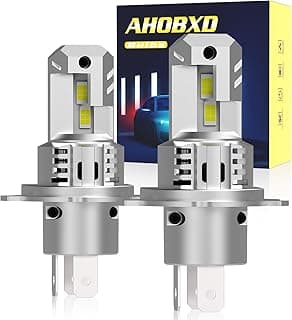
Technical Variables in LED Selection
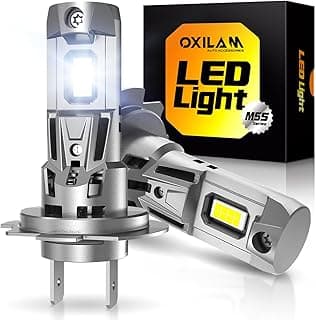
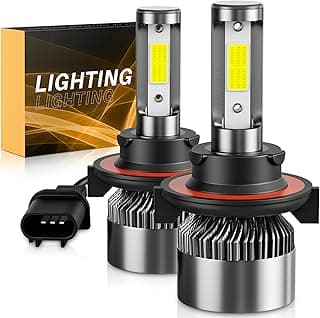
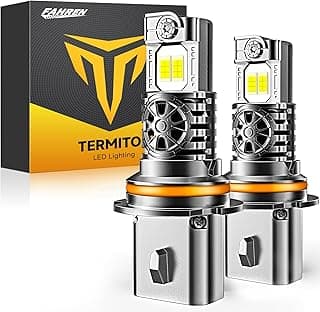
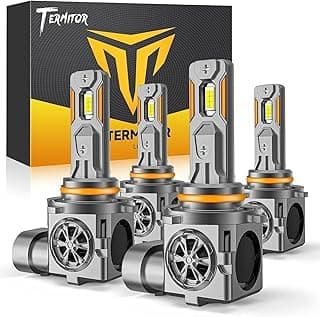
Choosing a gift in the automotive lighting category requires an understanding of thermal management and chip architecture. Most high-performance bulbs utilize either COB (Chip on Board) or CSP (Chip Scale Package) LEDs. As an expert analyst, I recommend CSP chips for most gift recipients. They offer a much smaller surface area, allowing them to more closely emulate a halogen filament's thin line, which results in a sharper cut-off line and better beam throw. When browsing for best gift ideas for him, focusing on these technical nuances ensures you are giving a component that actually improves the vehicle's performance rather than just changing its aesthetic.
Furthermore, the cooling mechanism is the primary determinant of a bulb's lifespan. LEDs are highly sensitive to heat; if the junction temperature exceeds its design limits, the diode will experience "lumen depreciation," where the light output permanently dims. The following table compares the two primary cooling architectures found in modern LED upgrades:
| Feature | Active Cooling (Fan-based) | Passive Cooling (Heat Sinks) |
|---|---|---|
| Thermal Dissipation | High; utilizes a micro-fan to force air over aluminum fins. | Moderate; relies on surface area and material conductivity. |
| System Footprint | Larger; requires clearance for the fan housing. | Compact; often uses braided copper or aluminum ribbons. |
| Potential Failures | Mechanical fan failure can lead to rapid overheating. | No moving parts, making it more durable in dusty environments. |
| Suitability | High-wattage bulbs requiring maximum brightness. | Fog lights or sealed housings with limited space. |
The Empathy of Ergonomic Lighting
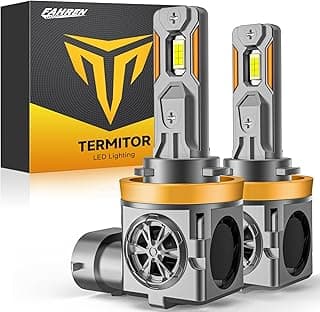
When selecting a lighting gift, one must consider the diverse living conditions of the recipient. For an elderly driver, the shift toward a 6000K "Cool White" temperature can significantly improve contrast, making it easier to identify road signs and hazards. This isn't just about power; it's about matching the light spectrum to the human eye's peak sensitivity. If the person you are gifting to drives a specific model, looking into the best h11 led headlight bulbs or the best 9006 led headlight bulbs is essential to ensure the plug-and-play compatibility that prevents frustration during installation.
Small-apartment dwellers who may do their own basic car maintenance will appreciate a "compact driver" design. Many high-intensity LEDs come with an external "ballast" or driver box. While these often provide better power regulation and CANbus compatibility (preventing dashboard error lights), they can be difficult to tuck away in tight engine bays. Seeking out "all-in-one" designs, where the circuitry is built into the bulb base, is a nod to the user's practical limitations.
Buy It For Life (BIFL) and Hidden Costs
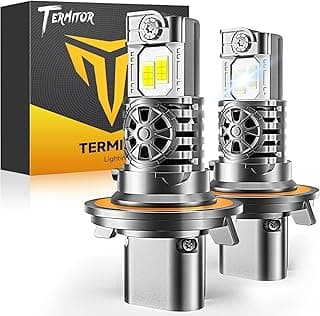
The "Buy It For Life" philosophy is difficult to apply to lighting because all diodes eventually degrade. However, the best aftermarket led headlight bulbs approach this by using modular components and heavy-duty materials like 6063 aviation-grade aluminum. Before purchasing, one must analyze the hidden costs of operation. This includes the potential need for CANbus decoders or anti-flicker modules. Some modern vehicles monitor the current draw of the headlights; because LEDs draw significantly less power than halogens, the car's computer may assume the bulb is burnt out and trigger a warning light or a "strobe" effect.
You should also warn the recipient about the "lumen trap." A bulb that produces 20,000 lumens but has a poor thermal substrate will likely drop to 12,000 lumens within twenty minutes of driving as the thermal protection kicks in. A truly great best headlight gift is one that maintains a stable, consistent output for the duration of a three-hour night drive, not just the first thirty seconds in the driveway. This stability is the hallmark of professional engineering.
Gift Selection Guidance for Various Personas
If you are deciding what is the greatest gift to give a commuter, consider the environment. In rainy or foggy climates, a bulb with a slightly warmer color temperature (around 4000K to 5000K) actually provides better visibility because blue light (6000K+) tends to reflect off water droplets, creating a "glare wall." Conversely, for those in dry, clear desert environments, the high-contrast 6000K white light is unmatched for long-distance spotting of wildlife or debris.
For high-density pet owners who often take their dogs on night trips to the park, lighting is a secondary safety layer. Ensuring that the peripheral "ditch lighting" is wide enough to catch the reflective eyes of an animal before it enters the roadway is a specific technical requirement that high-quality LED chips fulfill much better than aging halogen reflectors.
Frequently Asked Questions
Are aftermarket LED bulbs a direct replacement for halogens? Yes, the majority of the best aftermarket led headlight bulbs are designed to be "plug-and-play," meaning they use the same factory connector as your original bulbs, though some vehicles may require additional decoders to prevent dashboard errors.
Will these bulbs blind oncoming drivers? Not if they are engineered correctly; high-quality LEDs are designed with a precise "optical center" that aligns with the vehicle's housing to maintain a safe beam cut-off line, whereas cheap bulbs scatter light indiscriminately.
How long do these bulbs actually last in real-world conditions? While manufacturers often claim 30,000 to 50,000 hours, a realistic expectation for high-quality units is 5 to 7 years of regular night driving, provided the cooling fans or heat sinks are kept free of heavy mud and debris.
Do I need to replace both bulbs if only one is dim? Yes, you should always replace headlight bulbs in pairs to ensure a consistent color temperature and light pattern across the road, which reduces eye strain and improves depth perception.
Ultimately, when we look at the big picture of gifting, we find that utility and safety often provide the most lasting satisfaction. To some, it may just be a car part, but to the recipient, it is a clearer path home. As we explore the vast landscape of options, we realize that providing someone with the tools to navigate their world more safely is, in many ways, the answer to what is the greatest gift to give.