










The Shift from Play to Mastery in Pre-Adolescent Gifting
For many years, the default strategy for holiday shopping was centered on pure amusement. However, data from behavioral observation suggests that ten-year-olds derive more sustained satisfaction from gifts that allow them to interact with the adult world in a controlled manner. This is why many families find that the most popular gift to give on Christmas for this age group has shifted from simple figurines to complex building sets or entry-level technology. These items respect the child's intelligence and desire for autonomy.
The transition to age ten marks a psychological shift where the child seeks to prove their capability within their social circle and family hierarchy.
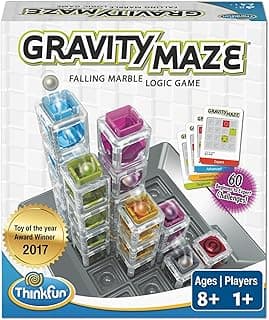
Selecting an appropriate item involves evaluating the child's current "zone of proximal development." A gift that is too simple will be discarded as "babyish," a common concern for ten-year-olds who are sensitive about their status. Conversely, a gift that is too complex can lead to frustration and a sense of failure. The objective is to find a challenge that is achievable with effort. This logic applies whether one is considering best lego games for a fan of construction or a sophisticated digital tool.
| Gift Category | Developmental Benefit | Relationship Impact |
|---|---|---|
| Skill-Based (e.g., Musical Instruments) | Encourages discipline and neural plasticity. | Builds trust through parental support of a long-term goal. |
| Social-Based (e.g., Board Games) | Develops strategic thinking and sportsmanship. | Creates shared memories and family bonding time. |
| Technical-Based (e.g., Electronics) | Promotes digital literacy and problem-solving. | Requires a collaborative safety and usage agreement. |
Balancing Technology and Responsibility
In the contemporary landscape, digital devices are often at the top of a child's wish list. For a ten-year-old, receiving a piece of technology is often viewed as a "rite of passage." It signals that the adults in their life trust them with more sophisticated and expensive equipment. If the child has shown interest in photography or flight, a best 100 dollar drone can serve as an excellent introductory tool to learn the basics of aerodynamics and spatial awareness without the excessive risk of a professional-grade model.
However, the introduction of technology must be handled with a focus on responsibility rather than just consumption. Behavioral scientists suggest that the most successful gifting of electronics includes a "social contract" where the child learns about maintenance, battery care, and digital boundaries. This approach ensures that the gift remains a tool for growth rather than a source of family conflict. It is also a precursor to the best gift ideas for teens, where technical independence becomes more pronounced.
Physical Activity and Social Dynamics
While digital interests are significant, the importance of physical development cannot be overlooked. Ten-year-olds are often at the peak of their interest in team sports or individual physical pursuits like skating or cycling. Providing the best sport shoes or high-quality outdoor equipment serves two purposes: it encourages a healthy lifestyle and provides a vehicle for social interaction with peers. At this age, being able to participate in a neighborhood game of soccer or basketball is vital for social integration.
Furthermore, social play is evolving. They are now capable of understanding complex rules and long-term strategies. This makes the transition to advanced table-top gaming appropriate. Engaging with best board games for 12 year olds, even at age ten, can provide a stimulating environment for family interaction that moves beyond the screen. These games require negotiation, logic, and the ability to handle both victory and defeat with grace.
Gifts are not merely objects: they are the physical manifestation of a caregiver's recognition of the child's evolving persona.
Analyzing Emotional Value vs. Material Value
A recurring theme in community discussions, particularly on platforms like Reddit, is the debate between the "flashiness" of a gift and its lasting impact. A material-heavy approach focuses on the immediate thrill of the "unboxing" moment. While this creates a high initial dopamine response, it often leads to the "hedonic treadmill," where the child quickly loses interest and seeks the next novelty. The emotional value approach, however, prioritizes the experience or the narrative attached to the gift.
A good experiential gift, such as tickets to a specialized workshop or a membership to a local science center, often carries more long-term weight than a physical toy. This is because experiences are integrated into the child's memory and identity. When a child receives a gift that requires the participation of a parent or friend, the "material" object becomes a secondary vessel for the "emotional" connection being built. For a ten-year-old, who is beginning to value their place in the family hierarchy, the time spent using the gift is often more significant than the cost of the item itself.
This balance shapes the long-term relationship between the giver and the recipient. A child who perceives that their parents have listened to their specific, perhaps niche, interests feels seen and validated. Conversely, generic gifts, regardless of price, can inadvertently signal a lack of attention to the child's personality. Therefore, the most successful gifts are those that reflect a deep understanding of the child's current fascinations.
Direct Answer Framework: Frequently Asked Questions
Is age ten too young for a smartphone as a Christmas gift?
Yes, for most children, a fully featured smartphone may be premature due to the complexities of social media and unsupervised internet access: however, a basic communication device or a tablet with robust parental controls can be a suitable middle ground. The decision should be based on the child's demonstrated level of responsibility and the specific safety needs of the family. If the goal is simply entertainment, consider alternatives that provide digital engagement without the risks of open connectivity.
How much should I realistically spend on a Christmas gift for a ten-year-old?
The appropriate amount is determined entirely by your household budget and the intended message of the gift, rather than a fixed market standard. Research into gifting psychology indicates that the recipient's appreciation is not linearly correlated with the price tag after a certain baseline of quality is met. Focus instead on the "utility-to-price" ratio. A durable, high-quality item that will be used for several years is a better investment than an expensive but fragile novelty that will break within weeks.
What is a good alternative to toys for children who have everything?
Experiences and skill-building kits are the most effective alternatives for children who already possess an abundance of physical toys. Consider subscription boxes focused on science experiments, art supplies for a specific medium, or even a contribution to a savings goal for a larger future purchase. These options promote "delayed gratification," a psychological trait that is highly beneficial for children to develop as they approach their teenage years.
In conclusion, finding the best christmas gifts for ten year olds involves a transition from seeing them as "children" to seeing them as "individuals." By focusing on mastery, social connection, and the balance between material and emotional value, gift-givers can provide items that are not only enjoyed on Christmas morning but are valued for years to come.








