
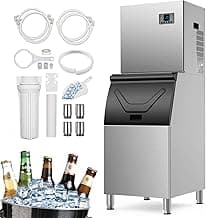
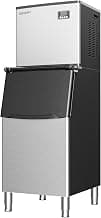
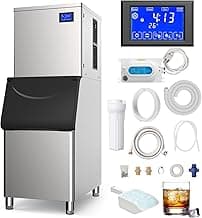
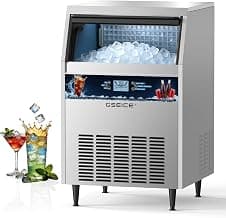
Thermodynamic Efficiency and Machine Selection
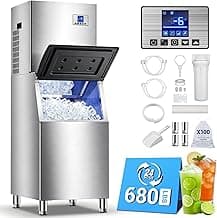
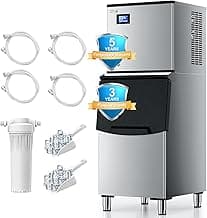
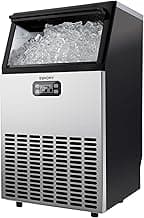
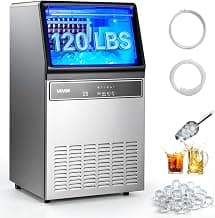
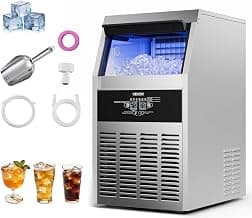
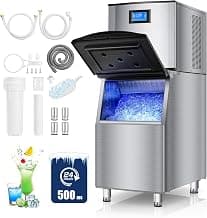
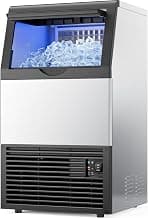
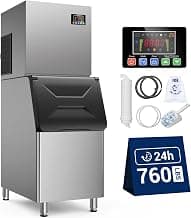
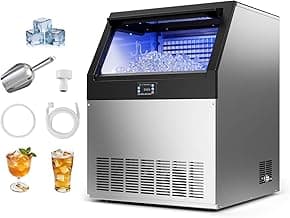
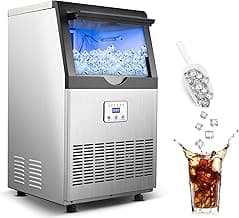
Selecting the best commercial ice maker requires an objective analysis of its cooling mechanism. Most units utilize either air-cooled or water-cooled condensers. Air-cooled units are the industry standard for their ease of installation and lower utility costs, though they require significant clearance for airflow and can increase the ambient temperature of a room. Water-cooled units, conversely, are significantly quieter and more efficient in hot environments, but they consume a staggering amount of water—a hidden operational cost that must be weighed against their quiet operation.
When considering this as a gift, one must analyze the physical environment of the recipient. For a residential setting where space is a premium, the best built in ice maker models offer a compromise between commercial power and kitchen-friendly dimensions. However, for a true enthusiast, nothing replaces the sheer volume and crystal-clear quality of a standalone commercial head and bin combination.
Gifting tech is about more than specifications; it is about upgrading the recipient's window to the digital world, ensuring every frame is a testament to quality.
| Ice Type | Primary Use Case | Production Environment | Maintenance Level |
|---|---|---|---|
| Full Cube | Slow-melting for cocktails | High-end bars/restaurants | Moderate (requires frequent descaling) |
| Nugget/Sonic Ice | Chewable, absorbent ice | Healthcare/Cafes/Home use | High (complex extrusion system) |
| Flake Ice | Food displays/Medical use | Seafood markets/Therapy | Moderate |
| Gourmet Clear | Aesthetic presentation | Luxury home bars | High (slow production, high clarity) |
The "Buy It For Life" (BIFL) Philosophy in Ice Production
From a sustainability and repairability standpoint, the best commercial ice maker stands in stark contrast to the disposable nature of modern consumer electronics. Professional machines are built with modular components; the compressor, water pump, and evaporator plates are designed to be individually serviced or replaced. This modularity ensures that the machine does not become e-waste due to a single component failure. When evaluating What is a good executive gift?, a commercial appliance that promises a decade or more of service is a statement of enduring quality.
However, the hidden costs of ownership must be transparently addressed. Any high-output ice machine is susceptible to mineral accumulation (scale) and microbial growth. Without a robust water filtration system, the lifespan of the evaporator can be halved within three years. Owners must factor in the cost of high-quality sediment and carbon filters, which should be replaced every six months to maintain the machine's efficiency and the ice's purity. For those moving into a new space, this machine can be categorized among the best gift ideas for housewarming for those building a professional-grade home kitchen.
User Empathy: Designing for Different Environments
The needs of a small apartment dweller differ vastly from a suburban homeowner or a business owner. For the home enthusiast, the noise of a commercial harvest cycle—where a sheet of ice drops into a bin—can be disruptive. In these scenarios, the best clear ice maker for home bar search should focus on units with extra insulation or those that utilize gravity-drain systems rather than noisy internal pumps. Conversely, in a commercial kitchen, the priority shifts entirely to the "recovery rate"—how fast the bin refills after the morning rush.
Maintenance and Long-Term Reliability
The mechanical integrity of an ice maker is primarily determined by its cleaning cycle. Modern units often feature "clean" lights and automated descaling programs, but these are no substitute for a manual deep clean. Independent testing indicates that machines with stainless steel evaporators tend to resist corrosion and pitting significantly better than those using nickel-plated copper, which can flake over time and introduce metallic tastes into the ice.
Furthermore, the drainage system is a critical, often overlooked technical variable. Commercial machines generate a significant amount of "purge" water—water that carries away impurities during the freezing process. If the recipient's location does not have a floor drain within a few feet of the machine, a condensate pump will be required. These pumps are frequent points of failure and add an additional layer of mechanical complexity to the setup.
Commercial grade performance is not just about quantity; it is about the precision of the thermal transition, ensuring every cube is free of trapped gasses and impurities.
Frequently Asked Questions
Does a commercial ice maker require a dedicated water line? Yes, every commercial ice maker requires a permanent connection to a potable water supply. Unlike portable units, these machines are designed for continuous operation and cannot be manually filled. A dedicated shut-off valve is also highly recommended for emergency maintenance.
Can I install a commercial ice maker in a residential garage? Only if the garage is climate-controlled. Most commercial units have a strict ambient temperature operating range, typically between 50°F and 100°F. Operating outside these parameters will force the compressor to work overtime, leading to premature failure and voiding most manufacturer warranties.
Is the ice from a commercial machine actually clearer than home ice? Yes, because commercial machines typically use a "directional freezing" process where water is sprayed or flowed over a chilled plate. This allows air bubbles and impurities to be washed away rather than trapped inside the cube, resulting in the crystal-clear density found in professional bar settings.
How much electricity does a commercial ice maker consume? Consumption varies, but a mid-sized commercial unit can draw between 500 and 1,000 watts during the freeze cycle. It is vital to ensure the circuit can handle the initial "surge" current required to start the compressor, which can be significantly higher than the running wattage.
In conclusion, gifting the best commercial ice maker is a gesture that combines technical sophistication with immense practical value. Whether it is intended for a professional venue or as the crown jewel of a residential renovation, understanding the engineering behind these machines ensures that the gift remains a functional, reliable asset for years to come.