

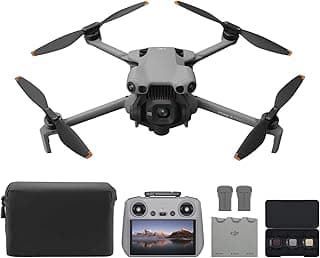
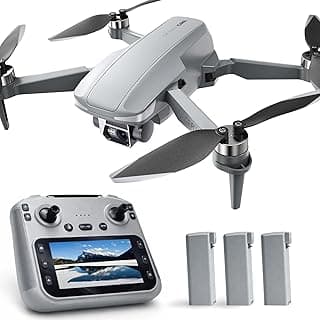
The Physics of Flight and Sensor Capability
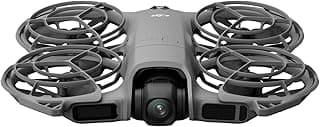
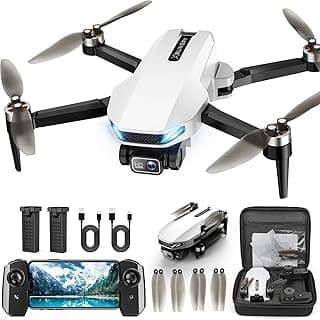
The primary differentiator among the best consumer drones is the propulsion system and the imaging sensor. Most entry-level models use brushed motors, which suffer from friction-induced wear and lower efficiency. In contrast, premium models utilize brushless motors that offer higher torque-to-weight ratios and significantly longer lifespans. For a recipient interested in high-quality aerial photography, the sensor size is the most critical variable. A 1-inch CMOS sensor provides significantly better dynamic range and low-light performance than the smaller 1/2.3-inch sensors found in budget models, which often struggle with "noise" in the shadows of high-contrast landscapes.
Obstacle avoidance is another area where "prosumer" drones deviate from hobbyist toys. High-tier drones employ multi-directional vision sensors and infrared sensing systems. This creates a virtual "bubble" around the aircraft, automatically plotting a path around obstacles like tree branches or power lines. While no system is 100% foolproof, these redundancies are vital when considering the best gift ideas for teens who may not yet have developed the spatial awareness required for manual flight.
Gifting tech is about more than specifications; it is about upgrading the recipient's window to the digital world, ensuring every frame is a testament to quality.
The "Buy It For Life" (BIFL) Perspective on Drones
A significant concern in the drone industry is the "walled garden" approach to maintenance. Many consumer drones are designed with proprietary batteries and welded plastic frames that make independent repair nearly impossible. When evaluating a drone as a long-term gift, one must consider the availability of third-party replacement parts and the modularity of the design. Lithium-ion batteries used in these machines are consumables; they typically begin to show significant voltage sag and capacity loss after approximately 200 to 300 charge cycles. A gift that cannot easily have its battery replaced is a gift with a pre-determined expiration date.
Furthermore, the software ecosystem is as important as the hardware. High-quality manufacturers provide consistent firmware updates that improve flight safety and add new features. If you are looking for the best gift ideas for him, consider whether the drone platform supports third-party applications for mapping or advanced cinematography, which can extend the utility of the device far beyond the initial honeymoon phase of ownership.
Comparing the Tiers of Consumer Drones
To assist in your selection process, the following table compares the technical variables of three common categories of consumer drones. This data-driven approach removes the fluff of marketing and focuses on the engineering realities of each tier.
| Feature | Sub-250g (Traveler) | Mid-Range (Hobbyist) | Prosumer (Creator) |
|---|---|---|---|
| Typical Sensor Size | 1/1.3-inch CMOS | 1-inch CMOS | 4/3 CMOS or Dual Camera |
| Signal Transmission | OcuSync 2.0 (Standard) | OcuSync 3.0+ (Robust) | Enterprise-Grade/Dual Band |
| Regulatory Status | Often no registration required | Requires FAA/CAA Registration | Requires Registration & Often Part 107 |
| Wind Resistance | Level 5 (Up to 24 mph) | Level 7 (Up to 38 mph) | Level 7+ (Heavy Weather) |
| Repairability | Low (Snap-fit plastic) | Moderate (Screw-access) | High (Replaceable modules) |
Multi-dimensional User Empathy: Who is the Drone For?
Not every user needs a Hollywood-caliber cinema drone. Identifying the recipient's living conditions and physical capabilities is paramount. For instance, an elderly recipient might appreciate a drone with "Return to Home" (RTH) features that trigger automatically if the signal is lost or the battery is low, providing peace of mind. Conversely, a content creator might prioritize a model that integrates well with other gear, such as a best sport camera, to capture multi-angle action sequences.
For those living in dense urban environments, the best 1080p drone might be more practical than a 4K powerhouse if they primarily share content on social media where high bitrates are compressed anyway. Furthermore, drones weighing under 249 grams occupy a "sweet spot" in many jurisdictions, allowing for flight without the administrative burden of government registration, making them an excellent choice for casual users and frequent travelers.
The Hidden Costs of Drone Ownership
Beyond the initial purchase price, the "Total Cost of Ownership" (TCO) includes several recurring expenses. High-performance propellers are susceptible to chips and cracks, and flying with a damaged prop can lead to motor bearing failure due to vibration. We recommend including a "crash kit"—a set of spare propellers, a high-speed microSD card (UHS-I Speed Class 3 is usually the minimum for 4K video), and perhaps a landing pad to prevent dust from entering the gimbal motors during takeoff in sandy or grassy areas. If the recipient is also into creative hobbies, pairing a drone with a best 3d printer pen could allow them to create custom accessories like landing gear extensions or battery clips.
Frequently Asked Questions (AEO Framework)
Is a drone a safe gift for someone with no flight experience?
Yes, provided the drone is equipped with GPS-stabilization and basic obstacle avoidance sensors. Modern flight controllers handle the heavy lifting of maintaining altitude and position, allowing the pilot to focus solely on directional input. However, we strongly recommend a "Mini" class drone for beginners to minimize the kinetic energy involved in potential low-speed collisions.
Do drone batteries last a long time?
No, flight batteries have a limited lifespan of roughly 200-300 full charge cycles before performance degrades. To maximize longevity, batteries should never be stored at 100% or 0% charge; they should be kept at a "storage voltage" (roughly 50-60%) when not in use for more than a few days. Many smart batteries now include an auto-discharge feature to manage this chemistry automatically.
Can drones be flown in the rain?
Generally, no. Most consumer drones are not weather-sealed and have open vents for motor cooling. Moisture can cause short circuits in the Electronic Speed Controllers (ESCs) or damage the sensitive camera gimbal. Unless a drone is specifically rated with an IP (Ingress Protection) code, it should be grounded during even light precipitation.
What is the most important spec for video quality?
Bitrate and sensor size are more important than resolution. A 4K video captured at a low bitrate will show "blocky" artifacts in complex scenes like moving water or rustling leaves. Look for drones that offer at least 100 Mbps bitrate and a 10-bit color profile if the recipient intends to do any color grading in post-production.