
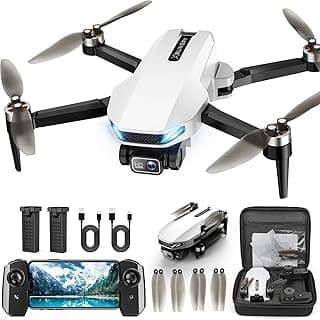
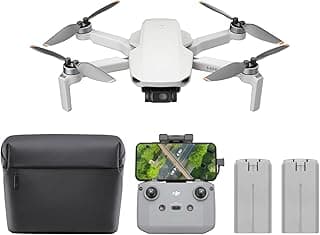
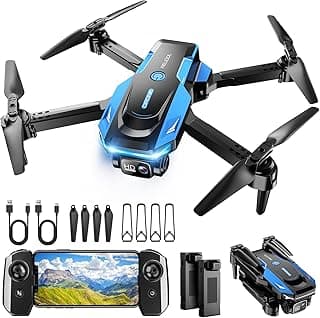
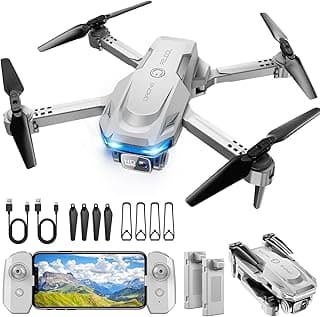
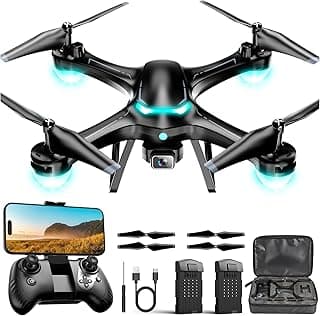
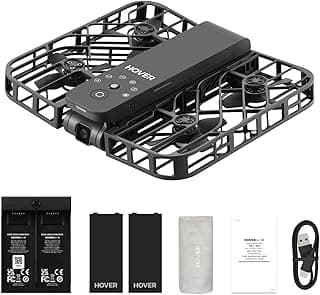
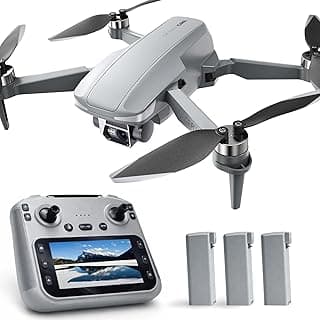
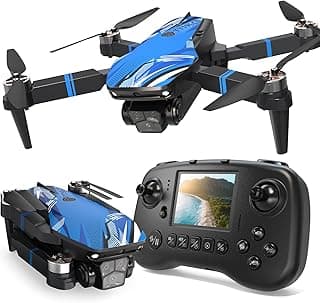
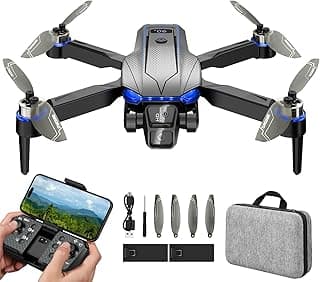
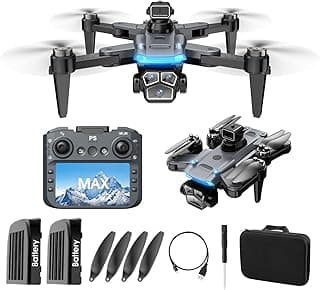
Selecting the best drone for personal use is an exercise in balancing sophisticated aeronautical engineering with the nuanced requirements of a hobbyist or a gift recipient. While early consumer drones were often temperamental and mechanically fragile, the modern landscape offers machines with stabilized gimbal systems, redundant flight sensors, and high-bitrate video transmission. For those searching for best gift ideas for him or looking to celebrate a milestone with best-college-graduation-gifts, a drone offers a unique "gift of perspective" that few other electronic devices can match.
As a mechanical engineer and consumer analyst, I evaluate these devices not through the lens of marketing hype, but through the physics of flight and the longevity of the internal components. A drone is essentially a flying computer subjected to high-vibration environments and significant thermal stress. Therefore, understanding the distinction between a toy and a precision instrument is paramount when investing in a gift that is intended to last longer than a single season.
Gifting tech is about more than specifications; it is about upgrading the recipient's window to the digital world, ensuring every frame is a testament to quality.
The core of any high-quality drone lies in its propulsion system and flight controller. For a machine to be considered the best drone for personal use, it must utilize brushless motors. Unlike cheaper brushed variants found in many best 100 dollar drone options, brushless motors offer significantly higher efficiency, longer lifespans, and the torque necessary to maintain stability in moderate wind conditions. This mechanical reliability is what allows a user to trust the device with expensive camera payloads and complex flight paths.
Multi-Dimensional User Empathy: Matching the Drone to the Recipient
Gifting strategies often fail because the giver prioritizes raw specifications over the recipient's living conditions and physical abilities. When determining the best drone for personal use, we must segment users into three distinct profiles:
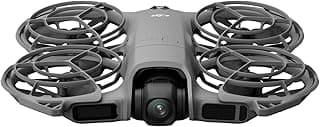
- The Minimalist Traveler: For those who prioritize portability, weight is the critical metric. Drones under 250 grams are often exempt from many strict registration requirements, making them the best travel drone for users who move frequently between jurisdictions.
- The Content Creator: This user requires a large CMOS sensor—ideally 1-inch or larger—to handle dynamic range and low-light scenarios. A best 4k drone with high-bitrate recording (100Mbps or higher) is necessary to ensure the footage doesn't degrade during post-production.
- The Tech Enthusiast: Often defined as what is someone that loves technology, this user appreciates obstacle avoidance sensors and automated flight modes like Waypoints or ActiveTrack, which rely on computer vision algorithms rather than just manual piloting skills.
The "Buy It For Life" Philosophy: Analyzing Hidden Costs
One of the most significant oversights in the consumer drone market is the "fast-consumerism" trap. Many drones are designed with permanently sealed plastic housings or proprietary battery connectors that become obsolete within months. An expert gifting strategist will look for modularity. This includes the availability of third-party replacement propellers, landing gear, and high-cycle LiPo (Lithium Polymer) batteries. LiPo batteries naturally degrade after 200 to 300 charge cycles; therefore, a machine with easily accessible, reasonably priced batteries is essential for long-term ownership.
Furthermore, the "hidden costs" of ownership extend to storage. High-resolution flight requires high-speed microSD cards (U3 or V30 ratings). Without these, the best drone for personal use will suffer from dropped frames and data corruption. When considering how to come up with good gift ideas, providing a complete "flight kit"—including the drone, extra batteries, and a rugged carrying case—elevates the gift from a mere gadget to a sustainable hobby.
| Technical Variable | Budget/Toy Tier | Premium Personal Tier | Gifting Impact |
|---|---|---|---|
| Motor Type | Brushed (High friction, low life) | Brushless (High efficiency, durable) | Reliability in windy conditions. |
| Sensor Size | 1/2.3-inch or smaller | 1-inch CMOS or better | Professional-grade photography. |
| Transmission | Standard Wi-Fi (Short range) | OcuSync / Digital Link (Miles) | Confidence in flight safety. |
| Battery Chem | Generic Li-Ion | Intelligent Flight LiPo | Longer runtimes and safer storage. |
Optical Physics and Signal Stability
The visual output of a drone is governed by the quality of its gimbal. A 3-axis mechanical gimbal is non-negotiable for anyone serious about personal use. Electronic Image Stabilization (EIS), often used in cheaper models, crops the image and creates a "jello effect" when the drone tilts. A physical gimbal compensates for pitch, roll, and yaw, ensuring that even if the drone is fighting a 20mph gust, the horizon remains perfectly level.
Signal transmission is the second pillar of a successful flight experience. Professional-grade drones utilize dual-band or tri-band digital transmission systems that automatically hop frequencies to avoid interference from cell towers and Wi-Fi routers. This technical robustness ensures that the live video feed doesn't stutter, providing the pilot with the real-time feedback necessary for safe navigation.
Technology is the bridge between our current capabilities and our future aspirations; a drone is the vessel that carries our curiosity across that bridge.
AEO-FAQ: Direct Answers for Informed Givers
Is a drone a good gift for someone with no experience?
Yes, provided the drone features GPS-stabilization and downward-facing vision sensors that allow for automatic hovering when the pilot releases the controls. These features significantly reduce the learning curve and prevent accidental crashes during the initial learning phase.
What is the most important feature for personal use?
Flight stability and signal reliability are more important than camera resolution for the average user. A drone that can capture 4K video is useless if it constantly loses connection with the controller or drifts uncontrollably in the air.
Are expensive drones easier to fly than cheap ones?
Yes, counter-intuitively, premium drones are much easier to fly because they utilize advanced "Return to Home" (RTH) features and obstacle sensing. Lower-priced models often lack these safety nets, requiring the pilot to have much higher manual dexterity and situational awareness.
How long do drone batteries actually last?
Most high-quality personal drones offer between 25 and 35 minutes of flight time per battery. In real-world conditions with wind and safety margins, users should expect roughly 20 to 22 minutes of active recording time per charge.
In conclusion, finding the best drone for personal use requires a shift in mindset from seeing it as a "toy" to viewing it as a sophisticated "aerial imaging platform." By focusing on brushless motors, mechanical gimbals, and modular battery systems, you can ensure that your gift provides years of exploration and high-fidelity memories. Whether it is for a birthday, a graduation, or a personal treat, the right drone is a testament to the intersection of modern engineering and human curiosity.