

Technical Benchmarks: What Defines a Premium Drone?
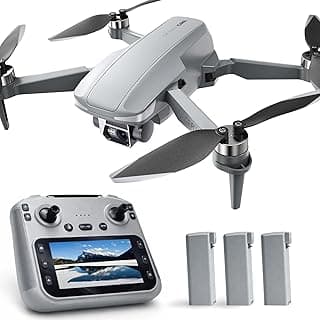
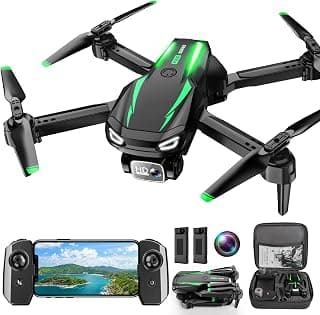
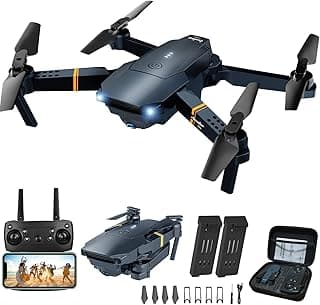
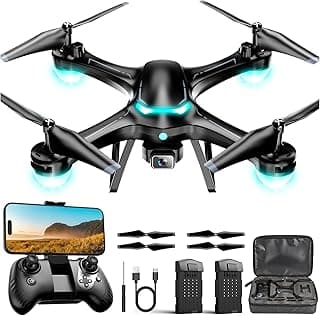
The core of any drone's value lies in its imaging capabilities and its flight controller's sophistication. A consumer-grade best 4k drone might offer high resolution, but resolution alone does not dictate image quality. Professional-grade systems prioritize sensor size—typically a 1-inch or Micro Four Thirds sensor—to ensure high dynamic range and low-noise performance in low-light environments. This is a critical distinction for what is someone that loves technology, as they will likely understand that pixel quality outweighs pixel quantity.
Furthermore, the mechanical gimbal system is what separates a shaky amateur video from a cinematic masterpiece. A 3-axis mechanical gimbal must be capable of compensating for high-frequency vibrations and sudden tilts caused by wind gusts. In the pursuit of the best drone money can buy, look for systems that utilize high-torque brushless motors and precision IMUs (Inertial Measurement Units) to maintain a level horizon within 0.01 degrees of accuracy.
| Technical Variable | Consumer Standard | Professional/BIFL Standard |
|---|---|---|
| Sensor Size | 1/2.3-inch CMOS | 1-inch or Micro Four Thirds |
| Transmission Range | 2-4 km (Wi-Fi based) | 10-15 km (OcuSync/Proprietary) |
| Obstacle Avoidance | Forward only | Omnidirectional (All directions) |
| Battery Chemistry | Standard LiPo | Intelligent High-Density LiPo |
| Chassis Material | Polycarbonate Plastic | Magnesium Alloy / Carbon Fiber |
Multi-Dimensional User Empathy: Matching the Gift to the Recipient
The "best" drone is subjective based on the living conditions and physical requirements of the user. We must categorize recipients to ensure the gift provides maximum utility rather than becoming a burden.
The Minimalist Traveler
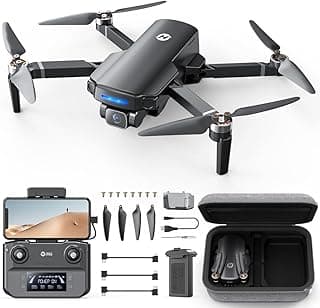
For the user who prioritizes portability and adheres to strict weight limits for international travel, a best small drone weighing under 250 grams is often the superior choice. These "sub-250g" drones often bypass certain registration requirements in many countries, making them ideal for someone who wants to capture memories without the administrative friction of larger aircraft. However, a mechanical engineer would warn that these smaller frames are more susceptible to "drift" in high winds due to lower mass-to-surface-area ratios.
The Professional Creative
For the individual who intends to use the equipment for commercial purposes, the best professional drone will feature interchangeable lenses, 10-bit color profiles (like D-Log), and the ability to record in Apple ProRes formats. These features allow for significant flexibility in post-production, a requirement for anyone pursuing a career in digital media. This level of equipment is often considered what is the greatest gift to give to a young filmmaker launching their studio.
The "Buy It For Life" Philosophy in Drone Ownership
Drones are, by nature, high-depreciation assets, but a BIFL (Buy It For Life) approach can mitigate this. The best drone money can buy is one that offers modularity and accessible replacement parts. Cheap, integrated designs are essentially disposable; once a single motor fails or a prop-guard snaps, the entire unit is often rendered unserviceable. In contrast, premium manufacturers provide detailed parts diagrams and allow users to replace propellers, landing gear, and even gimbal ribbons independently.
One must also consider the hidden costs of ownership. High-performance lithium-polymer (LiPo) batteries have a finite lifespan, typically degrading significantly after 200–300 charge cycles. A truly expert gift includes "Intelligent Flight Batteries" that feature self-discharge modes to prevent swelling when stored for long periods. Additionally, budget for a high-quality carrying case and a set of Neutral Density (ND) filters, which act as "sunglasses" for the drone's sensor, allowing for proper exposure in bright sunlight—a must for best christmas gifts for techies who understand the physics of light.
Direct Answer Framework: Frequently Asked Questions
Is a more expensive drone actually easier to fly?
Yes, higher-priced drones are significantly easier to operate because they utilize more sophisticated sensor suites. While budget models rely on basic GPS and user input, premium models use downward-facing vision sensors, ultrasonic wave sensors, and omnidirectional obstacle sensing to maintain a hover even without GPS signal. This technological redundancy reduces the cognitive load on the pilot, making crashes much less likely for beginners.
Do I need to buy special insurance for an expensive drone?
Yes, if you are investing in the best drone money can buy, third-party liability insurance or a manufacturer-backed protection plan is highly recommended. These plans often cover "flyaways," water damage, and accidental collisions for a small deductible. Given the complexity of modern flight controllers, a single hardware glitch or a sudden "bird strike" can result in a total loss of the asset without such coverage.
Can these drones be used in the rain or extreme cold?
No, most consumer and prosumer drones are not waterproof or even water-resistant. Exposure to moisture can short-circuit the Electronic Speed Controllers (ESCs) and ruin the sensitive gimbal motors. Furthermore, lithium batteries lose voltage rapidly in temperatures below freezing. While industrial-grade drones (costing five figures) feature IP ratings and internal heaters, standard premium drones should be kept grounded during precipitation or in extreme sub-zero environments.
Ultimately, the decision to purchase the best drone money can buy should be viewed as an investment in a creative tool. By focusing on sensor quality, flight stability, and repairability, you ensure that the gift remains relevant and functional long after the initial excitement of the first flight has passed. High-end technology should solve problems for the user, not create new ones through fragility or poor software support.