
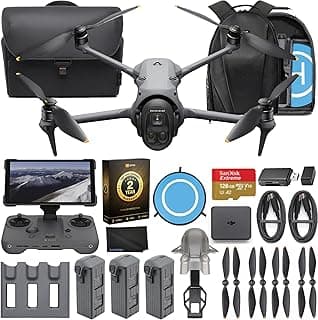
The Engineering Standards of Enterprise-Grade UAVs
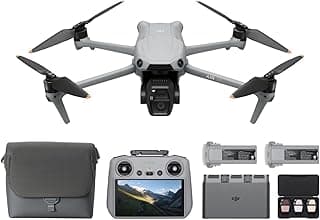
When assessing a professional-tier system, the primary metric is not merely flight time, but the quality of data acquisition and the redundancy of critical components. A truly professional drone must feature an integrated obstacle avoidance system that utilizes omnidirectional binocular vision sensors and infrared sensing. This level of technical sophistication is necessary because a "pro" user often operates in complex environments where manual navigation alone is insufficient to protect the high-value internal optics and flight controllers.
For those exploring best gift ideas for him, understanding the distinction between a toy and a tool is vital. A professional machine typically utilizes a 1-inch or Micro Four Thirds sensor, allowing for a dynamic range that captures detail in high-contrast lighting—something budget-friendly models simply cannot replicate due to physical sensor size limitations. Furthermore, the inclusion of OcuSync or similar proprietary transmission technologies ensures that the live feed remains stable even in areas with high electromagnetic interference, which is a common failure point in residential-grade equipment.
Gifting tech is about more than specifications; it is about upgrading the recipient's window to the digital world, ensuring every frame is a testament to quality.
The BIFL Philosophy: Modularity and Longevity in Drone Tech
In the "Buy It For Life" (BIFL) community, drones are often viewed with skepticism due to rapid hardware depreciation. However, the best professional drone choices mitigate this through modularity. Expert analysts look for airframes where gimbals can be swapped and batteries are not proprietary "black boxes" that lock the user into a single vendor's ecosystem forever. When you evaluate how to come up with good gift ideas for a technologist, consider the "right to repair." A drone that can be disassembled for motor replacement or sensor cleaning will outlast a sealed, unrepairable consumer unit by several years.
Hidden costs often include the cyclic degradation of Lithium-Polymer (LiPo) batteries. Professional systems often include "Intelligent Flight Batteries" that manage their own discharge cycles to prevent swelling. Prospective buyers should research the availability of third-party replacement parts and the active support of repair communities on platforms like Reddit. If a machine lacks a clear path for independent servicing after the manufacturer's warranty expires, it fails the BIFL test and should be treated as a consumable rather than a long-term asset.
Comparison of Drone Motor and Sensor Architectures
To help you distinguish between various technical variables, the following table compares standard consumer components with those found in professional-grade systems.
| Feature | Consumer Grade | Professional Grade | Technical Impact |
|---|---|---|---|
| Motor Type | Standard Brushed/Small Brushless | High-Torque Industrial Brushless | Better wind resistance and heat dissipation. |
| Sensor Size | 1/2.3-inch CMOS | 1-inch to Full-Frame / MFT | Greater low-light performance and color depth. |
| Redundancy | None (Single IMU/Compass) | Dual IMU & Dual Compass | Prevents catastrophic crashes if one sensor fails. |
| Data Security | Cloud-Dependent | Encrypted Local Storage / AES-256 | Ensures sensitive flight logs and images remain private. |
User Empathy: Matching the Machine to the Environment
The "best" drone is highly dependent on the recipient's specific living and working conditions. A professional photographer living in a high-density urban center faces different challenges than a surveyor in the rural Midwest. What is someone that loves technology going to appreciate most? For the urban dweller, strict decibel limits and low-noise propeller designs are essential to maintain compliance with local noise ordinances and to prevent neighbor friction. Conversely, for those in rugged terrains, the ability to operate in sub-zero temperatures with self-heating batteries is a non-negotiable requirement.
For creators focused on cinematic output, the best aerial photography drone must offer a global shutter or high-bitrate ProRes recording capabilities. These features prevent the "jello effect" (rolling shutter distortion) during high-speed maneuvers. If the recipient is more interested in technical builds, they might prefer a system where they can integrate custom parts, perhaps even using a best 3d printer for drone parts to create specialized landing gear or sensor mounts.
Advanced Considerations: Beyond the Flight
A professional UAV is part of a larger ecosystem. Gifting the drone itself is the first step, but the recipient will also need a robust data management strategy. High-resolution best 4k drone footage generates massive files that require specialized storage. Professionals often move toward 10-bit D-Log or HLG color profiles, which demand high-performance computing power to color grade and edit. If the recipient is just starting their journey, a drone with integrated autonomous flight modes (Waypoints, MasterShots) can bridge the gap between amateur results and professional delivery without requiring years of manual flight training.
When considering what is the greatest gift to give, think about the freedom of movement. A drone provides a perspective that was previously reserved for those with access to helicopters. This "democratization of the sky" is the true emotional value behind the technical specs. However, the gift should also come with a reminder of responsibility; professional drones often fall into weight categories that require FAA or local aviation authority certification for commercial use.
Frequently Asked Questions (FAQ)
Do professional drones require special licensing?
Yes, in most jurisdictions, any drone used for commercial purposes or weighing over 250g requires the operator to pass a knowledge test and register the aircraft. For professional use, the pilot must typically hold a specific certificate, such as the Part 107 in the United States.
Are professional drones significantly harder to fly than consumer ones?
No, they are often easier to fly because they possess superior stabilization, more sensors, and highly accurate GPS positioning that allows them to hover perfectly even in high winds. The "difficulty" lies in mastering the complex camera settings and flight planning software, not the basic stick movements.
Can I upgrade the camera on a professional drone later?
It depends on the model's architecture. While most foldable professional drones have fixed gimbals, enterprise-level "heavy lift" drones are designed with interchangeable payloads, allowing you to switch between thermal, zoom, or high-res cinema cameras as technology evolves.
How long does a professional drone battery actually last?
While manufacturers claim 30 to 45 minutes, real-world professional flight time is usually 20% less once you factor in the "Return to Home" safety margin and the power draw from the high-resolution camera and transmission systems. Always plan for multiple battery swaps during a production day.
Is it worth buying a used professional drone?
Generally, no, unless the battery cycle count is low and there is documented proof of no "hard landings." Drone components like gimbals and internal IMUs are sensitive to vibration; a used unit might have micro-fractures in the frame or motor bearings that lead to failure mid-flight, making a new unit with a warranty a much safer investment for a high-stakes gift.