
The Physics of Flight: Why Stability Varies by Model
Stability in the air is a product of sensor fusion—the ability of the drone to combine data from GPS, GLONASS, downward-facing vision sensors, and ultrasonic barometers. While entry-level models may claim "stable flight," they often struggle with horizontal drift in winds exceeding 15 mph. A drone truly categorized as the best drone out there must utilize a sophisticated Electronic Speed Controller (ESC) that can make micro-adjustments to motor RPM thousands of times per second. This level of precision is what separates a frustrating toy from a professional-grade imaging platform.
When considering these devices for younger recipients, specifically when browsing best gift ideas for teens, the focus should shift toward internal fail-safes. Features like "Return to Home" (RTH) are not just conveniences; they are critical recovery systems that trigger when the battery reaches a specific voltage threshold or the radio link is severed. Without these robust protocols, a high-value gift can become a lost asset within minutes of its first flight.
Gifting tech is about more than specifications; it is about upgrading the recipient's window to the digital world, ensuring every frame is a testament to quality.
Segmenting the Best Drones for Different Recipient Personas
A "one size fits all" approach to aerial technology ignores the physical and regulatory limitations of different environments. To find a truly meaningful gift, we must analyze the recipient's lifestyle and technical needs.
The Minimalist Traveler: Portability vs. Performance
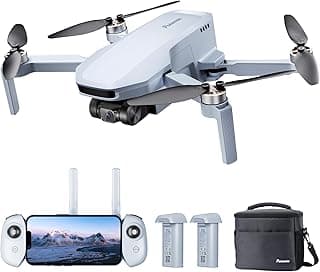
For those who value mobility, the best small drone is often the most practical choice. However, engineering a small airframe involves significant trade-offs in battery capacity and wind resistance. Consumers should look for models that utilize high-energy-density Lithium Polymer (LiPo) batteries and foldable arm mechanisms that do not compromise the integrity of the internal wiring over hundreds of cycles. In many regions, keeping the take-off weight under 250 grams is the critical threshold to avoid complex registration requirements, making sub-250g models highly desirable for casual users.
The Creative Professional: Optical Physics and Bitrates
If the recipient is an aspiring cinematographer, the best 4k drone is defined by its sensor size, not just its resolution. A 1-inch CMOS sensor will vastly outperform a smaller 1/2.3-inch sensor in dynamic range and low-light performance, regardless of whether both are labeled "4K." Furthermore, professional users require high bitrates (100Mbps or higher) and the ability to shoot in 10-bit D-Log profiles to ensure the footage can be color-graded effectively in post-production.
The Tech Enthusiast: Understanding the Fascination
When investigating what is someone that loves technology, we find that the appeal of drones often lies in the mastery of the hardware. For these individuals, the best professional drone might be one that allows for manual gain adjustments and third-party software integration. They see the drone as an extension of their digital toolkit, often considering these devices among the best christmas gifts for techies because they merge mechanical engineering with software-driven automation.
Technical Comparison of Drone Classes
| Feature | Ultralight (Sub-250g) | Prosumer (Mid-size) | Enterprise (Heavy-lift) |
|---|---|---|---|
| Motor Type | Micro Brushless | High-Torque Brushless | Industrial Grade Brushless |
| Wind Resistance | Level 5 (~20mph) | Level 6-7 (~30mph+) | Level 8+ (Extreme) |
| Typical Sensor | 1/1.3-inch CMOS | 1-inch or Micro 4/3 | Full Frame / Thermal |
| Proprietary Parts | High (Integrated) | Moderate (Modular) | Low (Standardized) |
The "Buy It For Life" Philosophy: Repairability and Hidden Costs
Modern drones are increasingly designed as sealed units, which complicates the "Buy It For Life" (BIFL) ideal. A critical aspect of how to come up with good gift ideas in the tech sector is investigating the availability of replacement parts. A drone with an integrated camera and gimbal that cannot be replaced independently of the mainboard is a "total loss" waiting to happen after a minor collision. Expert buyers look for models where propeller guards, landing gear, and even individual motor arms can be sourced from third-party manufacturers.
Furthermore, one must consider the degradation of lithium batteries. A drone battery typically has a lifespan of 200-300 cycles before significant capacity loss occurs. If the manufacturer uses a proprietary "Smart Battery" system, the cost of maintaining the drone over five years can exceed the original purchase price. Always check if the recipient is prepared for these ongoing operational costs, or consider including a "fly more" bundle that provides multiple batteries and a multi-charger to extend the practical life of the gift.
Frequently Asked Questions: Direct Answers for Drone Buyers
Is a more expensive drone always easier to fly?
Yes, higher-priced drones typically include more sophisticated obstacle avoidance sensors and redundant GPS systems, which significantly lower the barrier to entry for beginners and reduce the likelihood of pilot error. However, they also come with higher repair costs if a crash does occur.
Can I fly a drone anywhere after buying it?
No, flight is strictly governed by local aviation authorities; most urban areas, national parks, and zones near airports are "No Fly Zones" (NFZs) hardcoded into the drone's firmware. It is essential to check local regulations before gifting a drone to ensure the recipient has a legal place to operate it.
Do I need a license to give a drone as a gift?
No, the act of purchasing or gifting does not require a license, but the recipient may need to pass a basic safety test or obtain a commercial certificate (such as Part 107 in the US) depending on the weight of the drone and whether they intend to use it for profit.
Finding the best drone out there requires looking past the glossy packaging and assessing the mechanical integrity of the airframe. Whether you are seeking a lightweight model for travel or a heavy-lift platform for professional work, prioritizing flight stability, sensor quality, and repairability will ensure that your gift remains a functional tool rather than a shelf-bound relic. By matching the hardware to the recipient's specific environment, you provide them with a new perspective on the world around them.