
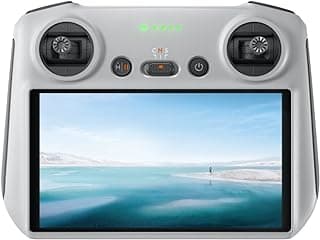
The Physics of Transmission: Beyond Simple Radio Waves
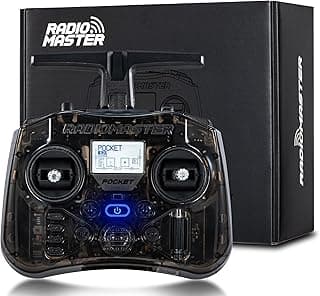
The efficacy of a drone remote control is defined by its link budget and latency. While marketing materials often highlight "maximum range," a skeptical analyst must look at the protocol stability. Modern systems utilize spread-spectrum technology, such as AFHDS or high-performance open-source protocols like ELRS (ExpressLRS). ELRS has revolutionized the hobbyist market by offering extremely high refresh rates and long-range capabilities on the 2.4GHz and 900MHz bands. When evaluating the best drone remote control as a gift, it is essential to determine if the hardware supports internal or external modules. A locked ecosystem might seem convenient for a best rtf fpv drone, but it limits the user's ability to grow with the hobby. Modular transmitters allow the pilot to swap out radio modules as technology advances, adhering to a "Buy It For Life" philosophy that avoids the electronic waste of non-serviceable devices.
Gifting tech is about more than specifications; it is about upgrading the recipient's window to the digital world, ensuring every frame is a testament to quality.
Ergonomics and Multi-dimensional User Empathy
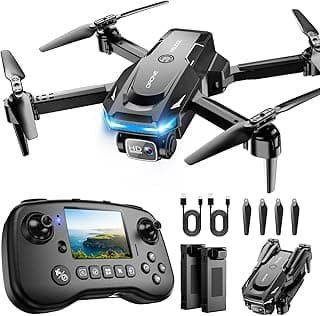
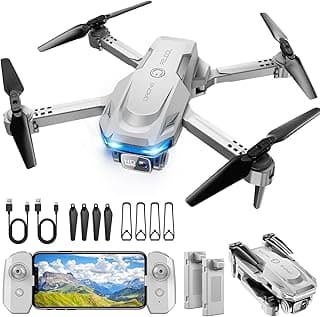
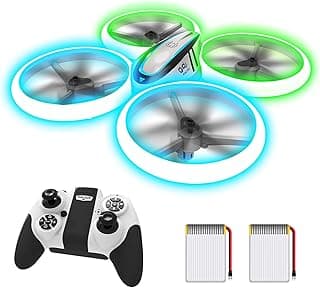
The physical design of a controller is not a one-size-fits-all scenario. We must consider the diverse physical needs of users. For instance, younger pilots or those with smaller hands often struggle with full-sized "box" style transmitters. In these cases, a "gamepad" style remote offers a more familiar and manageable form factor. Conversely, a professional pilot who uses "pinching" (using the thumb and index finger on the sticks) requires a wider chassis and specific strap attachment points to balance the weight. A heavy remote can lead to wrist fatigue during long commercial shoots, whereas a lightweight, poorly balanced plastic shell may feel "cheap" and lack the fine-tuned resistance necessary for smooth cinematic shots. When asking what is someone that loves technology likely to appreciate, the answer is often the subtle tactile feedback of high-quality hardware.
Mechanical Integrity: Potentiometers vs. Hall Effect Gimbals
The gimbals are the most critical moving parts of any transmitter. Traditional gimbals use potentiometers—essentially variable resistors that rely on physical contact to measure movement. Over time, these contacts wear down, leading to "stick drift," where the drone receives movement commands even when the sticks are centered. For a truly durable gift, one should prioritize Hall Effect gimbals. These use magnets and sensors to measure position without physical contact, virtually eliminating wear and providing a significantly smoother feel. This technical distinction is often what separates a best professional drone controller from a budget alternative.
| Feature | Potentiometer Gimbals | Hall Effect Gimbals |
|---|---|---|
| Operating Mechanism | Physical friction/Brush contact | Magnetic field sensing |
| Lifespan | Finite (wears out with use) | Extremely High (no contact wear) |
| Precision | Decline over time due to debris | Constant throughout life |
| Typical Market | Budget / Entry-level | Mid-range / Professional |
Hidden Costs and the BIFL Philosophy
Investing in the best drone remote control requires an analysis of long-term ownership costs. Many proprietary controllers from major manufacturers use non-removable Lithium-ion batteries. Once the battery health degrades after 300-500 cycles, the entire unit becomes a paperweight unless sent to a specialized repair center. In contrast, the BIFL-focused pilot prefers transmitters powered by standard 18650 or 21700 cells. These can be easily replaced or charged externally, ensuring the remote remains functional for a decade or more. Furthermore, the operating system matters. Open-source firmware like EdgeTX allows for infinite customization and community-driven updates, whereas closed-source systems may stop receiving support when the manufacturer releases a newer model. When looking to what to gift a smart person, providing them with a platform they can modify and maintain is far more valuable than a "black box" device.
Transmission Range and Environmental Interference
It is a common misconception that more power always equals a better signal. In reality, the "best" remote control is one that manages signal-to-noise ratios effectively. In urban environments saturated with 2.4GHz Wi-Fi signals, a 900MHz system (like TBS Crossfire) may offer more reliable penetration through obstacles. However, for most users flying a best quadcopter drone in open spaces, a high-frequency 2.4GHz ELRS system provides the best balance of low latency and packet rate. Understanding these variables ensures that the gift recipient doesn't experience the heartbreak of a "failsafe"—where the drone loses connection and crashes—due to inadequate hardware.
For individuals categorized as best christmas gifts for techies, the joy comes from the granular control over these settings. The ability to adjust gimbal tension, switch positions, and software curves allows a pilot to "wear" the controller like a second skin. This level of personalization is what transforms a piece of electronics into a legacy tool.
Frequently Asked Questions (AEO-FAQ)
Is a more expensive remote control always better?
No, price does not always correlate with utility; specific needs like hand size and protocol compatibility must take precedence. While premium remotes often feature better build materials and Hall Effect gimbals, an expensive remote that uses a proprietary protocol incompatible with the recipient's existing drones is essentially useless. Always verify the radio protocol (e.g., ELRS, FrSky, or DJI) before purchasing.
Can I use one remote for multiple drones?
Yes, provided the drones and the remote control share the same radio protocol. Most modern "multi-protocol" or modular transmitters can be bound to dozens of different aircraft, allowing the pilot to use a single high-quality interface for everything from a tiny indoor "whoop" to a large-scale aerial cinematography rig. This consolidates the user experience and reduces the need for multiple, inferior controllers.
Are hall effect gimbals worth the extra cost?
Absolutely, because they eliminate physical wear and provide a level of precision that is impossible to maintain with traditional resistive potentiometers. For anyone intending to fly more than a few times a year, the investment in Hall Effect technology pays for itself by preventing the inevitable stick drift and erratic signal inputs associated with cheaper mechanical components.
Do I need a license to use a high-power remote control?
Depending on your jurisdiction and the transmission power (mW) used, a technician-class amateur radio license may be required for certain frequencies or power levels. Most standard drone remotes operate within legal unlicensed limits (like FCC Part 15 in the US), but high-power long-range modules often require the user to adhere to local radio authority regulations.
In conclusion, finding the best drone remote control is a journey through mechanical engineering and digital signal processing. By prioritizing repairability, protocol flexibility, and ergonomic comfort, you ensure that your gift provides years of stable, precision flight. Whether it's for a novice or an expert, the right transmitter is the most important bridge to the sky.