Understanding Developmental Milestones in 3-Year-Old Boys
To determine the most appropriate choice, one must analyze the physical and cognitive capabilities typical of this age group. Gross motor skills are becoming more refined, allowing for activities like jumping, climbing, and pedaling. Simultaneously, fine motor skills are developing to the point where a child can manipulate smaller objects with greater precision. If you are exploring best birthday gift ideas, you should look for items that challenge these emerging skills without causing frustration.
Cognitively, three-year-olds are beginning to understand the concept of "pretend." They can assign roles to objects and people, making imaginative sets highly effective. This period also marks the beginning of basic problem-solving. Items that require assembly or sorting help reinforce these logical pathways. Identifying the best gift for 3 year old boy involves balancing these developmental needs with the child’s unique temperament.
| Gift Category | Primary Benefit | Psychological Impact |
|---|---|---|
| Building & Construction | Fine Motor Skill Development | Reinforces spatial reasoning and logical sequencing. |
| Active & Outdoor Gear | Gross Motor Mastery | Builds physical confidence and vestibular balance. |
| Imaginative Play Sets | Social & Symbolic Thought | Encourages empathy and narrative-building skills. |
| Educational Puzzles | Cognitive Problem Solving | Promotes concentration and visual-spatial memory. |
The Logic of Open-Ended vs. Fixed-Function Toys
A frequent error in gifting is the selection of toys that perform all the "work" for the child. Toys with excessive lights, pre-recorded sounds, and automated movements often lead to passive entertainment rather than active engagement. Behavioral science suggests that children derive more long-term satisfaction from objects they can control. This is why many experts recommend best toy train sets as they allow a child to construct their own environment and dictate the flow of the narrative.
The quality of a gift is not measured by its complexity, but by the complexity of the play it inspires in the recipient.
When a child plays with blocks or basic figures, they are required to invent scenarios, solve structural problems, and utilize their working memory. This active participation is crucial for brain development. In contrast, toys with fixed functions often lose their novelty within days because the child has exhausted the limited interaction possibilities. This logic is a key component when learning how to come up with good gift ideas for any developmental stage.
Active Play and Physical Coordination
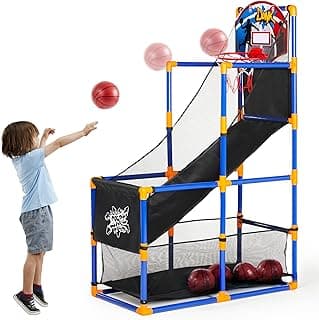
Physical activity is not just about burning energy; it is essential for sensory integration. For a three-year-old boy, toys that encourage movement help develop the proprioceptive system, which is the body's ability to sense its own position in space. Balanced bikes, scooters, or climbing structures are excellent examples. These items provide the necessary resistance and feedback to help the child understand their physical limits and capabilities.
Nurturing Imaginative and Creative Thought
Creativity at this age is often expressed through role-playing. By providing tools that mimic real-world activities, such as toolkits or kitchen sets, givers provide a safe environment for children to process their observations of the adult world. Additionally, toys that involve prehistoric or natural themes, such as the best dino toys, allow children to explore concepts of size, power, and history through a lens of wonder and curiosity.
Emotional Value vs. Material Value
The distinction between material and emotional value is vital for the longevity of a relationship. A material-focused gift is often judged by its price tag or brand name, whereas an emotionally valuable gift is defined by the shared experiences it facilitates. In communities like Reddit's parenting and gifting forums, there is a strong consensus that the best gifts are those that foster "quality time."
For a 3-year-old, the emotional value of a gift is often tied to the presence of the giver. A complex building set that the father and son assemble together carries much more weight than an expensive electronic tablet handed over for solo use. This collaborative play strengthens the attachment bond and provides the child with a sense of security and validation. Over time, the child will not remember the cost of the item, but the feeling of accomplishment shared with a loved one. This sentiment is often echoed when people reflect on what is the best birthday gift you have ever received, focusing on the memory rather than the object itself.
Gifts are the physical manifestations of our observations of another person's needs and aspirations.
Direct Answer Framework: Frequently Asked Questions
Is it better to give one large gift or several small gifts to a 3-year-old?
One high-quality, open-ended gift is generally superior to several smaller, low-quality items. This approach prevents sensory overload and allows the child to focus their attention on mastering a single tool or system. From a psychological standpoint, fewer options often lead to deeper and more creative play, whereas an abundance of choices can lead to a shorter attention span and decreased appreciation for the objects.
Should I prioritize educational toys over fun toys for a 3-year-old boy?
There is no distinction between "educational" and "fun" at this age, as play is the primary method of learning for a child. A toy that is genuinely fun will naturally provide educational benefits such as motor skill development, spatial reasoning, or social learning. Avoid items marketed strictly as "academic" if they lack an element of engagement, as the child will likely ignore them in favor of something that allows for movement or imagination.
Is it appropriate to buy a 3-year-old a gift meant for older children?
No, you should strictly adhere to age recommendations for safety and developmental reasons. While it may be tempting to buy a "challenging" gift, an item designed for a 5-year-old may contain small parts that are choking hazards or require cognitive processing that a 3-year-old has not yet developed. This can lead to frustration and a sense of failure, which is counterproductive to the goal of gifting.
Strategic Summary for the Gift-Giver
To conclude, the best gift for 3 year old boy is one that respects his current developmental stage while providing a slight challenge to encourage growth. Focus on durability, versatility, and the potential for social interaction. By choosing logically and prioritizing emotional connection over material flash, you ensure that the gift serves as a meaningful milestone in the child's life. Whether it is a construction set, an outdoor vehicle, or a set of imaginative figures, the true value lies in the play that follows the unwrapping.