

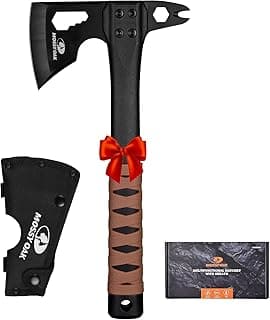
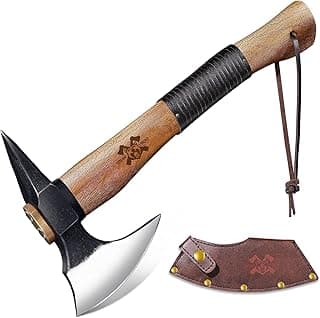
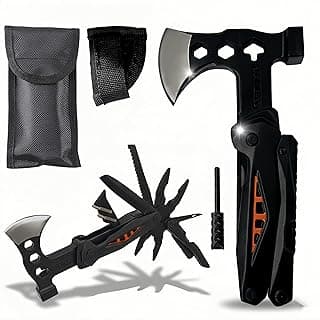
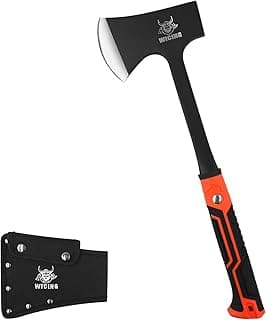
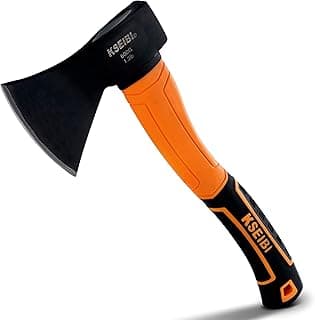
Metallurgical Integrity: The Foundation of the Best Hunting Axe
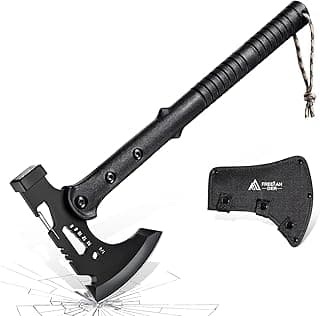
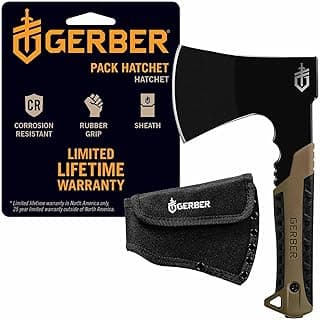
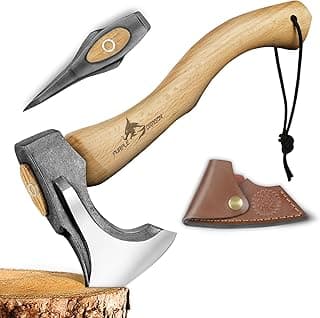
The performance of any axe is dictated by the chemical composition of its head. Most budget-grade axes utilize drop-forged stainless steel, which, while resistant to corrosion, fails to hold an edge under the high-impact stress of chopping frozen wood or bone. In contrast, the best hunting axe typically features hand-forged Swedish steel or high-carbon alloys like 1095 or 5160. These materials allow for a "differential temper"—a process where the bit (the edge) is hardened to approximately 56-58 HRC to maintain sharpness, while the poll (the back) remains softer to absorb the shock of each strike without cracking.
When evaluating steel quality, transparency from the manufacturer is paramount. A reputable brand will specify the forging method and the specific alloy used. This level of detail is a hallmark of the best gift ideas for him, as it demonstrates a commitment to technical excellence rather than aesthetic appeal. Unlike mass-produced tools, a hand-forged head will often show slight variations, which are markers of the artisan’s hammer rather than defects.
Gifting tech is about more than specifications; it is about upgrading the recipient's window to the digital world, ensuring every frame is a testament to quality.
Ergonomics and Material Science in Handle Design
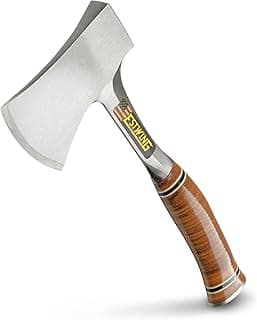
The handle, or haft, of the best hunting axe is the bridge between human force and mechanical output. From a mechanical engineering perspective, the choice between American Hickory and modern composites is a trade-off between vibration damping and environmental immunity. Hickory is the gold standard for high-end gifting because its long, straight fibers naturally absorb the kinetic energy of a strike, protecting the user's joints from "sting." This is a critical consideration when selecting what to gift for your father's birthday, as older users or those with early-stage arthritis require a tool that minimizes musculoskeletal stress.
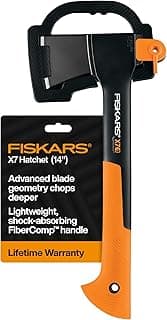
However, users must be aware of the "grain orientation." For maximum strength, the grain should run vertically, parallel to the axe head. A horizontal grain orientation creates a shear plane that is prone to snapping under heavy load. For those who prioritize a "Buy It For Life" (BIFL) philosophy, a wooden handle is superior because it can be replaced. Synthetic handles, while virtually indestructible, are often molded directly onto the head; once the handle is damaged, the entire tool becomes hazardous or useless, contributing to the cycle of fast consumerism.
Comparison of Hunting Axe Configurations
| Axe Type | Head Weight | Handle Length | Primary Use Case | Portability Rating |
|---|---|---|---|---|
| Hand Hatchet | 1.0 - 1.25 lbs | 10 - 13 inches | Kindling, precision carving | High (Belt-worn) |
| Hunting/Pack Axe | 1.5 - 2.0 lbs | 18 - 20 inches | Liming, small felling, bone splitting | Medium (Pack-strapped) |
| Small Forest Axe | 2.0 - 2.5 lbs | 24 - 26 inches | Felling medium trees, major clearing | Low (Vehicle/Basecamp) |
Multi-dimensional User Empathy: Matching the Axe to the Hunter
Not every hunter requires the same tool. A high-altitude sheep hunter, who counts every ounce in their pack alongside their best backpacking rain jackets, will prioritize a compact hatchet with a skeletonized handle or a lightweight alloy head. Conversely, a whitetail hunter operating from a fixed basecamp might prefer a heavier forest axe capable of processing large amounts of firewood or clearing thick brush lines.
For the female hunter, balance is often more important than raw weight. A tool with a head-heavy bias can lead to premature fatigue. Selecting an axe with a neutral balance point—typically just below the head—allows for more controlled, accurate swings. If you are looking for gifts for my best friend who enjoys rugged solo treks, ensuring the tool fits their specific grip strength and torso height is more valuable than buying the most expensive model on the market.
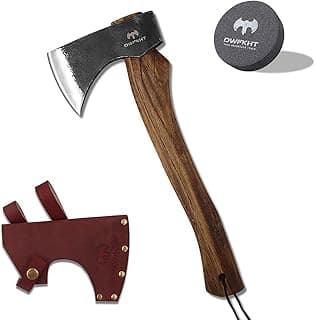
Safety is the final piece of the empathy puzzle. Every premium axe should be gifted with a vegetable-tanned leather sheath. An exposed blade in a backpack is not just a danger to the recipient, but can also destroy expensive gear such as best gloves for hiking or delicate sleep systems. A high-quality mask (sheath) is a non-negotiable component of a BIFL tool.
The Hidden Costs of Ownership and Maintenance
The "true" cost of the best hunting axe extends beyond the initial purchase price. Unlike stainless steel knives, high-carbon axes are prone to oxidation. A neglected tool will develop surface rust within hours of exposure to moisture. Therefore, gifting an axe should ideally include a maintenance kit: a honing stone, a puck-style sharpener, and a tin of boiled linseed oil for the handle. This ritual of maintenance is what separates a professional user from a casual consumer.
Furthermore, one must consider the "sharpening curve." A thin, razor-sharp "Scandi" grind is excellent for wood carving but will chip if it strikes a rock or a hard knot. A "Convex" grind is more durable for general hunting tasks. For those who frequently encounter extreme conditions, supplementary gear like best survival gloves can provide the necessary grip and protection when the axe handle becomes slick with rain or blood.
True durability is found at the intersection of traditional craftsmanship and rigorous field testing; an axe is not finished until it has survived the season.
Frequently Asked Questions: Direct Guidance
Can a hunting axe be used to process game?
Yes, but it is primarily used for heavy tasks like splitting the brisket or pelvis rather than fine skinning. While a sharp hunting axe can perform rough butchery, it should be used in conjunction with a dedicated fixed-blade knife for meat preservation. For those processing in the snow, wearing best winter hiking boots womens or similar traction gear is essential to maintain a stable stance during the swing.
Is a wooden handle better than a fiberglass handle for a gift?
Wooden handles are superior for gifting due to their traditional aesthetic, superior shock absorption, and repairability. While fiberglass is more weather-resistant, it transmits more vibration to the hand and cannot be replaced by the user if it breaks, making it a "disposable" high-end tool.
What is the most versatile length for a hunting axe?
19 to 20 inches is the most versatile length for a general hunting axe. This size, often called a "Pack Axe," is long enough to provide two-handed leverage for chopping while remaining short enough to be used one-handed for precision tasks or carried comfortably on the side of a backpack.
Does a more expensive axe stay sharp longer?
Generally, yes, because higher-priced axes use superior steel alloys and more precise heat-treatment cycles. However, edge retention also depends on the user’s technique; even the most expensive Swedish steel will dull quickly if it is driven into the dirt or used to chop through sand-encrusted bark.
In conclusion, finding the best hunting axe is an exercise in valuing quality over convenience. By focusing on the BIFL philosophy and understanding the technical nuances of metallurgy and handle design, you can provide a gift that will not only endure the harshest wilderness conditions but will likely be passed down through generations. It is a tool that requires respect, maintenance, and skill—the very definition of a meaningful gift.