
The Material Science of Concealment: Beyond the Pattern
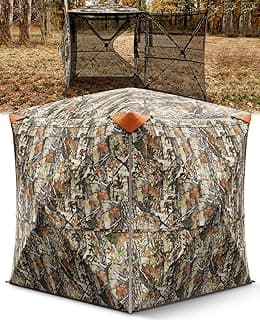
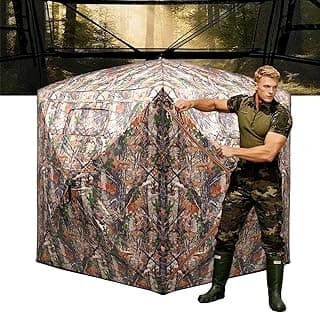
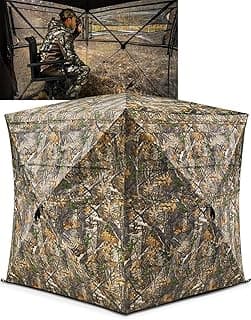
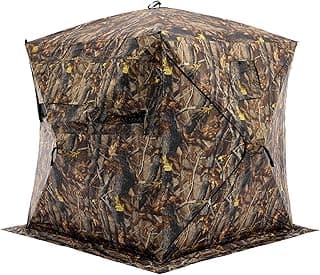
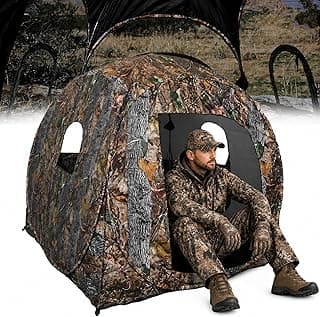
The efficacy of a hunting blind is largely dictated by its fabric's Denier (D) count. A budget-grade blind typically uses 150D polyester, which is susceptible to pinhole leaks and significant light "glow" from the interior. For a gift that qualifies as the best hunting blind, one should look for at least 300D to 600D fabric. Higher denier counts provide a denser weave that blocks sunlight more effectively, ensuring the interior remains pitch black. This is critical because any internal silhouette caused by backlighting will immediately compromise the hunter's position, regardless of the quality of their best 10x50 binoculars for hunting.
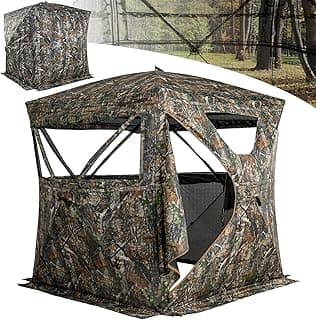
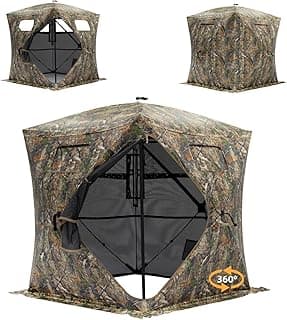
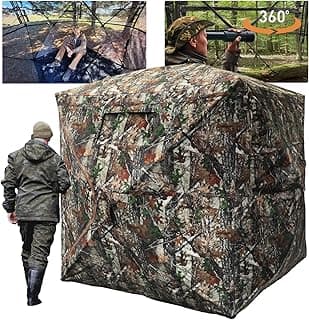
Furthermore, the "see-through" mesh technologies that have revolutionized the market must be scrutinized. While they provide an impressive 270 to 360-degree field of view, these meshes vary in durability. An elite gift choice will feature one-way vision mesh that is chemically treated to resist fading. Skepticism is required regarding "scent-proof" claims; no fabric is entirely impermeable to odors, but blinds with carbon-lined interiors or those constructed with heavy, tightly woven materials can significantly mitigate the outward flow of human scent markers.
Ergonomics and Accessibility for Diverse Users
A truly expert gifting strategy accounts for the physical limitations of the recipient. For an aging hunter or those with limited mobility, a blind with a "walk-through" door design is superior to the traditional zippered "V" or "tri-corner" doors, which require significant crouching and high steps. This level of empathy in product selection is what separates a standard gift from one that truly enhances the user's quality of life. If you are researching gifts for my best friend who enjoys archery, ensure the blind has a vertical height exceeding 70 inches to allow for standing shots, which is a common requirement for those using a best compound bow for hunting.
| Feature Category | Standard Performance | Elite/BIFL Performance | Mechanical Impact |
|---|---|---|---|
| Fabric Density | 150D - 300D Polyester | 600D+ Oxford/Polyester | Prevents light bleed and water ingress. |
| Frame Mechanism | Tension Wire / Thin Hub | Reinforced Solid Hubs | Stability in 30+ mph wind gusts. |
| Window Systems | Noisy Zippers | Silent Slide / Magnetic | Allows for stealthy adjustments near prey. |
| Floor Design | Open Ground | Integrated/Detachable Floor | Controls scent and pest entry. |
Hidden Costs and the BIFL Philosophy
Investing in a hunting blind involves understanding the "hidden costs" of ownership. Cheaper blinds are essentially disposable; once a rod snaps or a zipper teeth misalign, the entire unit often becomes landfill-bound due to the lack of replaceable parts. A "Buy It For Life" (BIFL) approach favors manufacturers that offer individual replacement poles, hub kits, and patch material. When gifting, consider the long-term utility: a $400 blind that lasts a decade is significantly more economical than a $100 blind that requires replacement every two years.
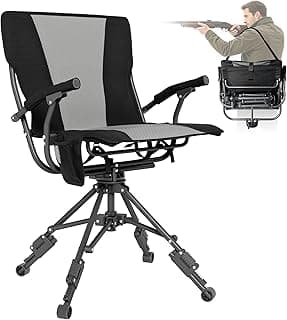
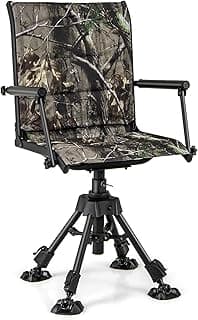
Additionally, the "tactical furniture" inside the blind is often overlooked. A gift of a blind is ideally paired with a best hunting chair for blind. A standard folding chair lacks the swivel capability and silent movement necessary for a 360-degree blind. The interaction between the chair's height and the blind's window ports is a critical variable; if the chair is too low, the hunter must stand to see out, creating movement that is easily detected by game.
Maintenance and Environmental Degradation
Even the highest quality blinds are subject to the laws of physics. Ultraviolet (UV) light is the primary enemy of synthetic fabrics, breaking down polymer chains and causing the "pinking" or fading of camouflage patterns. To extend the life of this gift, experts recommend a seasonal application of UV-protectant sprays. Furthermore, modularity is key. Blinds that allow for the attachment of natural brush (brush straps) not only improve concealment but also add a layer of physical protection against the elements, shielding the primary fabric from direct sun and wind abrasion.
Gifting tech is about more than specifications; it is about upgrading the recipient's window to the digital world, ensuring every frame is a testament to quality.
Frequently Asked Questions
Is a see-through mesh blind really invisible to deer?
No, while see-through mesh is highly effective at obscuring movement, it is not invisible. Its success depends on the interior remaining darker than the exterior; if a hunter wears light-colored clothing or leaves a rear window open, the "transparency" works in reverse, making the hunter visible to the game.
Can I leave my hunting blind out all season?
Yes, provided the blind has a high denier rating (600D+) and a heavy-duty frame, but it is not recommended for years of continuous exposure. Extended setup leads to fabric fatigue and potential mold issues if the unit is not properly dried before storage. Always look for models with heavy-duty stakes and tie-down ropes to prevent structural collapse during storms.
What is the most common failure point in a hunting blind?
The zippers and the hub rods are the most frequent mechanical failures. Salt-crush or dirt in zipper tracks causes them to seize, while extreme cold makes fiberglass rods brittle. Choosing a blind with silent-slide windows (no zippers) and solid-core rods mitigates these two primary points of failure, ensuring the gift remains functional for years.
Does the camo pattern matter as much as the blind's shape?
No, the "break-up" of the hard, rectangular silhouette is far more important than the specific leaf or twig pattern on the fabric. A hunter should use the blind’s brush straps to incorporate local vegetation, which physically breaks up the outline and allows the blind to blend into the specific micro-environment of the hunt.
In summary, the search for the best hunting blind is a balance of structural engineering and practical empathy. By focusing on high-denier fabrics, reinforced mechanical hubs, and silent operation, you can provide a gift that offers both tactical success and long-term durability in the field.