
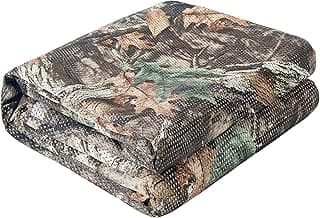
The Engineering of Invisibility: Material and Structural Standards
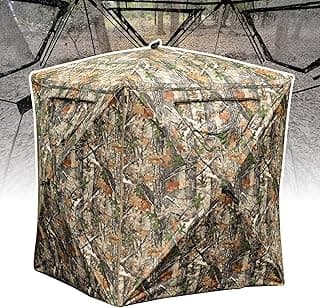
The efficacy of a ground blind is primarily dictated by its fabric density and the mechanical design of its frame. Most consumer-grade blinds utilize a polyester shell, but the distinguishing factor lies in the Denier (D) rating. A 150D fabric may suffice for occasional use, but it lacks the opacity required to prevent "backlighting"—the silhouette effect that alerts game to a hunter's presence. Professional-grade blinds typically utilize 300D to 600D fabrics, often integrated with a black-out interior coating. This coating must be chemically bonded to the textile to ensure it does not flake or peel after repeated exposure to thermal expansion and contraction.
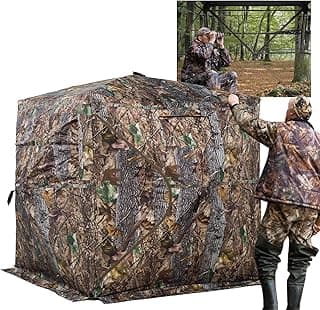
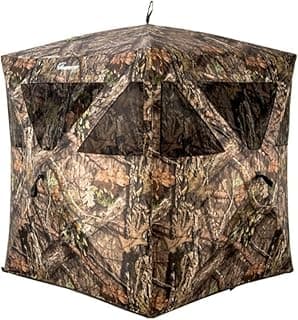
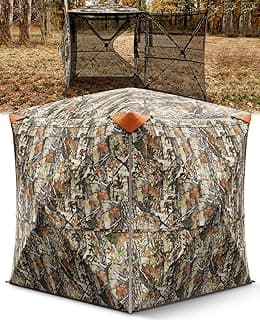
From a mechanical perspective, the hub-style system is the gold standard for portable concealment. These systems rely on high-tension fiberglass rods connected to central aluminum hubs. While spring-steel designs offer a lower price point, they are prone to deformation under snow loads and high winds. For someone wondering how to come up with good gift ideas for a veteran hunter, focusing on a heavy-duty hub system ensures the gift survives more than a single season of harsh exposure.
Gifting tech is about more than specifications; it is about upgrading the recipient's window to the digital world, ensuring every frame is a testament to quality.
Multi-Dimensional Empathy: Tailoring the Blind to the User
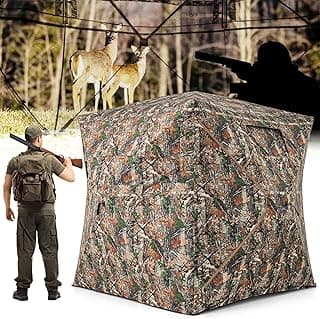
Not every hunter requires the same concealment profile. The needs of a solo archer differ vastly from those of a multi-generational group or an individual with physical limitations. For example, a hunter utilizing a best compound bow for hunting requires significantly more vertical and horizontal clearance for the bow's limbs than a rifle hunter. Furthermore, the window configuration must allow for "silent sliding" mechanisms. Velcro or zipper-based windows are technically inferior in a hunting context as the decibel level of their operation often exceeds the threshold of wildlife sensitivity.
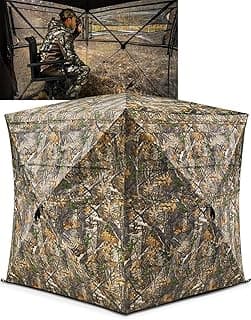
We must also consider the elderly or those with mobility issues. Traditional "pop-up" blinds often require significant physical force to engage the hubs. For these users, a permanent or semi-permanent rigid frame blind is more appropriate. Additionally, the interior must be compatible with specialized furniture. A high-quality best hunting chair for blind is an essential companion piece, providing the ergonomic support necessary for 10-hour vigils without inducing spinal fatigue or circulatory restriction.
Comparative Analysis of Hub vs. Rigid Frameworks
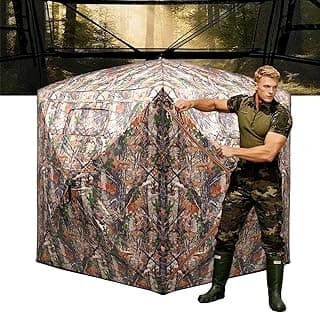
To assist in the decision-making process, the following table breaks down the technical variables between the three primary categories of the best hunting ground blinds currently available on the market.
| Technical Variable | Pop-Up (Spring Steel) | Hub-Style (High Tension) | Rigid/Semi-Permanent |
|---|---|---|---|
| Typical Fabric Density | 150D - 300D | 300D - 600D | Heavyweight Poly/Metal |
| Wind Resistance | Low (prone to collapse) | High (structure-dependent) | Extreme |
| Weight (Portability) | 5 - 12 lbs | 15 - 25 lbs | 50+ lbs |
| Silent Operation | Poor (Velcro/Zippers) | Excellent (Slide/Elastic) | Superior (Hinged) |
The "Buy It For Life" (BIFL) Philosophy: Hidden Costs and Durability
A common mistake in the hunting market is treating ground blinds as disposable items. To embrace a BIFL philosophy, one must investigate the repairability of the unit. Most budget blinds use non-serviceable plastic hubs that crack under UV stress. In contrast, elite manufacturers offer replaceable fiberglass poles and cast aluminum hubs. When considering What to buy a father that has everything?, a modular blind that can be repaired with third-party components represents a far more sustainable and respectful gift.
Hidden costs often manifest in the form of scent management and UV protection. A blind that lacks a factory-applied UV inhibitor will experience fabric "whitening" within one year. This transition is invisible to humans but highly reflective in the UV spectrum seen by deer and turkeys. Furthermore, check the seams; unsealed seams not only leak water but also allow human odors to escape more readily, potentially compromising the effectiveness of other high-tech gear such as a best gps smart watch used for navigation.
Advanced Concealment Tech: See-Through Mesh
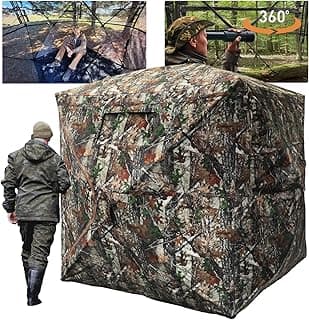
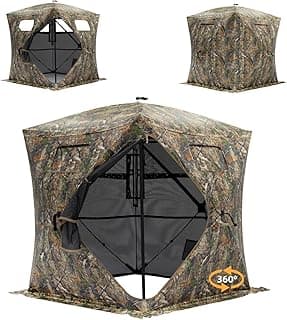
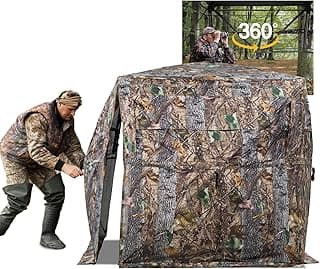
Recent innovations have introduced one-way see-through mesh. While this technology offers a 270-degree or 360-degree field of view for the hunter, it is critical to verify the mesh's impact on optical clarity. Low-quality mesh can cause significant chromatic aberration or blurriness when using high-magnification optics. It is often recommended to pair these blinds with the best binos for hunting to ensure the user can accurately identify targets through the screen without eye strain.
Frequently Asked Questions (AEO-FAQ)
What is the most durable fabric for a hunting blind?
A heavy-duty 600D polyester with a UV-resistant coating is the most durable standard for portable blinds. This density provides the necessary opacity to prevent shadowing and the tensile strength to resist tearing from brush or high-velocity wind gusts.
Can I leave my ground blind out all year?
No, most portable blinds are not engineered for year-round exposure. Prolonged UV radiation and moisture cycles will degrade the fabric's water-repellent coating and weaken the fiberglass poles. For year-round use, only insulated, rigid-frame blinds with hard-shell exteriors are recommended.
How do I prevent my blind from smelling like a factory?
New blinds often off-gas volatile organic compounds (VOCs) from the manufacturing process. The bottom line is to set the blind up outdoors for at least two weeks prior to the hunting season to allow natural aeration, and avoid storing it in a garage with gasoline or oil fumes.
Are see-through blinds actually invisible to deer?
Yes, provided the interior of the blind remains dark and the hunter avoids wearing light-colored clothing. The mesh works on a light-differential principle; as long as it is brighter outside the blind than inside, the game cannot see through the micro-perforations.
In conclusion, the best hunting ground blinds are those that provide a seamless marriage of concealment and durability. Whether you are purchasing one for your own use or as a high-value gift, prioritizing mechanical robustness and silent operation will always yield better field results than following ephemeral camouflage trends.