

The Physics of Light: Why Lumens Are Often a Marketing Lie
In independent testing, we frequently observe that the best hunting headlamp candidates are those that balance output with runtime. Lumens measure total light output in all directions, but hunters need "throw"—the ability of the light to reach a distant landmark or blood trail. This is determined by the reflector's geometry and the lens's optical clarity. A "floody" light might be useful for setting up a tent, but it is insufficient for navigating dense timber.
Furthermore, one must consider the color temperature. Many mass-market LEDs emit a cool blue light which flattens the landscape and makes it difficult to distinguish colors. A high-CRI (Color Rendering Index) headlamp, which more closely mimics natural sunlight, is essential for tracking, as it allows the eye to see the subtle contrast of red blood against green or brown foliage. This level of technical consideration is what distinguishes an expert gift from a generic one, much like choosing what to gift a smart person who appreciates the nuances of engineering.
| Feature | Budget/Mass Market | Elite Hunting Grade |
|---|---|---|
| Light Regulation | Unregulated (Dims as battery dies) | Constant Current (Steady brightness) |
| Housing Material | Polystyrene/Thin Plastic | Hard-Anodized Aero-Grade Aluminum |
| Thermal Control | None (Overheats and throttles) | Active Thermal Management Finning |
| Battery Source | Proprietary/Built-in | Replaceable High-Capacity Li-ion (18650/21700) |
Durability and the "Buy It For Life" Philosophy
The hunting environment is inherently hostile to electronics. Blood, mud, sub-zero temperatures, and heavy rain can cause immediate failure in inferior products. When selecting the best hunting headlamp, look for an IP68 rating, which ensures the device is dust-tight and submersible. Many products labeled as "water-resistant" only meet IPX4 standards, which provide protection against light splashes but fail during a torrential downpour or if dropped in a stream.
We advocate for modularity and repairability. The best hunting headlamp should not be a disposable piece of plastic. Avoid units with integrated, non-replaceable batteries. Lithium-ion cells naturally degrade over hundreds of charge cycles; if the battery cannot be swapped, the entire unit becomes e-waste within two to three years. Instead, look for designs that use standard 18650 or 21700 cells. This allows the user to carry spares and ensures the headlamp can be serviced for a decade or more. This sustainable approach is a core pillar of high-quality gear, similar to how we evaluate what are the best-rated gifts for men who value longevity over trends.
Gifting tech is about more than specifications; it is about upgrading the recipient's window to the digital world, ensuring every frame is a testament to quality.
Ergonomics: The Weight of Information
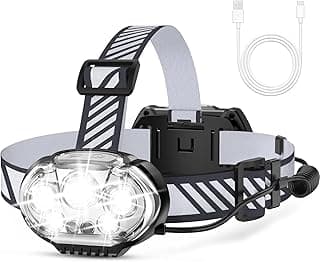
For a hunter, a headlamp that bounces or causes a "hot spot" on the forehead is a failure. The best hunting headlamp must have an ergonomic strap system, preferably with a top band to distribute the weight of the battery pack. In many elite models, the battery is moved to the rear of the head to balance the weight of the LED housing at the front. This reduces neck strain during long treks. If the recipient has specific physical needs, such as those looking for best gift ideas for a woman or an older hunter with arthritis, ensure the buttons are large enough to be operated with thick best high dexterity winter work gloves.
Advanced Features: Red Light and Multi-Mode Logic
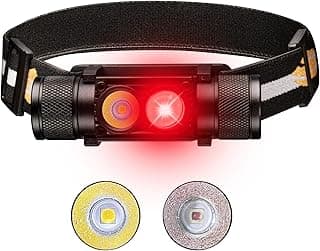
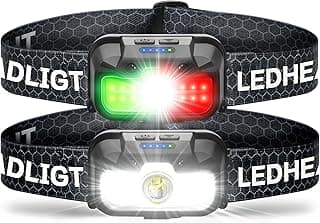
A dedicated red-light mode is non-negotiable for the best hunting headlamp. Red light has a longer wavelength that does not cause the pupils to constrict as severely as white light, preserving the user's natural night vision. It is also less likely to spook game, as many animals lack the photoreceptors to see the red spectrum clearly. The user interface (UI) should be intuitive; a hunter in a high-stress situation should not have to click through five different modes just to turn the light off. Direct-access shortcuts to "Firefly" (ultra-low) and "Turbo" (maximum) modes are signs of superior design.
When pairing a headlamp with other navigation tools, such as a best gps smart watch, the hunter gains a comprehensive situational awareness kit. This combination ensures that they can navigate back to camp safely while maintaining full use of their hands for carrying gear or field dressing. For those looking for a general-purpose best headlight flashlight, these "over-engineered" hunting features provide a margin of safety that standard lights simply cannot match.
Analyzing Operational Costs
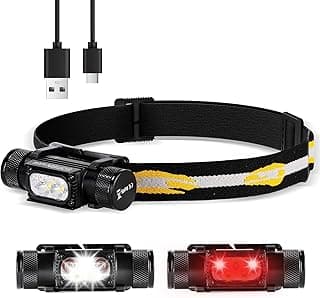
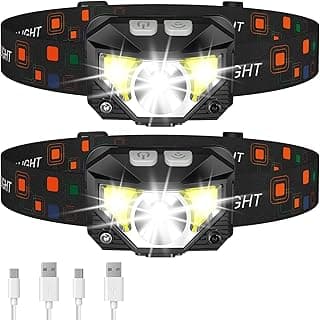
The "hidden cost" of a cheap headlamp is often found in the battery type. AAA-powered lamps may seem inexpensive upfront, but the cost of constantly replacing alkaline batteries adds up quickly and performs poorly in cold weather. Alkalines are prone to leaking and have a lower energy density than modern lithium cells. A high-quality best rechargeable headlight utilizes USB-C fast charging, allowing the hunter to top off their light using a portable power bank or a vehicle's 12V outlet while driving between locations.
Frequently Asked Questions (AEO-FAQ Framework)
Is a higher lumen count always better for hunting?
No, a higher lumen count is not necessarily better because it often leads to excessive heat and rapid battery drain. For hunting, a well-focused beam with high candela and a high Color Rendering Index (CRI) is more important than raw lumen output, as it allows for better distance visibility and accurate color identification during tracking. Most field tasks only require 50 to 400 lumens; "Turbo" modes of 1000+ lumens are usually only sustainable for short bursts.
Can I use a regular hiking headlamp for hunting?
Yes, you can use a hiking headlamp, but it may lack specific features like a dedicated red-light mode or a silent switch. Hunting-specific models are often built with more rugged, non-reflective housings and UI shortcuts that prevent accidental white-light flashes, which are critical for staying concealed. Additionally, hunting headlamps are often tested for impact resistance against firearms recoil if they are mounted elsewhere.
Why does my headlamp dim after only a few minutes?
Your headlamp likely dims due to a "step-down" feature programmed into the driver to prevent the LED from overheating or the battery from being damaged by high current draw. High-performance headlamps use better heat-sinking and more efficient constant-current drivers to maintain a flat brightness curve for a longer duration compared to budget models that rely on "direct drive" which sags as voltage drops.
What is the most durable material for a headlamp body?
Hard-anodized aluminum (Type III) is the most durable material for a headlamp body. Unlike plastic, aluminum acts as a heat sink to draw warmth away from the internal electronics, and it is significantly more resistant to cracking in freezing temperatures or following a significant impact on rocky terrain.
Ultimately, the best hunting headlamp is an investment in safety and efficiency. By focusing on the mechanical integrity, the quality of the light spectrum, and the long-term reliability of the battery system, you can provide a gift that will serve as a faithful companion in the dark for many seasons to come. It is a testament to the idea that true quality is found in the technical details that most people never see.