
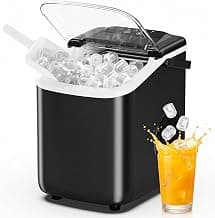
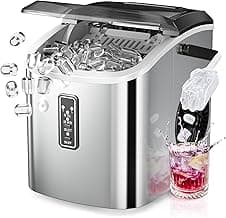
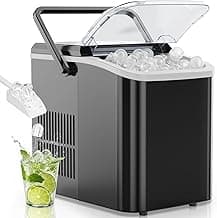
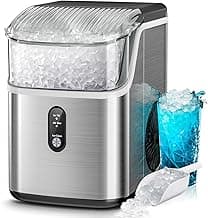
The Engineering Behind the Best Ice Maker for Home Use
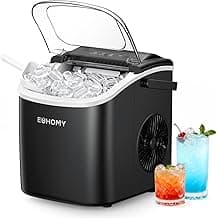
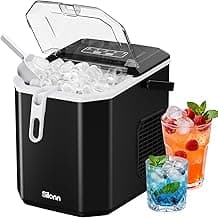
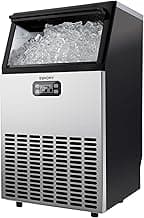
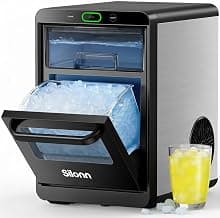
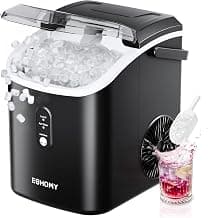
Unlike traditional freezer molds that freeze water from the outside in—trapping air and impurities—a high-end ice maker for home use typically employs one of two mechanical processes. The first is the falling film technique, common in clear ice production, where water flows over a vertical chilled plate. The second is the auger system, which produces the sought-after "nugget" ice by scraping thin layers of ice from a cylindrical evaporator and compressing them into small, chewable pieces. If you are shopping for a connoisseur of texture, the best chewable ice maker is often the preferred choice because it creates porous ice that absorbs the flavor of the beverage.
However, performance is strictly dictated by the environment. Most residential units are air-cooled, meaning their "24-hour production capacity" is measured at a standard 70°F ambient temperature. In a warmer kitchen or near a heat-producing oven, that efficiency can drop by as much as 20-30%. This is a critical factor when considering what is a good gift for someone moving into a new house, as the placement of the appliance will dictate its actual real-world output.
Gifting tech is about more than specifications; it is about upgrading the recipient's window to the digital world, ensuring every frame is a testament to quality.
Analyzing Ice Morphology: Finding the Right Match
Different ice shapes serve different physical purposes. Large, dense cubes have a lower surface-area-to-volume ratio, resulting in a slower melt rate that prevents the dilution of expensive spirits. Conversely, small bullet-shaped ice, produced by budget countertop units, melts rapidly and is best suited for water bottles or quick smoothies. For those who frequently host gatherings, the best clear ice maker for home bar use provides the aesthetic and functional performance required for high-end cocktails.
To help you navigate these variables, the following table compares the most common residential ice types based on their technical characteristics:
| Ice Type | Density Rating | Primary Use Case | Mechanical Failure Risk |
|---|---|---|---|
| Clear/Gourmet Cube | High (99% Solid) | Slow-melting for spirits and highball drinks. | Medium (Scaling on evaporator plates) |
| Nugget/Sonic Ice | Low (Compressed Flake) | Chewable; perfect for soft drinks and healthcare. | High (Auger and gearbox wear) |
| Bullet Ice | Medium (Hollow Core) | Quick cooling; standard for most countertop units. | Low (Simple mechanical "scoop" design) |
The Buy It For Life (BIFL) Perspective: Durability and Maintenance
From a "Buy It For Life" standpoint, the best ice maker for home use is not necessarily the one with the most features, but the one that can be easily maintained. The most common cause of terminal failure in these appliances is mineral calcification. In regions with hard water, calcium and magnesium deposits build up on the evaporator sensors and water pumps. Without a dedicated "Self-Clean" cycle or an accessible water circuit for manual descaling, the machine’s lifespan will rarely exceed two years. Expert-level gifts should always be accompanied by a high-quality water filter to mitigate these issues from day one.
Furthermore, one must analyze the "hidden costs" of ownership. Portable countertop units are rarely refrigerated; the bins are merely insulated. This means ice is constantly melting and being recycled back into the reservoir. While this prevents water waste, the constant running of the compressor to maintain the ice supply leads to higher energy consumption and faster wear on the mechanical seals. For a truly high-performance gift, the best countertop nugget ice maker should feature a high-efficiency compressor and a quiet cooling fan to ensure it remains a helpful addition rather than a noisy distraction in the recipient's living space.
Gifting Strategies for Different Living Conditions
When selecting these units as best birthday gift ideas, consider the recipient’s specific lifestyle constraints:
- The Apartment Dweller: Focus on decibel ratings. Units that utilize brushless DC fans are significantly quieter than the budget AC fan alternatives found in mass-market stores.
- The High-Volume Entertainer: Prioritize production speed over storage. A machine that produces 40+ lbs of ice per day is useless if it only stores 2 lbs at a time, forcing the user to manually move ice to a separate freezer bin.
- The Remote Worker: A desk-side ice maker provides a small luxury during the workday, but it must have an automatic shut-off sensor to prevent overflow if the user is distracted by meetings.
Frequently Asked Questions (FAQ)
Do home ice makers keep the ice frozen like a freezer?
No, the majority of countertop ice makers for home use do not have a refrigerated storage bin. These units are designed to produce ice quickly and hold it in an insulated basket where it will slowly melt over time, with the meltwater being recycled back into the reservoir to create more ice. For long-term storage, you must move the produced ice to a traditional freezer.
How often do I need to clean a home ice maker?
You should clean and descale your ice maker every 1 to 3 months depending on the hardness of your local water supply. Hard water causes mineral buildup on the freezing elements, which can lead to cloudy ice, reduced production speed, and eventual motor failure. Using distilled or filtered water can significantly extend the time between cleaning cycles.
Why does my ice maker smell or produce bad-tasting ice?
Bad-tasting ice is typically caused by mold growth in the water lines or the absorption of food odors from the surrounding environment. Because ice makers are damp, warm environments when not in use, they are prone to biofilm buildup. Regular sanitization with a food-grade citric acid solution or a specialized ice machine cleaner is required to maintain hygiene and taste neutrality.
Is it worth buying an ice maker with a built-in water line?
Yes, if the recipient has the plumbing infrastructure available, a unit with a dedicated water line provides the ultimate convenience by eliminating the need to manually refill the reservoir. However, for most "gift" scenarios, a portable model is safer as it requires no professional installation and can be used immediately out of the box.
In conclusion, finding the best ice maker for home use involves a careful balance of mechanical complexity, maintenance requirements, and the recipient's specific needs. By prioritizing machines with modular parts, robust compressors, and efficient cooling systems, you ensure that your gift remains a centerpiece of the home for years to come, rather than a disposable convenience.