
The Engineering Advantage: Why Size Matters in UAV Gifting
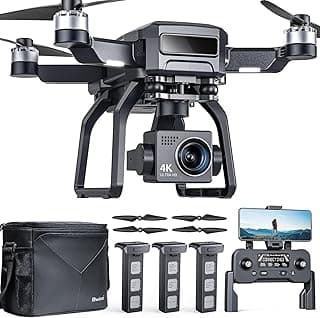
The primary benefit of a large-scale drone platform is its rotational inertia. In mechanical terms, a larger distance between the motors—the "diagonal wheelbase"—increases the leverage the flight controller has to maintain level flight. While many look for the best 4k drone for casual use, a large-scale platform offers a superior physical barrier against the "jello effect" (rolling shutter vibration) often found in lightweight plastic frames. When you gift a large drone, you are providing a platform that can accommodate larger sensors, such as 1-inch or Micro Four Thirds CMOS units, which are essential for professional-grade dynamic range and low-light performance.
Gifting tech is about more than specifications; it is about upgrading the recipient's window to the digital world, ensuring every frame is a testament to quality.
When considering what is someone that loves technology, a drone with heavy-lift capabilities is the pinnacle of the hobby. These machines utilize high-torque, low-KV (kilovolt) brushless motors that spin larger propellers. This configuration is inherently more efficient for long-duration flights and heavy payloads. Unlike the fast-consumerism models that rely on high-RPM small blades, the best large drone prioritizes steady, deliberate movement, which is the hallmark of high-budget cinematography and precision mapping.
Technical Comparison: Small vs. Large Scale Drones
To understand the value proposition of a large-scale gift, one must examine the hardware variables that influence long-term utility. The following table highlights the physical and operational differences that justify the investment in a larger platform.
| Technical Variable | Sub-250g Micro Drones | Best Large Drone (Pro-sumer) |
|---|---|---|
| Motor Configuration | High KV / High Heat Displacement | Low KV / High Torque Efficiency |
| Propeller Diameter | 3 to 5 inches | 9 to 15+ inches |
| Wind Resistance | Beaufort Scale 3-4 (Moderate) | Beaufort Scale 5-7 (Strong/Near Gale) |
| Signal Penetration | Standard Wi-Fi / Digital Link | Redundant Long-Range OcuSync/Radio |
| Repairability | Glued/Snap-fit (Difficult) | Screw-fastened / Modular Components |
BIFL Philosophy: Ensuring Longevity in High-End Drones
The best christmas gifts for techies focus on longevity and performance rather than seasonal trends. A "Buy It For Life" (BIFL) approach to drones requires looking beyond the box art and examining the availability of replacement parts. The best large drone models are almost always designed with a modular architecture. This means that if a landing gear strut cracks or an ESC (Electronic Speed Controller) fails after three years of service, the recipient can source an independent replacement part and perform the repair with standard precision tools. In contrast, many smaller "disposable" drones require the entire unit to be replaced or sent to a proprietary service center at a cost exceeding the unit's value.
Hidden costs of ownership must also be analyzed. Large drones require high-capacity Lithium-Polymer (LiPo) or Lithium-High-Voltage (LiHV) batteries. While these offer impressive flight times, they have a finite lifecycle of 200–300 charge cycles before internal resistance increases and capacity degrades. When gifting these items, check for intelligent battery management systems (BMS) that automatically discharge the cells to a "storage voltage" to prevent swelling and chemical degradation. This level of battery sophistication is rarely found in budget models but is standard in the best large drone category.
User Empathy: Choosing the Right Large Drone for the Recipient
If you are struggling with how to come up with good gift ideas, look toward tools that offer creative expansion. However, a large drone is not a universal solution. It is essential to match the machine to the recipient's physical and technical comfort levels:
- The Aspiring Filmmaker: Needs the best aerial photography drone with an integrated 3-axis mechanical gimbal. Electronic Image Stabilization (EIS) is insufficient for large-scale cinema work; only physical stabilization provides the fluid motion required for professional results.
- The Industrial Professional: Engineers and filmmakers often seek the best professional drone to ensure project success. These users require RTK (Real-Time Kinematic) GPS positioning for centimeter-level accuracy in surveying and mapping.
- The Tech Enthusiast: Prioritizes obstacle avoidance sensors and automated flight modes. Large drones have higher kinetic energy; therefore, a 360-degree infrared or vision-based avoidance system is a critical safety feature to prevent high-velocity impacts.
Direct Answer FAQ: Essential Drone Gifting Knowledge
Is a large drone harder to fly than a mini drone?
No. In fact, a large drone is generally significantly easier to fly because its increased mass and more powerful GPS modules allow it to hover with rock-solid stability, even in gusty winds that would cause a small drone to drift. The complexity arises from pre-flight checklists and legal regulations rather than the actual flight controls.
Do large drones require special registration or licenses?
Yes. Any drone weighing over 250 grams (which includes virtually all large drones) must be registered with the relevant national aviation authority (such as the FAA in the US or EASA in Europe). Depending on the usage—recreational versus commercial—the recipient may also need to pass a basic safety test or obtain a remote pilot certificate.
What is the most common reason for large drone failure?
Firmware mismanagement and battery neglect. Most large-scale UAV failures are not mechanical but are caused by pilots ignoring low-battery warnings or failing to calibrate the compass (IMU) after traveling long distances, which can lead to "fly-away" incidents where the drone loses its positional orientation.
Are large drones loud enough to be a nuisance?
While large drones move a higher volume of air, they often operate at a lower acoustic frequency than small drones. Small drones produce a high-pitched "mosquito" whine, whereas a large drone produces a lower-frequency "thrum" that carries further but is often perceived as less irritating at a distance. However, strict adherence to local noise ordinances is always recommended.
Ultimately, selecting the best large drone as a gift signals an appreciation for high-performance engineering. It is a gift that moves the recipient from being a casual observer to an active pilot of a sophisticated aerial robot. By focusing on modularity, battery health, and mechanical stabilization, you ensure that this high-tech investment remains a functional part of their creative arsenal for years to come.