
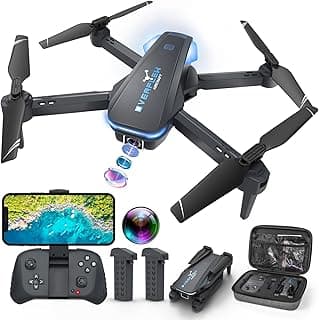
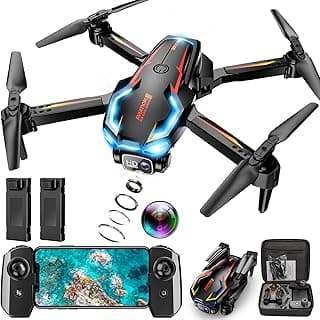
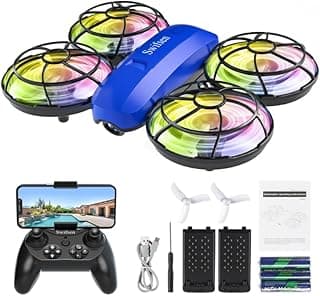
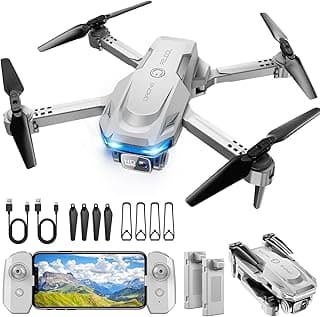
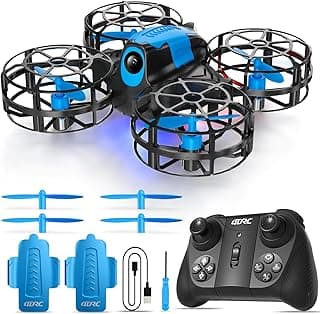
The Physics of a Beginner-Friendly Flight
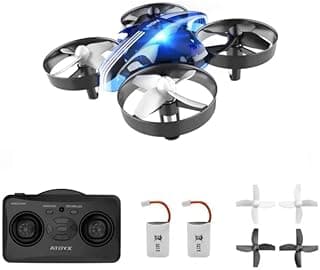
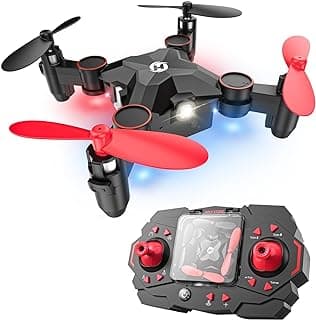
The "best learning drone" isn't necessarily the most expensive one, but rather the one with the most sophisticated flight controller. For a beginner, the primary challenge is orientation. Advanced learning drones include "Headless Mode," a software-level feature that aligns the drone’s movement with the controller’s joystick regardless of where the drone's "nose" is pointed. From a technical standpoint, this relies on a high-precision magnetometer that must be shielded from electromagnetic interference—a common failure point in ultra-budget models.
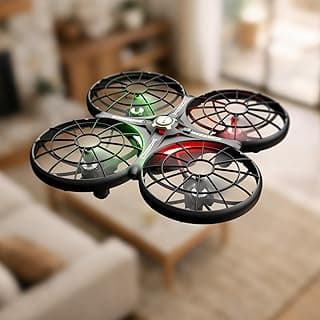
Furthermore, stability in the air is governed by the PID (Proportional, Integral, Derivative) loop tuning within the flight controller. A well-engineered best quadcopter drone uses data from its IMU (Inertial Measurement Unit) to make hundreds of micro-adjustments per second. Without this, the aircraft will drift significantly, making indoor practice nearly impossible for those who live in confined spaces.
Safety and Durability: The Engineering Perspective
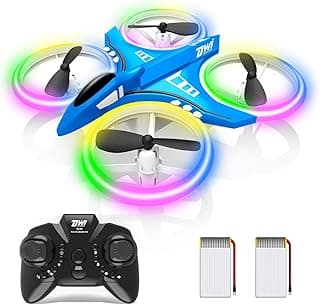
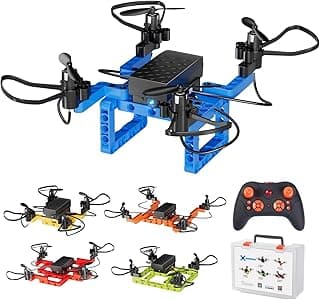
When gifting to a younger recipient, durability is the most critical technical variable. Propeller guards are not just safety accessories; they are essential structural components that protect the motors from torque-induced failure during a collision. We recommend looking for frames made of high-ductility polymers rather than brittle, recycled plastics. If the recipient is particularly interested in the mechanics, you might consider how what is someone that loves technology might react to a drone that allows for component swapping.
| Feature | Technical Requirement | Learning Impact |
|---|---|---|
| Motor Type | Brushless (Preferred) vs. Brushed | Brushless motors offer 10x the lifespan and better wind resistance. |
| Positioning | GPS + Optical Flow | Enables "Hands-off" hovering, reducing the risk of crashes for novices. |
| Battery Chemistry | LiPo with Smart Management | Prevents over-discharge and ensures predictable flight times. |
| Frame Material | Reinforced ABS or Carbon Fiber | Determines whether a crash results in a scratch or a total loss. |
The "Buy It For Life" Philosophy in Drone Gifting
The drone industry is notorious for "planned obsolescence." To avoid this, a strategic gifter should look for a best starter drone kit that features a modular design. Many budget drones utilize proprietary, "all-in-one" boards where a single motor failure requires discarding the entire unit. In contrast, a BIFL (Buy It For Life) approach favors drones with plug-and-play components. This transition from consumer to "pilot-mechanic" is a significant part of the learning curve.
Before purchasing, it is vital to research the availability of third-party spare parts. Does the manufacturer sell replacement arms? Can you buy prop-guards separately? For those who have access to a 3D printer, selecting a model with community-supported files can be life-changing; the best 3d printer for drone parts allows a student to manufacture their own upgrades and repairs, reinforcing the STEM educational value of the gift.
User Empathy: Matching the Drone to the Recipient
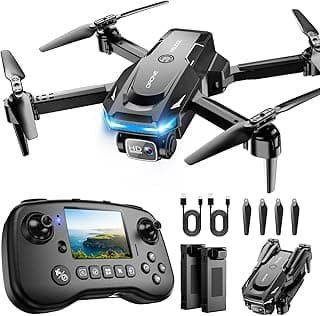
Not every learner has the same needs. A 10-year-old child needs a drone with fully enclosed propellers and a low-latency "Return to Home" button. An adult learner, however, might prioritize a best affordable video drone that offers a stable 4K gimbal-stabilized camera, as their "learning" involves both piloting and aerial cinematography. For those still unsure about the direction of their gift, understanding how to come up with good gift ideas involves analyzing the recipient's environment—do they have a large backyard, or will they be flying in a local park with strict decibel regulations?
The weight of the drone is another factor. In many jurisdictions, drones over 250 grams require federal registration. For a hassle-free gift, selecting a "Nano" or "Mini" drone that stays under this threshold allows the recipient to start flying immediately without bureaucratic hurdles. This is a crucial detail often overlooked by those considering best gift ideas for teens.
The best drones are those that bridge the gap between being a passenger and being a pilot, offering enough assistance to prevent frustration but enough manual control to teach the true art of flight.
Hidden Costs and Operational Realities
A drone gift is rarely a one-time expense. The engineering-minded gifter should account for the "Hidden Costs of Ownership":
- Battery Degradation: LiPo batteries lose approximately 20% of their capacity after 50-100 cycles. Providing extra batteries is essential for a meaningful practice session.
- SD Card Requirements: High-bitrate video requires U3-rated cards; standard cards will cause system lag and data corruption.
- Software Updates: Some drones require modern smartphones with specific CPU requirements to run the flight app.
Frequently Asked Questions
Is a cheap drone good for learning?
No, ultra-cheap drones (under $50) usually lack the altitude hold and stabilization sensors required for a positive learning experience, often leading to immediate crashes. Investing slightly more in a stabilized platform ensures the recipient spends more time flying and less time retrieving the aircraft from trees.
How long does it take to learn to fly?
With a modern "best learning drone" equipped with GPS, a user can be comfortably hovering and performing basic maneuvers within 30 minutes. However, mastering manual flight and complex cinematic orbits can take dozens of flight hours. If you are looking for best starter drones, prioritize those with flight simulators built into the app.
Can these drones be flown indoors?
Yes, provided the drone has "Optical Flow" sensors that do not rely on GPS, which often fails inside buildings. Ensure the drone is in "Cine" or "Tripod" mode to limit maximum speed and sensitivity while indoors. This is a great feature for those wondering what should i gift on my birthday to someone with limited outdoor access.
In conclusion, the best learning drone is a sophisticated balance of software assistance and mechanical resilience. By focusing on modularity, sensor quality, and the recipient's specific physical environment, you are gifting an experience that transcends mere entertainment. You are gifting the sky.