
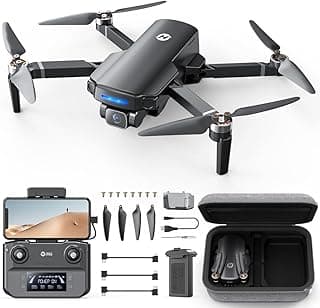
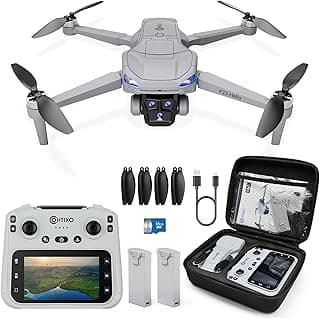
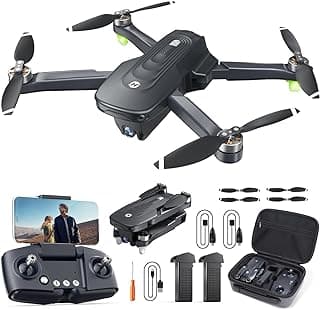
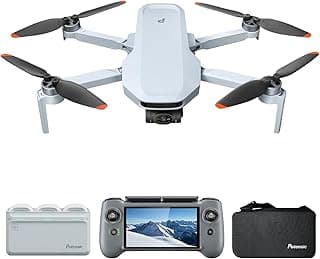
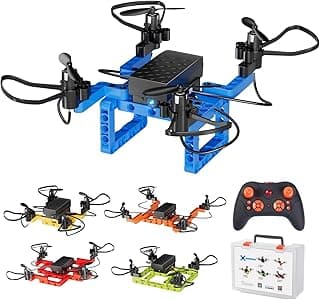
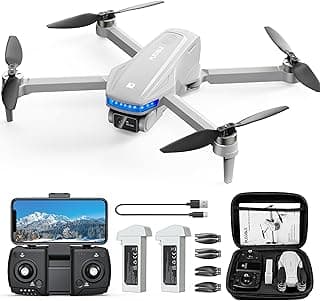
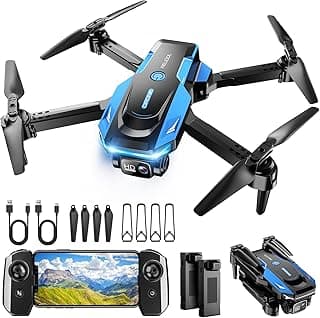
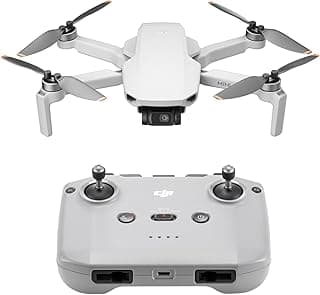
The Technical Foundation of a Reliable Starter Drone
From an engineering perspective, the stability of a drone is dictated by its flight controller’s ability to process data from the Inertial Measurement Unit (IMU). For a beginner, the kit must include an autonomous hovering feature, usually stabilized by GPS or optical flow sensors. Without these, the learning curve becomes a series of expensive crashes. When evaluating the best starter drone kit, the distinction between brushed and brushless motors is the most critical factor for longevity. While some might consider a best 100 dollar drone as a low-risk entry, these often utilize brushed motors which have a finite lifespan of approximately 10 to 20 flight hours before mechanical friction degrades the internal brushes.
In contrast, premium starter kits utilize brushless motors. These are more efficient, generate less heat, and are significantly quieter. For a gift that is intended to last, investing in brushless technology is a prerequisite for a "Buy It For Life" philosophy. It ensures the recipient spends more time in the air and less time sourcing replacement parts for burned-out propulsion systems.
| Feature | Brushed Motors (Budget) | Brushless Motors (Premium Starter) |
|---|---|---|
| Mechanical Longevity | Low (10-20 hours) | High (1000+ hours) |
| Maintenance | Disposable; requires motor replacement | Modular; requires occasional bearing cleaning |
| Flight Stability | Prone to power fluctuations | Precise RPM control for better hovering |
| Noise Profile | High-pitched friction noise | Low-frequency aerodynamic hum |
User Empathy: Matching the Drone to the Pilot
A gifting strategist must consider the specific needs of the recipient. A best aerial drone for a teenager living in a suburban area has different requirements than a kit for an adult traveler. For younger users, propeller guards and a weight under 250 grams are essential—not just for safety, but to comply with international civil aviation regulations that often exempt lightweight craft from complex registration processes.
Gifting tech is about more than specifications; it is about upgrading the recipient's window to the digital world, ensuring every frame is a testament to quality.
For those looking for gifts for my best friend who has an interest in photography, the camera sensor becomes the priority. A true starter kit for a creator should feature a mechanical gimbal. Electronic Image Stabilization (EIS) can only do so much to correct for wind buffeting; a 2-axis or 3-axis physical gimbal is the only way to ensure professional-grade footage. If the goal is high-quality imaging, one should steer toward a best 4k drone that balances sensor size with flight endurance.
Hidden Costs and the Maintenance Lifecycle
The purchase price of the best starter drone kit is only the first step. To provide a truly comprehensive gift, one must account for the ecosystem of ownership. Lithium Polymer (LiPo) batteries are the lifeblood of these machines, yet they are also their most vulnerable component. These batteries degrade over time, losing capacity after approximately 200-300 charge cycles. A "smart" battery system, which automatically discharges to a storage voltage when not in use, is a critical feature that prevents swelling and premature failure.
Furthermore, one must analyze the availability of third-party spare parts. A drone that cannot be repaired is a disposable product. Expert hobbyists recommend kits where propellers, landing gear, and even arm modules can be swapped out using standard hex drivers. This modularity transforms a potential "crash and burn" scenario into a minor mechanical hurdle, teaching the recipient valuable repair skills along the way. This is especially true for what is someone that loves technology, as they often find as much joy in the maintenance and optimization of the machine as they do in the flight itself.
Safety and Environmental Considerations
Operating a drone involves a responsibility to the environment and the community. High-quality starter kits now include "Geofencing" software, which prevents the drone from accidentally entering restricted airspace near airports or sensitive government installations. This software-level protection is invaluable for a novice pilot who may not yet be familiar with local aviation charts. Additionally, considering the decibel levels is important for those living in high-density areas; a drone that produces over 80 decibels can quickly become a nuisance to neighbors, potentially leading to conflicts that end the hobby prematurely.
Structured Evaluation of Modern Starter Kits
When finalizing a choice, use the following technical variables to rank potential candidates. A kit that scores highly in three or more of these categories represents a superior value proposition:
| Technical Variable | Ideal Specification for Starters | Why It Matters |
|---|---|---|
| Signal Transmission | Occusync or Digital 2.4/5.8GHz | Prevents signal loss and "fly-aways" in interference-heavy areas. |
| Battery Chemistry | High-Density LiPo with BMS | Extends flight time and ensures safe charging/storage. |
| Weight Class | < 249 Grams | Simplifies legal compliance in most jurisdictions. |
| Navigation | Dual-Band GPS + GLONASS | Enables accurate "Return to Home" if the controller loses connection. |
Frequently Asked Questions (FAQ)
Is it difficult for a beginner to learn how to fly a drone?
No, modern drones equipped with GPS and downward-facing vision sensors are remarkably easy to fly as they can maintain a stationary hover even if the pilot lets go of the controls. The "best starter drone kit" will typically include "Headless Mode," which makes the drone respond to directional inputs relative to the pilot rather than the drone's own orientation, significantly reducing the initial cognitive load.
Do I need a license to give a drone as a gift?
No license is required to purchase or gift a drone; however, the recipient may need to complete a basic online safety test (such as the FAA TRUST in the US) depending on their country's regulations and the weight of the drone. Always check if the drone weighs more than 250g, as this is the standard threshold for mandatory registration in many regions.
How long do drone batteries actually last in the air?
Most starter drones offer a flight time between 18 and 31 minutes per battery, though real-world conditions like wind and temperature will often reduce this by 15-20%. It is highly recommended to choose a "Fly More" combo or a kit that includes at least two batteries, as the charging process typically takes much longer than the flight duration itself.
In conclusion, gifting the best starter drone kit is an exercise in balancing technical sophistication with practical durability. By prioritizing brushless motors, mechanical gimbals, and modular repairability, you provide the recipient with a tool that expands their horizons rather than a gadget that ends up in a landfill. Whether it is for a photography enthusiast or a tech-obsessed friend, a well-chosen drone offers a unique perspective that few other gifts can match.