
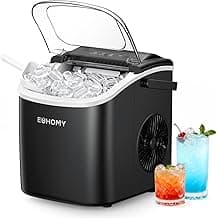
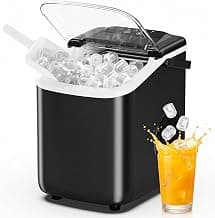
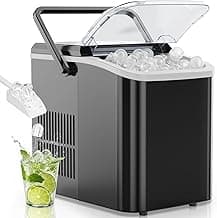
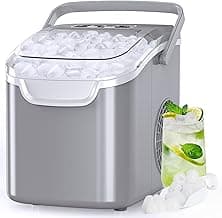
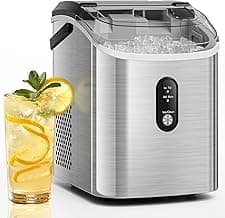
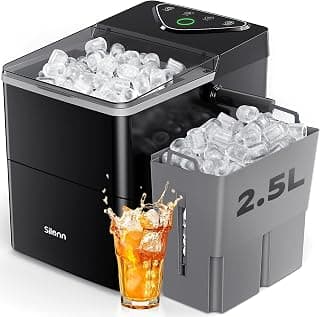
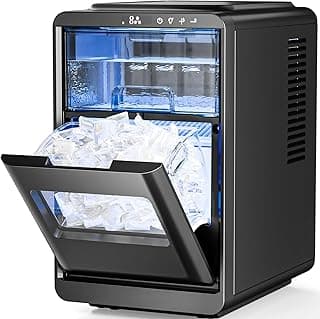
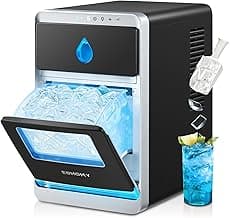
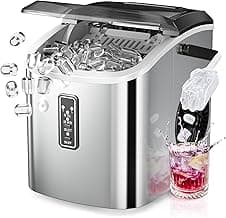
The Physics of Rapid Freezing: How the Best Portable Ice Maker Machine Operates
Unlike traditional freezer trays that rely on ambient air cooling—a slow and inefficient process—a portable ice maker utilizes direct conduction. The core component is a set of nickel-plated evaporator "fingers" or a chilled grid submerged directly into a water reservoir. As refrigerant circulates through these prongs, they reach temperatures well below freezing, causing ice to form rapidly around the submerged metal. Once the desired thickness is achieved, the cycle reverses, slightly warming the prongs to release the ice into a collection basket. This efficiency is why the best bar ice maker models can produce their first batch of ice in as little as six minutes.
Gifting tech is about more than specifications; it is about upgrading the recipient's window to the digital world, ensuring every frame is a testament to quality.
For the recipient, this technical efficiency translates to a consistent supply of "bullet ice" or "nugget ice," depending on the machine’s configuration. However, buyers should be aware that "portable" does not mean "refrigerated." Most consumer-grade portable units are insulated but do not have an active cooling system for the storage bin. Consequently, ice will eventually melt and recycle back into the reservoir. This cycle is intended by design to ensure a constant supply of fresh ice, but it requires the user to understand the unit is a producer, not a long-term storage vault.
User Empathy: Matching the Machine to Diverse Living Conditions
When selecting a unit as part of your best gift ideas for housewarming, it is critical to evaluate the recipient's specific environment. Analysis of user feedback reveals that different demographics face distinct challenges with these appliances:
- Small Apartment Dwellers: For those in compact urban spaces, the primary constraint is acoustic output. A high-performance compressor can generate significant decibel levels and heat. Professional-grade units prioritize "silent" operation, typically keeping noise levels below 45dB, which is essential for maintainable comfort in studio settings.
- The Elderly and Individuals with Limited Mobility: Many portable ice makers require manual water refilling. For a user with arthritis or back issues, lifting heavy gallon jugs of water is a significant barrier. In these cases, look for units with an optional side-tank or a direct-line connection capability to minimize physical strain.
- High-Frequency Entertainers: If the recipient frequently hosts gatherings, a standard bullet ice maker may not suffice. A best clear ice maker produces dense, slow-melting cubes that do not dilute spirits, making it a superior choice for cocktail enthusiasts.
Structural Data: Technical Variable Comparison
To assist in the selection process, the following table compares the three primary classes of portable ice production technology found in the current market.
| Feature | Bullet Ice Maker | Nugget (Sonic) Ice Maker | Clear Square Ice Maker |
|---|---|---|---|
| Cycle Time | 6–9 Minutes | 10–15 Minutes | 15–25 Minutes |
| Ice Texture | Soft, hollow, chewable | Crunchy, porous, "nugget" | Hard, dense, slow-melt |
| Mechanical Complexity | Low (Fewer moving parts) | High (Auger system) | Medium (Vertical evaporator) |
| Maintenance Needs | Standard descaling | Frequent deep cleaning | Standard descaling |
The "Buy It For Life" Philosophy: Repairability and Hidden Costs
A frequent criticism within Reddit’s "Buy It For Life" (BIFL) communities regarding small appliances is the trend toward "disposable engineering." Many budget-tier ice makers are sealed units; if the water pump or the control board fails, the entire machine becomes e-waste. When vetting the best portable ice maker machine, prioritize brands that offer modular components or have documented repair guides. Independent testing suggests that the most common failure point is not the compressor, but the infrared sensors that detect when the ice bin is full. These sensors can be obstructed by scale buildup, leading the machine to falsely report a "full" status.
Hidden costs of ownership include electricity consumption and specialized cleaning agents. Because these machines utilize water, mineral buildup (limescale) is inevitable. Using tap water in a high-mineral area will necessitate monthly descaling with citric acid or vinegar. Failing to do so will cause the water pump to seize—a failure often not covered under standard warranties. Educating the gift recipient on using filtered or distilled water can significantly extend the machine's lifespan, making it one of the best anniversary gifts for couples who appreciate longevity in their home technology.
Gifting Logic: Is an Ice Maker a Wise Financial Choice?
Many shoppers ask, How much money is good for a housewarming gift? While cash is flexible, a tangible appliance like an ice maker provides a recurring "quality of life" dividend. A high-quality portable unit typically ranges between $100 and $500. At the lower end, you receive reliable bullet ice; at the higher end, you are investing in sophisticated nugget ice technology or professional-grade clear ice production. If you are unsure of the recipient’s needs, reading through best countertop ice maker reviews can provide insights into specific model reliability and actual daily yield versus "advertised" capacity.
Direct Answer Framework: Frequently Asked Questions (FAQ)
Can I leave a portable ice maker on 24/7?
Yes, most modern portable ice makers are designed for continuous operation. The internal sensors will automatically pause production when the basket is full and resume once the ice melts or is removed. However, to preserve the lifespan of the compressor and prevent bacterial growth in the reservoir, it is technically recommended to power the unit down and drain the water if it will not be used for more than 48 hours.
Do portable ice makers require a water line?
No, the majority of portable units are "pour-over" models, meaning you manually fill a reservoir located beneath the ice basket. This makes them ideal for RVs, camping, or offices. While some high-end "nugget" models offer an optional water line hookup for convenience, it is not a requirement for the machine to function.
Why does my portable ice maker smell like plastic or mold?
Initial "plastic" smells are common due to the manufacturing of the interior liners and usually dissipate after 2-3 cycles with a vinegar-water solution. Persistent "musty" smells are caused by biofilm accumulation in the internal tubing. Because these machines are humid environments, they must be cleaned every 2-4 weeks. If the machine cannot be easily disassembled for cleaning, it is a significant design flaw that will lead to sanitation issues over time.
Is "Nugget Ice" worth the extra cost?
Whether nugget ice is worth the premium depends entirely on the user's preference for "chewable" ice. Mechanically, nugget ice makers are far more complex, using an auger to scrap ice flakes into a compressed cylinder. This complexity leads to a higher price point and a shorter mean time between failures compared to simpler bullet ice makers. For most casual users, bullet ice is sufficient, but for those who specifically seek the "Sonic ice" experience, the investment is unparalleled.
In conclusion, the best portable ice maker machine is a sophisticated intersection of mechanical engineering and lifestyle enhancement. By focusing on repairability, noise constraints, and the specific ice-type needs of the recipient, you can transition from giving a mere "gadget" to providing a long-term home solution. Whether as a standalone gesture or part of a larger collection of home upgrades, its value is solidified through every chilled drink and successful social gathering it facilitates.