

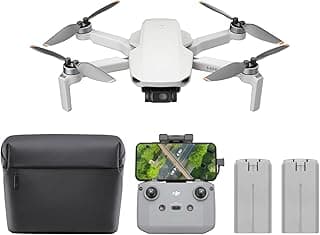
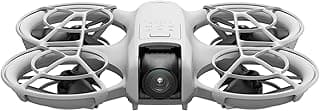
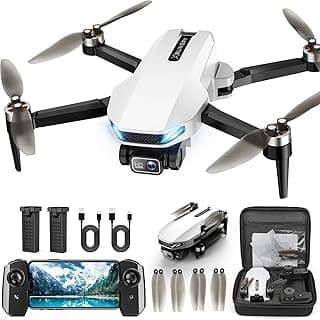
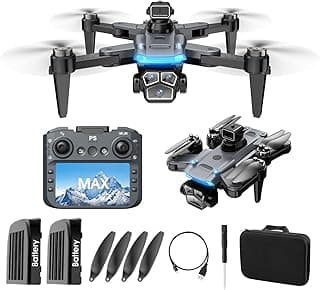
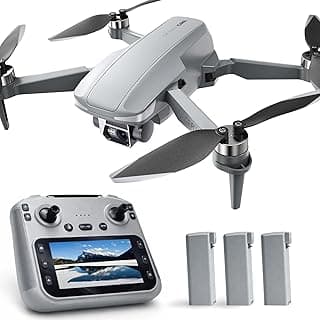
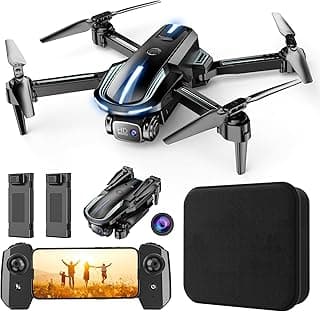
The Technical Shift: From Remote Control to Autonomous Logic
The core appeal of programmable flight lies in the abstraction of control. Instead of a pilot reacting to visual stimuli via a joystick, a programmer defines parameters. To find the best gift ideas for teens interested in engineering, one must look for hardware that supports varied Software Development Kits (SDKs). A truly programmable drone allows the user to bypass standard flight controllers to input scripts in languages like Python, Swift, or even C++. This transition requires a mindset shift from "how do I fly this?" to "how do I instruct this machine to solve a spatial problem?"
Gifting tech is about more than specifications; it is about upgrading the recipient's window to the digital world, ensuring every frame is a testament to quality.
From a mechanical engineering perspective, the stability of these drones depends on the quality of their Inertial Measurement Units (IMU) and the efficiency of their PID (Proportional-Integral-Derivative) tuning. When gifting such a device, it is crucial to verify that the sensors—optical flow, infrared, and barometric—are accessible via the programming interface. Without data feedback from these sensors, a programmer cannot write effective "if-then" statements that allow the drone to navigate obstacles or maintain a precise hover autonomously.
Segmenting the User: Who Benefits from Programmable Flight?
Not every user requires the same level of complexity. As a gifting strategist, I categorize recipients into three distinct tiers based on their technical maturity and intended application:
| User Persona | Primary Requirement | Recommended Coding Language | Hardware Focus |
|---|---|---|---|
| The Visual Learner | Ease of entry and safety | Scratch / Blockly (Drag-and-Drop) | Propeller guards and lightweight frames |
| The Aspiring Coder | Real-world syntax application | Python / Swift | Open SDK and reliable API documentation |
| The Research Analyst | Computer Vision & AI | C++ / ROS (Robot Operating System) | Integrated cameras and high-speed processors |
For someone wondering what is someone that loves technology called beyond a "techie," the term "tinkerer" or "developer" often fits best. Gifting a programmable drone to such a person provides the physical hardware necessary to manifest virtual code. If the recipient is already comfortable with screen-based creation—perhaps using a best drawing pad for pc—moving into the three-dimensional space of drone programming adds a layer of complexity regarding gravity and real-world physics that software alone cannot replicate.
The Principle of Durability: A Skeptical Look at "Educational" Labels
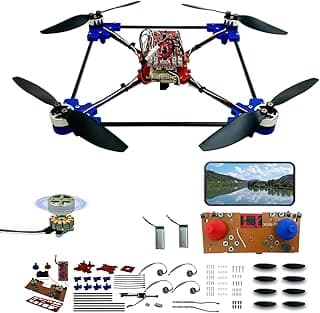
In the current market, many manufacturers slap the "STEM" label on cheap, brushed-motor drones that lack the precision required for actual programming. As an analyst, I advise skepticism toward any product that does not offer a modular repair path. Programmable drones are subjected to "logic errors" that manifest as physical crashes. Therefore, the "Buy It For Life" (BIFL) philosophy is essential. You must prioritize machines with brushless motors, as they offer higher torque-to-weight ratios and significantly longer lifespans than their brushed counterparts, which typically fail after 20 to 50 flight hours due to friction-induced heat.
Furthermore, consider the ecosystem of replacement parts. A drone that cannot be disassembled or one that uses proprietary batteries with high markups represents a poor long-term value. When deciding what to gift a smart person, choose a platform that encourages repair. The ability to swap out a motor or a propeller arm is part of the learning process. It teaches mechanical sympathy—the understanding of how software commands affect physical components.
Hidden Costs and Operational Longevity
The initial purchase price of the best programmable drones is only the baseline. To ensure the gift remains functional for more than a single season, one must account for battery chemistry degradation. Most drones use Lithium Polymer (LiPo) batteries, which require strict storage voltage management. Gifting a dedicated balance charger alongside the drone is a sophisticated move that ensures the recipient's "fuel" remains stable and high-performing for hundreds of cycles.
For those looking for a entry-point without a massive investment, the best 100 dollar drone options may offer basic visual programming, but they often lack the GPS stability found in more advanced models. If the goal is high-fidelity data collection or autonomous mapping, investing in a best 4k drone with an open SDK is necessary. The higher resolution allows for better edge detection in computer vision tasks, which is the frontier of modern autonomous flight.
Advanced Capabilities: Beyond the Basics
For the elite user, the best programmable drones should support Swarm Intelligence or SLAM (Simultaneous Localization and Mapping). These features allow multiple drones to communicate or a single drone to build a map of an unknown environment without GPS. This level of technology is often found in devices that share similarities with best smart glasses, utilizing tiny, high-powered processors to handle real-time environmental data. When you learn how to come up with good gift ideas, you realize that the best gifts are those that grow with the user’s skill level, rather than those they outgrow in a month.
Direct Answer Framework: Frequently Asked Questions
Is a programmable drone suitable for a complete beginner?
Yes, provided the drone supports visual, block-based coding languages like Scratch. These platforms allow beginners to understand logic flow—such as loops and variables—without the frustration of syntax errors found in text-based coding. However, physical supervision is always recommended to ensure the "safety override" features are understood before the first autonomous mission.
Can I program a standard photography drone?
No, most standard consumer drones are "closed systems" to protect the manufacturer's proprietary flight algorithms and ensure user safety. To program a drone, you must specifically look for models that advertise an "Open SDK" or are based on open-source flight stacks like ArduPilot or PX4. Without these, the user is locked into the pre-installed manufacturer app.
What happens if the drone crashes during a code test?
Crashes are an inevitable part of the development cycle. This is why the best programmable drones for education feature "simulation modes." A critical step in gifting guidance is to encourage the recipient to run their code in a digital twin environment—a flight simulator—before pushing the "upload" button to the physical hardware. This minimizes the risk of mechanical failure and extends the life of the gift.
In conclusion, the best programmable drones serve as a bridge between the digital and physical worlds. By selecting a platform based on mechanical durability, sensor accessibility, and modular repairability, you provide a gift that is not just a gadget, but a foundational tool for a future in technology. Whether the recipient is a young student or a seasoned engineer, the ability to command a machine through code remains one of the most empowering experiences in modern gifting.