
![Mammoth Lakes, Mono Divide Map [Inyo and Sierra National Forests] (National Geographic Trails Illustrated Map, 809)](/_next/image/?url=https%3A%2F%2Fm.media-amazon.com%2Fimages%2FI%2F91Y1xnqyY9L._AC_UL320_.jpg&w=640&q=75)
![Paiute ATV Trail Map [Fish Lake National Forest, BLM] (National Geographic Trails Illustrated Map, 708)](/_next/image/?url=https%3A%2F%2Fm.media-amazon.com%2Fimages%2FI%2F91RO-SWSqmL._AC_UL320_.jpg&w=640&q=75)
The Engineering of Precision: What Defines a High-Quality Topographical Map?
Topographical maps differ from standard navigational tools by representing the three-dimensional reality of the earth’s surface on a two-dimensional plane. For a hunter, "the best" does not mean the most colorful; it means the most accurate. Accuracy in this context is defined by the scale and the contour interval. A 1:24,000 scale, often used by the USGS, provides the granular detail necessary to identify "bench" formations or hidden drainage areas where game might congregate.
When searching for the best 10x50 binoculars for hunting, one looks for clarity and light transmission. Similarly, a high-quality map must offer visual clarity. This is achieved through high-contrast printing and the use of multi-layered data. Modern maps often integrate public and private land boundaries, which is a critical feature for legal compliance. Without clear markers for property lines, a hunter risks unintentional trespassing—a complication no gift-giver wants to bestow.
Gifting tech is about more than specifications; it is about upgrading the recipient's window to the digital world, ensuring every frame is a testament to quality.
The physical substrate of the map is another engineering consideration. Traditional bond paper is unsuitable for field use as it loses structural integrity when saturated. The "Buy It For Life" (BIFL) approach suggests prioritizing synthetic, waterproof papers or high-mil lamination. These materials resist tearing along fold lines and can be marked with grease pencils for tactical planning, then wiped clean without degrading the printed ink.
Comparing Navigational Mediums: Digital vs. Physical
The debate between digital applications and physical paper maps is often framed as a choice between modern convenience and old-school reliability. However, an elite strategist knows that these tools are complementary. Digital maps allow for rapid scouting and "e-scouting" before the season begins, but they are tethered to battery life and hardware stability. Physical maps serve as the fail-safe, the ultimate insurance policy in the backcountry.
| Variable | Physical Synthetic Maps | Digital Mapping Apps |
|---|---|---|
| Power Requirement | Zero; depends on ambient light only. | High; requires constant battery/charging. |
| Update Frequency | Static until a new edition is printed. | Frequent; dynamic data updates. |
| Field Durability | High (Waterproof/Tear-resistant). | Limited by device ruggedness. |
| Tactical Utility | Excellent for group planning. | Superior for GPS waypointing. |
Selecting the best topo maps for hunting as a gift requires understanding how to come up with good gift ideas that address real-world vulnerabilities. If the recipient frequently hunts in high-altitude, sub-zero environments, digital screens may lag or fail entirely. In these conditions, a high-resolution paper map is not just a backup; it is the primary tool. Conversely, for a hunter who covers thousands of acres in a single season, the multi-layered convenience of a digital subscription might be more appropriate.
The Hidden Costs of Modern Navigation
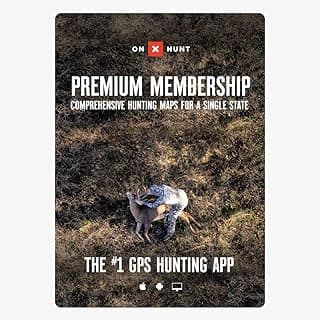
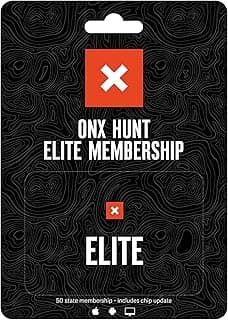
A critical principle in gifting premium gear is analyzing the hidden costs of ownership. Digital mapping services often operate on a subscription model. While the initial "gift" might be a one-year membership, the recipient is then burdened with recurring costs to maintain access to their saved waypoints and data layers. This "software as a service" (SaaS) model contrasts sharply with the BIFL philosophy. A physical map, once purchased, remains a permanent asset in the hunter’s collection.
Furthermore, hardware depreciation is a significant factor. A high-end smartphone or tablet used for navigation will likely be obsolete within three to five years. In contrast, the topographical features of a mountain range do not change on a human timescale. A well-maintained physical map can remain accurate for decades, only needing replacement if land ownership boundaries shift significantly. This longevity is what makes it a contender for what is the greatest gift to give: a tool that lasts a lifetime.
Multi-Dimensional User Empathy: Who Are You Buying For?
As an expert, I categorize hunters into three primary personas to ensure the map matches their specific mechanical and psychological needs:
1. The Backcountry Specialist
This individual ventures miles from the nearest trailhead. They require a "custom" map that covers their specific drainage or ridge. For them, weight is an enemy. They need ultra-thin, high-strength synthetic maps that can be folded into a pocket without bulk. Every gram saved is a gram of additional water or protein they can carry.
2. The Tech-Integrated Scout
This hunter likely uses best active noise cancelling headphones during the long drive to the camp and relies on a suite of digital tools. For them, the best topo maps for hunting are digital-physical hybrids—maps with QR codes that sync to their mobile devices, allowing for seamless transition between the screen and the page.
3. The Senior Sportsman
Aging hunters or those with visual impairments face challenges with the small, dense text of standard USGS maps. The ideal gift for this group is a "large-format" map with enhanced contrast and simplified legends. Prioritizing 20-foot or 40-foot contour intervals over the more crowded 10-foot intervals can significantly reduce eye strain and improve decision-making speed in the field.
Maintenance and Longevity of Cartographic Gifts
To truly embrace the BIFL philosophy, the gift should include a protective system. A transparent, UV-resistant map case is essential for preventing the sun’s rays from fading critical data. When a map is exposed to the elements, even the "waterproof" coatings can eventually break down if they are constantly abraded by grit and dirt. Encouraging the recipient to store their maps flat or in loose rolls, rather than tight, permanent creases, will double the life of the product.
BIFL Checklist for Map Selection:
- Material: Is it printed on a polymer substrate rather than cellulose?
- Ink: Are the inks UV-stabilized to prevent fading?
- Detail: Does the scale allow for identifying features smaller than 50 feet?
- Modular Storage: Is there a compatible protective case included?
Frequently Asked Questions
Is a paper map better than a GPS for hunting?
Yes, as a primary fail-safe, a paper map is superior because it does not rely on satellite signals, battery power, or internal circuitry that can fail in extreme weather. While a GPS offers precision, a map provides the broad spatial context necessary for tactical movement and emergency egress.
What map scale is best for stalking game?
A scale of 1:24,000 is the gold standard for stalking because it provides enough detail to identify micro-terrains like saddles, funnels, and small creeks. Larger scales (like 1:100,000) are better for driving or general orientation but lack the granularity required for active hunting.
How do I know if a map is actually waterproof?
Look for terms like "synthetic paper" or "polypropylene substrate." True waterproof maps are not just coated with a thin layer of plastic; the material itself is plastic-based and will not absorb water even if submerged for hours. You can test this by applying a drop of water to a corner; it should bead and roll off immediately without leaving a dark spot.
In conclusion, the best topo maps for hunting represent a fusion of technical engineering and sentimental value. By choosing a map that respects the physical realities of the backcountry and the diverse needs of the individual hunter, you are providing more than just a piece of paper; you are providing the confidence to explore, the safety to return, and the expertise to succeed.