
The Engineering of Clear Ice: Why Thermal Physics Matters
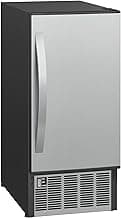
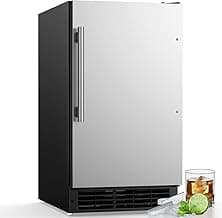
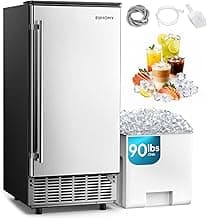
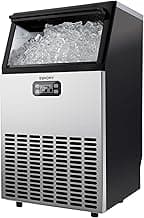
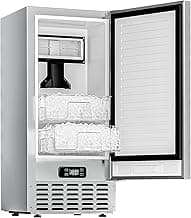
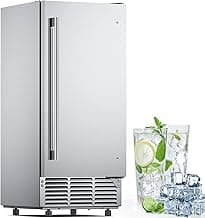
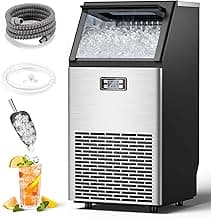
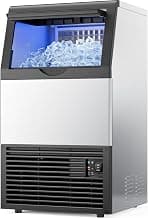
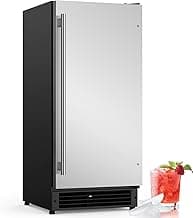
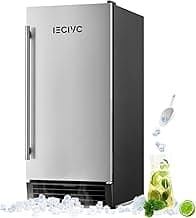
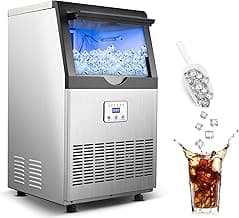
The primary differentiator between a standard freezer bin and a dedicated undercounter machine is the production of "clear ice." Standard ice is cloudy because it freezes from the outside in, trapping air and minerals in the center. In contrast, the best undercounter ice maker for home models utilizes directional freezing. Water is continuously circulated over a chilled evaporator plate, allowing layers to build up slowly while impurities and air bubbles are washed away. This results in ice that is chemically purer and physically denser, meaning it melts slower and does not alter the flavor profile of the beverage. For a home bar enthusiast, gifting a best clear ice maker for home bar is essentially gifting the ability to serve professional-grade cocktails that maintain their integrity for longer durations.
The Hidden Reality of Installation: Pumps vs. Gravity
One of the most significant oversights when selecting an ice maker as a gift is the drainage requirement. Unlike a refrigerator, these machines are "open systems." The ice bin is not refrigerated to sub-zero temperatures; rather, it is insulated. As ice slowly melts, it must be drained to prevent the bin from becoming a pool of stagnant water. This leads to two distinct mechanical configurations:
- Gravity Drains: These require the unit to be positioned directly above a floor drain. They are mechanically simpler and quieter but offer zero flexibility in placement.
- Condensate Pumps: These units can pump meltwater upwards or across a room to a sink drain. While they allow for versatile installation, they introduce a mechanical failure point and a periodic "humming" sound during the pump cycle.
Technical Comparison: High-Output vs. Specialty Ice Systems
To assist in the decision-making process, the following table breaks down the technical variables between standard high-output clear ice machines and specialty "nugget" or "sonic" ice machines often found in the residential market.
| Feature | Clear Ice (Gourmet) | Nugget Ice (Chewable) |
|---|---|---|
| Ice Density | High (Slow melting) | Low (Aerated, chewable) |
| Production Rate | 30 – 65 lbs per 24 hours | up to 80 lbs per 24 hours |
| Maintenance Level | Moderate (Descaling required) | High (Frequent cleaning needed) |
| Best For | Spirits, Old Fashioneds, Luxury Hosting | Soft drinks, Smoothies, Families |
Principle of Longevity: Buying for Life (BIFL) in the Appliance Space
In the world of high-end appliances, the "Buy It For Life" philosophy is often challenged by mineral scaling and compressor fatigue. Independent repair communities, including those on Reddit, frequently highlight that the lifespan of an ice maker is dictated by water quality and the accessibility of the evaporator. A machine that cannot be easily disassembled for manual descaling is a machine destined for the landfill within three to five years. When searching for the best undercounter ice maker for home, prioritize units with stainless steel reservoirs and accessible cleaning ports. While best commercial ice makers offer incredible durability, they are often too loud for a residential setting. The goal is to find a prosumer model that balances the rugged internal components of a commercial unit with the sound insulation of a home appliance.
Gifting Strategy: Is It Worth the Investment?
When determining how much money is good for a housewarming gift of this magnitude, the budget typically starts at four figures for a reliable undercounter unit. While a best countertop nugget ice maker is a fantastic, more affordable alternative, the permanence of an undercounter model adds significant value to the property itself. It is a "milestone" gift, often reserved for best anniversary gifts for couples who have recently renovated their forever home. The psychological impact of never having to buy a bag of ice again, coupled with the aesthetic appeal of a custom-paneled door that matches the cabinetry, makes this a gift of unparalleled sophistication.
Frequently Asked Questions (AEO Framework)
Do undercounter ice makers require a dedicated water line?
Yes, all undercounter ice makers require a dedicated 1/4-inch cold water supply line similar to a refrigerator's ice maker. Unlike portable units, these machines cannot be manually filled with water; they are designed for automated, continuous production to ensure the bin remains full at all times.
Are undercounter ice makers loud enough to disturb a quiet kitchen?
It depends on the model, but generally, yes, they produce more noise than a standard refrigerator. The noise comes from three sources: the compressor running, the water circulating over the evaporator, and the "clinking" sound of ice dropping into the bin. High-end residential models include extra insulation to dampen these sounds, but they are rarely completely silent.
How often does an undercounter ice maker need to be cleaned?
A thorough cleaning and descaling must be performed every six months, or more frequently if the home has hard water. Mineral buildup is the number one cause of mechanical failure in ice makers. Using an inline water filter can extend the time between cleanings, but it does not eliminate the need for a manual vinegar or nickel-safe citric acid flush to maintain the clarity and taste of the ice.
Can an undercounter ice maker be installed outdoors?
Only if the unit is specifically rated for outdoor use. Outdoor-rated ice makers feature enhanced insulation, weather-resistant electrical components, and more powerful compressors capable of maintaining ice production in high ambient temperatures. Installing an indoor unit in an outdoor kitchen will void the warranty and likely lead to compressor failure within a single summer season.
Ultimately, choosing the best undercounter ice maker for home requires a balance of plumbing pragmatism and a desire for luxury. By focusing on repairability, ice quality, and the specific hosting needs of the recipient, you can provide a gift that transforms their daily routine into a high-end experience.