


The Engineering Standards of Market Leaders
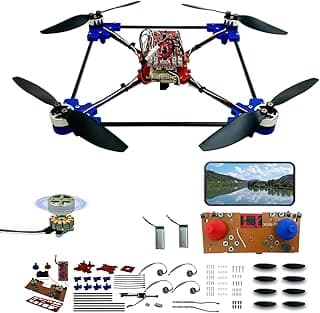
The distinction between a generic quadcopter and a product from the best drone makers lies in the sophistication of the Inertial Measurement Unit (IMU) and the Electronic Speed Controllers (ESCs). Top-tier manufacturers utilize brushless motors with high-grade magnets that resist heat degradation, ensuring that the propulsion system remains efficient over hundreds of flight hours. In contrast, budget-focused brands often rely on brushed motors with a finite lifespan, making them poor choices for those seeking a "buy it for life" gift experience. For a recipient who appreciates technical precision, such as what is someone that loves technology, the hardware's internal architecture is just as important as the external design.
Safety is the primary qualifying condition for any premium recommendation. A reliable maker must integrate a fully functional Global Navigation Satellite System (GNSS) that connects to multiple constellations (GPS, GLONASS, Galileo) to prevent positioning drift. Without this level of engineering, even the best starter drones can become difficult to control in moderate wind. Furthermore, we must scrutinize the gimbal mechanics; a true 3-axis mechanical gimbal is the only way to achieve cinematic stability, whereas digital stabilization often results in a loss of resolution and "jello" effects in the footage.
Comparative Analysis of Manufacturer Technical Variables
To assist in your selection process, the following table breaks down the technical variables that differentiate industry-standard manufacturers from secondary market competitors.
| Technical Variable | Hobbyist Standard | Professional Grade (Best Makers) |
|---|---|---|
| Motor Type | Brushed (High friction, short life) | Brushless (High efficiency, durable) |
| Obstacle Avoidance | Infrared (Basic, low light failure) | Omnidirectional Vision Sensors |
| Transmission System | Standard Wi-Fi (High latency) | OcuSync/Lightbridge (Low latency, long range) |
| Battery Chemistry | Standard LiPo | Intelligent Flight Battery (Self-discharging) |
User Empathy: Matching Hardware to Living Conditions
When searching for the best gift ideas for a woman who enjoys landscape photography, or perhaps best gift ideas for him if he is an outdoor enthusiast, one must consider the specific constraints of the user's environment. For instance, a gift for a city dweller must prioritize a best small drone with a sub-250g takeoff weight to navigate complex airspace regulations without the need for extensive bureaucratic registration in many regions.
Conversely, users in coastal or mountainous regions require airframes with high wind resistance ratings (Level 5 or higher). A lightweight drone that lacks the motor torque to fight a 20mph gust will quickly become a lost investment. We must also consider the "noise floor." High-pitched propeller noise can be a significant nuisance in suburban environments; therefore, the best drone makers invest heavily in low-noise propeller geometry and sinusoidal ESC algorithms to dampen the acoustic signature of the flight.
The Hidden Costs of Aerial Gifting
A critical perspective often overlooked in gifting guides is the total cost of ownership. While is $1000 a good birthday gift? The answer depends on whether that budget includes essential accessories. High-end drones from the best drone makers often utilize proprietary battery technology. While these "intelligent" batteries are safer—as they automatically discharge to a storage voltage to prevent swelling—they are also significantly more expensive than generic equivalents. A thoughtful gift should include at least two additional batteries, as the standard 20-30 minute flight time is frequently halved by takeoff, landing, and setup procedures.
Moreover, the repairability of the unit is a major factor for the "Buy It For Life" (BIFL) philosophy. Many modern drones are constructed with unibody shells that are held together by plastic clips and proprietary screws, making them nearly impossible for a layperson to repair after a minor crash. We favor makers that offer comprehensive protection plans (like refresh programs) and those whose components, such as the best 4k drone camera modules, can be replaced without discarding the entire aircraft.
Software Ecosystem and Data Security
The hardware is only half of the story. The best drone makers provide robust app support with regular firmware updates that improve flight safety and add new features post-purchase. However, users must be aware of "geofencing" restrictions. Many top brands use GPS data to prevent flight near airports or sensitive locations. While this is a vital safety feature, it can be frustrating for users living in restricted zones. Always verify the recipient's local airspace before committing to a specific brand. For those looking for best first time mother gifts that capture family memories, a drone with reliable "follow-me" modes and high-quality sensors like those found in a best prosumer drone can offer a unique perspective that a traditional camera cannot match.
Frequently Asked Questions
Is it worth buying a drone from a lesser-known manufacturer to save money?
No, because budget manufacturers often cut costs on the flight controller and GPS modules, which directly increases the risk of a total loss due to mechanical or signal failure. Furthermore, third-party parts and battery replacements for obscure brands are often unavailable after the first year of production, leading to forced obsolescence.
Do I need a special license to gift a drone?
No, the act of purchasing or gifting does not require a license, but the recipient may need to register the drone or take a basic safety test (such as the TRUST test in the US) depending on the weight of the aircraft and local laws. Always check the takeoff weight; drones under 249g are generally exempt from many of the stricter registration requirements.
What is the most important spec for a drone used for photography?
The sensor size is the most critical variable. A 1-inch sensor will provide significantly better dynamic range and low-light performance than the smaller 1/2.3-inch sensors found in entry-level models. If the goal is professional-quality imagery, focus on the sensor's physical dimensions rather than just the megapixel count.
In conclusion, navigating the offerings of the best drone makers requires a balance between technical skepticism and an appreciation for the joy of flight. By focusing on modularity, sensor quality, and environmental suitability, you can ensure that your gift remains a high-flying asset for years to view rather than a piece of electronic waste.