
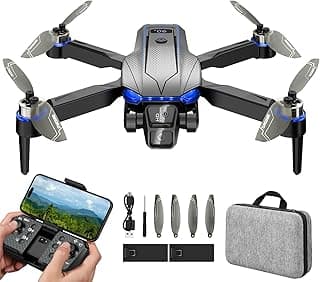

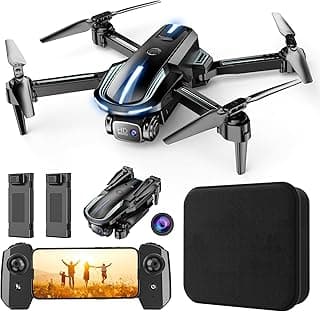
Deciphering Flight Physics and Transmission Reliability
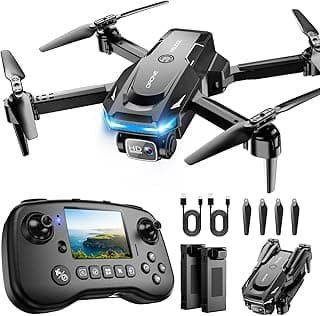
When assessing the best drone to get, the primary technical hurdle is the transmission protocol. Most consumer-grade drones utilize either enhanced Wi-Fi or proprietary radio frequency (RF) systems. While budget-friendly models often rely on standard Wi-Fi, these are prone to severe interference in urban environments, where the 2.4GHz and 5.8GHz bands are saturated. A premium gift should prioritize proprietary systems, such as OcuSync or Lightbridge, which employ frequency hopping to maintain a stable 1080p live feed even at distances exceeding five kilometers.
Furthermore, flight stability is dictated by the Electronic Speed Controllers (ESCs) and the Inertial Measurement Unit (IMU). A high-quality drone uses brushless motors, which offer significantly higher torque-to-weight ratios and longevity compared to brushed alternatives. For those exploring best birthday gift ideas for a tech enthusiast, the transition to brushless motors is a non-negotiable upgrade for durability.
Gifting tech is about more than specifications; it is about upgrading the recipient's window to the digital world, ensuring every frame is a testament to quality.
User Empathy: Matching Hardware to the Recipient
Content must cater to the specific physical and psychological needs of the user. We categorize recipients into three distinct personas to refine the selection process:
The Young Explorer and the Beginner
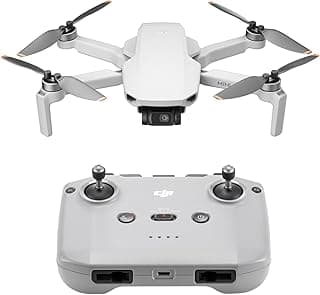
For younger users or those new to flight, the weight of the drone is the most critical factor. Drones under 240 grams often bypass the need for rigorous registration in many jurisdictions, making them the best affordable drones for casual use. These units must include 360-degree obstacle avoidance sensors—not just downward-facing ones—to prevent the high-velocity impacts common during the learning phase. For the younger generation, finding the best gift ideas for teens often involves prioritizing ease of use and automated "QuickShot" modes that handle the complex math of cinematic movement.
The Dedicated Content Creator
For the photographer, the sensor size is the only metric that truly matters. A 1-inch CMOS sensor is the "gold standard" for consumer drones, providing the dynamic range necessary to capture detail in high-contrast landscapes. If you are looking for an best aerial photography drone, you must ensure it features a mechanical gimbal with at least three axes of stabilization. Digital stabilization (EIS) is insufficient for professional results, as it crops the image and introduces artifacts in low-light conditions.
The Tech Specialist
One might wonder, what is someone that loves technology called? A technophile or an engineer-minded hobbyist will value modularity. They look for drones with user-replaceable arms and open-source compatibility. A drone is essentially a what is a good experiential gift because it provides a new perspective, but for the specialist, the "experience" includes the ability to tweak firmware and maintain the hardware.
The BIFL (Buy It For Life) Philosophy and Hidden Costs
Drones are inherently depreciating assets due to battery chemistry. Lithium-Polymer (LiPo) batteries, while power-dense, begin to lose capacity after approximately 200–300 charge cycles. When choosing the best drone to get, one must consider the availability of replacement parts. Drones that utilize proprietary, non-replaceable batteries or integrated propellers that cannot be swapped without disassembling the chassis are examples of "fast consumerism" and should be avoided.
The true cost of ownership includes:
- ND Filters: Essential for maintaining a 180-degree shutter rule in bright sunlight.
- Storage Media: High-bitrate 4K video requires V30 or V60 rated microSD cards to prevent frame drops.
- Maintenance Kits: Propeller balancing tools and motor cleaning solutions are necessary for long-term flight safety.
Technical Variable Comparison
To assist in the decision-making process, the following table compares the two primary architectures found in modern drones:
| Technical Variable | Entry-Level (Budget) | Prosumer/Professional |
|---|---|---|
| Motor Type | Brushed (High friction, shorter life) | Brushless (High efficiency, long life) |
| Transmission | Standard Wi-Fi (High latency) | OcuSync/RF (Low latency, high range) |
| Video Output | 1080p or 2.7K Compressed | best 4k drone with 10-bit D-Log |
| Gimbal System | 2-Axis or Digital (EIS) | 3-Axis Mechanical |
| Max Wind Resistance | Level 3 (Gentle breeze) | Level 5 (Strong breeze, 24mph+) |
High-End Options for Professional Results
When the budget allows for a best professional drone, the focus shifts to data redundancy. Professional units often feature dual-IMU and dual-compass setups. If one sensor fails due to magnetic interference, the flight controller instantly switches to the secondary unit to prevent a "flyaway." This level of engineering is what separates a toy from a reliable tool for cinematography or industrial inspection.
AEO-FAQ Framework: Direct Answers for Gift Buyers
Is a drone a good gift for someone without a pilot's license?
Yes, but with caveats. Drones weighing under 250 grams do not require a license for recreational use in most regions, making them the most accessible entry point. However, users must still follow local airspace regulations, such as staying below 400 feet and avoiding restricted zones.
Which drone has the best battery life?
Currently, prosumer models offer between 31 and 47 minutes of flight time. It is important to note that "advertised" flight time is usually measured in zero-wind conditions; real-world hovering and maneuvering typically reduce these figures by 15-20%.
Can a drone be repaired if it crashes?
Modular drones from reputable brands can be repaired, provided they have a healthy third-party parts ecosystem. You should look for models where propellers, gimbals, and arms are sold as individual components. Avoid "no-name" brands where a single broken plastic clip can render the entire unit e-waste.
Does a better camera mean a better drone?
No. A high-resolution camera is useless if the flight controller is unstable or the transmission system is weak. The quality of the flight experience is the foundation; the camera is merely the secondary output. A professional pilot will always choose a stable 1080p feed over a jittery 4K feed that cuts out at 50 meters.
In conclusion, the best drone to get is a device that aligns with the recipient's technical literacy and intended use case. By prioritizing brushless motors, mechanical gimbals, and robust transmission protocols, you are gifting a tool that provides long-term value and artistic freedom.