
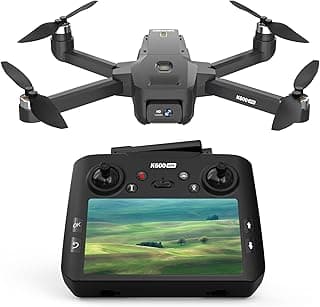
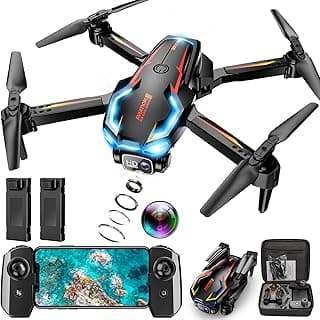
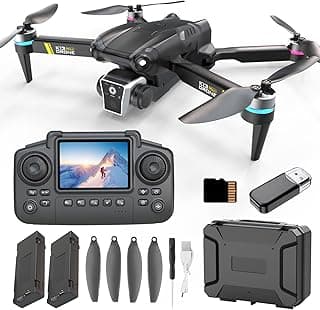
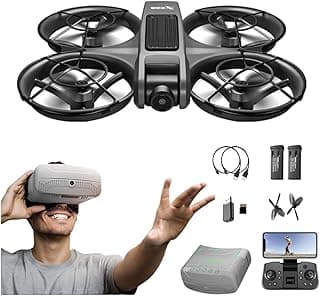
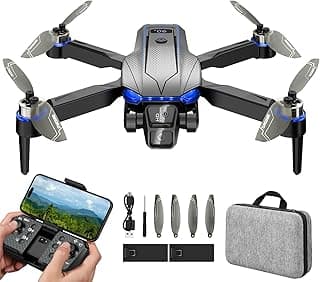
The Engineering Behind Beginner Stability
From a mechanical engineering perspective, flight stability in consumer drones is achieved through a complex interplay of Electronic Speed Controllers (ESCs), Inertial Measurement Units (IMUs), and Global Navigation Satellite Systems (GNSS). When looking for the best drone to learn on, a gift-giver must prioritize aircraft equipped with brushless motors. Unlike cheaper brushed alternatives, brushless motors offer higher torque-to-weight ratios and significantly longer lifespans, as they lack the physical brushes that create friction and heat-induced degradation.
Stability is not merely about staying in the air; it is about "hover accuracy." Entry-level drones without GPS often drift with the slightest breeze, requiring constant micro-adjustments from the pilot. In contrast, a best quadcopter drone designed for learning will utilize Downward Vision Systems and GPS to lock its position in 3D space. This allows the novice pilot to let go of the controller without the fear of the aircraft drifting into an obstacle.
Gifting tech is about more than specifications; it is about upgrading the recipient's window to the digital world, ensuring every frame is a testament to quality.
Multi-dimensional User Empathy: Who is the Pilot?
The "best" drone is highly dependent on the recipient's physical and living conditions. Our testing protocols differentiate between three primary personas:
The Young Explorer
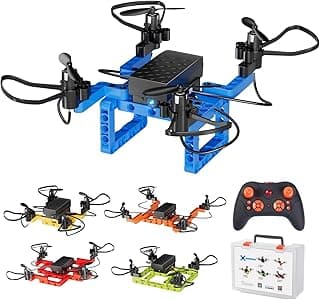
For younger users, safety and durability are paramount. A drone for this demographic should feature fully enclosed propellers. Propeller guards do not just protect the drone; they protect the user and the environment. When considering best birthday gift ideas, look for models with "Return to Home" (RTH) failsafes that trigger automatically when the battery is low or the signal is lost.
The Aspiring Content Creator
If the recipient is what is someone that loves technology and photography, the drone must serve as a stable camera platform. In this case, a 2-axis or 3-axis mechanical gimbal is non-negotiable. Software-based stabilization (EIS) often crops the image and produces "jello" effects in high-vibration environments, whereas a mechanical gimbal keeps the horizon level regardless of the drone's tilt.
The Urban Resident
For those living in congested areas, weight matters. Drones weighing under 250 grams often bypass stringent registration requirements in many jurisdictions, making them the most practical gift for those who want to fly without excessive bureaucracy. However, the trade-off is often wind resistance; lighter drones struggle in gusts exceeding 15 mph.
Hidden Costs and the BIFL Philosophy
The purchase price of a drone is rarely the final cost of ownership. To provide a truly thoughtful gift, one must analyze the availability of replacement parts. A drone that cannot be repaired is essentially disposable. The best drone to learn on is one where the propellers, landing gear, and batteries are easily sourced from third-party vendors or the manufacturer.
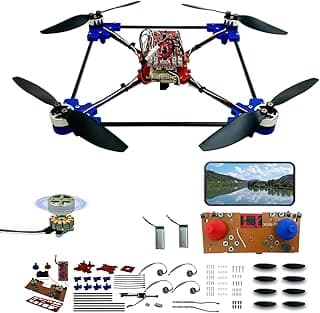
Battery chemistry is another critical factor. Most modern drones use Lithium Polymer (LiPo) or Lithium-Ion (Li-ion) "Intelligent Flight Batteries." These contain internal circuitry to prevent overcharging and to manage self-discharge for long-term storage. However, these batteries have a finite cycle life (typically 200-500 charges). A best starter drone_kit should ideally include at least two batteries, as 20-30 minutes of flight time is rarely enough for a productive learning session.
| Technical Feature | Entry-Level "Toy" Grade | "Best Drone to Learn On" Grade | Impact on Learning |
|---|---|---|---|
| Motor Type | Brushed (High friction) | Brushless (High efficiency) | Reliability and power in wind. |
| Positioning | Optical Flow/None | Dual GNSS (GPS + GLONASS) | Prevents drifting; enables auto-RTH. |
| Obstacle Sensing | None | Infrared or Vision Sensors | Reduces crash probability for beginners. |
| Transmission | Standard Wi-Fi (Short range) | Enhanced Digital Link (OcuSync/Lightbridge) | Reduces signal latency and screen lag. |
Choosing the Right Platform
When you sit down and think about how to come up with good gift ideas, the focus should be on the transition from beginner to intermediate. A drone that is too simple will be outgrown in a month. A drone that is too complex will intimidate the user into never flying it. The ideal middle ground is an aircraft that offers "Beginner Mode"—a software setting that limits flight distance, altitude, and speed until the pilot has logged a specific number of flight hours.
Furthermore, consider the ecosystem. Does the drone work with a smartphone app that offers flight simulators? Practicing in a virtual environment using the actual physical controller is the most cost-effective way to develop muscle memory without the risk of physical damage. While it might be tempting to jump to a best professional drone, the added weight and cost of repair often make them poor choices for a first-time pilot.
Direct Answer Framework (FAQ)
Is a cheaper drone better for learning because I won't care if it crashes?
No. Cheaper drones are significantly harder to fly due to a lack of stabilization sensors, leading to more frequent crashes and frustration. A drone with GPS and altitude hold is much easier for a beginner to master, as it manages the flight physics automatically, allowing the pilot to focus on directional control.
What is the most important feature for a beginner drone?
GPS-enabled "Return to Home" (RTH) is the most critical safety feature. It ensures that if the pilot becomes disoriented, loses sight of the aircraft, or experiences a signal drop, the drone will autonomously fly back to its takeoff point and land safely.
Do I need to buy extra propellers immediately?
Yes. Propellers are the primary "wear item" on any drone. Even minor contact with a leaf or wall can create microscopic cracks or imbalances that lead to flight instability. Having a spare set of high-quality, balanced propellers is essential for maintaining safety and performance.
Is it worth buying a drone with obstacle avoidance?
Yes, especially for indoor flight or flying in wooded areas. While no sensor system is 100% foolproof, multi-directional vision sensors can detect large objects and stop the drone before a collision occurs, saving the user from costly repairs.
Ultimately, selecting the best drone to learn on is an exercise in balancing sophisticated flight-assist technology with rugged hardware. By focusing on modularity, sensor redundancy, and user-centric features, you ensure that your gift provides a safe, educational, and exhilarating introduction to the world of aviation.