
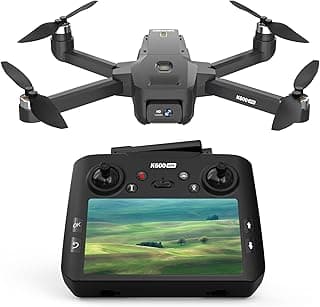
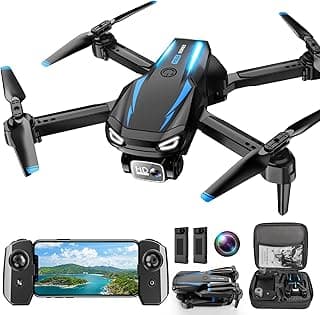
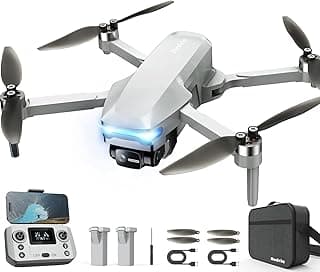
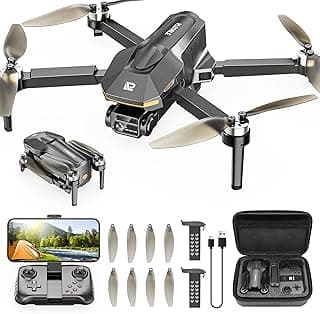
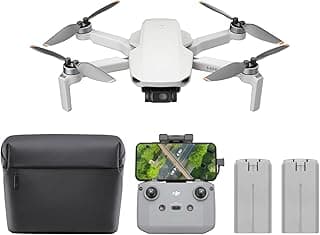
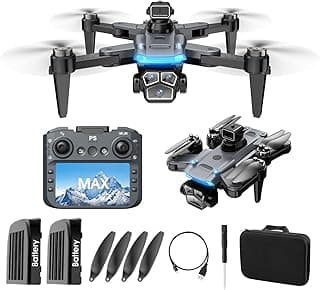
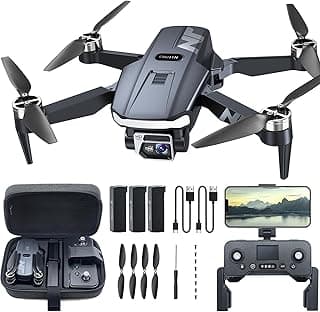
The Technical Threshold: Sensor Physics and Imaging Prowess
The primary differentiator for the best drone under 2000 is the sensor architecture. While entry-level models often utilize 1/2.3-inch sensors that struggle in low-light environments, the professional tier typically offers a 1-inch CMOS or even a Micro Four Thirds system. From a mechanical engineering standpoint, a larger sensor allows for larger individual pixels (microns), which increases the signal-to-noise ratio. This results in cleaner footage during the "golden hour," where light levels are challenging but visually stunning.
When considering best christmas gifts for techies, it is essential to understand that high-resolution "4K" labels can be misleading. A best 4k drone in the budget category may offer the pixel count, but lacks the bit depth and dynamic range found in the $1500 to $2000 range. Drones in this tier often support 10-bit D-Log or HLG color profiles, allowing editors to retain details in both highlights and shadows that would otherwise be lost to "clipping" in cheaper models.
Gifting tech is about more than specifications; it is about upgrading the recipient's window to the digital world, ensuring every frame is a testament to quality.
Mechanical Stability: The Role of the 3-Axis Gimbal
Flight is inherently chaotic; wind gusts and motor vibrations create constant micro-tremors. The mechanical integrity of a drone's gimbal is what separates professional results from amateur home movies. The best drone under 2000 utilizes high-torque brushless motors within its 3-axis gimbal to counteract tilt, roll, and pan movements with millisecond precision. This stabilization is crucial for anyone using a best aerial photography drone for commercial purposes, such as real estate or landscape surveying.
| Technical Feature | Consumer Tier ($500-$800) | Professional Tier ($1500-$2000) |
|---|---|---|
| Sensor Size | 1/2.3" or 1/1.3" CMOS | 1" CMOS or Micro Four Thirds |
| Obstacle Avoidance | Forward/Backward only | Omnidirectional (All directions) |
| Transmission Range | 4-6 Miles (Standard Signal) | 9-15 Miles (Low Latency/HD) |
| Wind Resistance | Level 5 (Up to 24 mph) | Level 7 (Up to 38+ mph) |
Principle of Multi-dimensional User Empathy
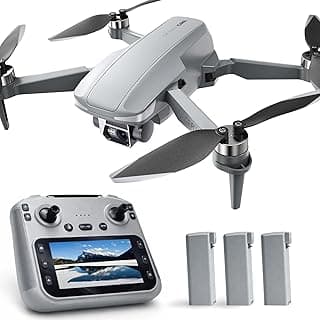
Choosing a drone requires looking beyond the spec sheet to the specific lifestyle of the recipient. What is someone that loves technology? Often, they are individuals who appreciate the intersection of software intelligence and physical performance. For a frequent traveler, the best drone under 2000 might be a foldable, sub-900g model that balances portability with high-end optics. This is where a best travel drone becomes an essential companion for capturing global adventures.
Conversely, for a professional cinematographer, weight is less of a concern than "noise" and "bitrate." They require a system that can handle high-speed maneuvers without dropping signal. For these users, What is a good experiential gift? The answer is the ability to master the skies. The improved obstacle avoidance systems in the $2000 price range—often featuring omnidirectional sensing—provide the "mental bandwidth" for the pilot to focus on the shot rather than the safety of the aircraft.
Buy It For Life (BIFL) and the Reality of Maintenance
One must be skeptical of the idea that a drone is a "forever" purchase. Lithium-polymer (LiPo) batteries are consumables; they typically begin to show chemistry degradation after 200-300 charge cycles. However, the best drone under 2000 is built with a modular philosophy. Unlike budget drones that are often held together with adhesive and plastic clips, professional units are designed to be serviced. Replacement arms, motor assemblies, and landing gear are readily available through third-party repair networks.
Prospective buyers should account for the "hidden costs" of operation. A $1800 drone often requires an additional $400 for a "Fly More" combo, which includes extra batteries, a charging hub, and a carrying case. Furthermore, professional-grade Neutral Density (ND) filters are a non-negotiable accessory for controlling shutter speed in bright conditions. Investing in a drone with a robust community of third-party support ensures that the machine remains flight-worthy long after the manufacturer's warranty expires.
Direct Answer Framework: Frequently Asked Questions
Is the best drone under 2000 difficult for a beginner to fly?
No, professional-tier drones are actually significantly easier and safer to fly than budget models due to their advanced sensor arrays. While a $100 drone may drift with the wind, a $1500+ unit uses dual-frequency GPS (GNSS) and downward-facing vision sensors to hold its position with centimeter-level accuracy, even in high winds. The inclusion of omnidirectional obstacle sensing means the aircraft will automatically stop or maneuver around trees and buildings, effectively providing a "safety net" for the novice pilot.
Do I need a special license to fly a drone in this price range?
Yes, if you intend to use the drone for any form of commercial work, you must obtain a certification (such as the Part 107 in the United States). Even for purely recreational use, most drones over 250 grams in this category require federal registration. It is a common misconception that "hobbyist" flight is exempt from all rules; in reality, airspace regulations apply to everyone. Before gifting a high-end drone, ensure the recipient is aware of the local altitude limits and "No Fly Zones" to avoid significant legal penalties.
Can these drones be used for mapping or 3D modeling?
Affirmative, many drones in the sub-$2000 category are compatible with photogrammetry software. By using automated flight path applications, the drone can take a series of overlapping photos that are later stitched together to create 3D models of buildings or topographic maps of land. However, users should verify if the specific model supports a "Global Shutter" or has a high-quality mechanical shutter, as "rolling shutter" distortion can compromise the accuracy of 3D data in moving aircraft.
Ultimately, selecting the best drone under 2000 is about recognizing that you are purchasing a tool of creative empowerment. Whether it is intended for a professional portfolio or as a centerpiece for a tech enthusiast's collection, the value lies in the reliability of the flight and the breathtaking clarity of the resulting imagery. By focusing on sensor physics, mechanical durability, and long-term repairability, you can ensure that this gift remains a pinnacle of modern technology for years to come.