

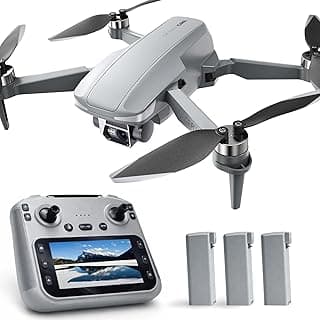
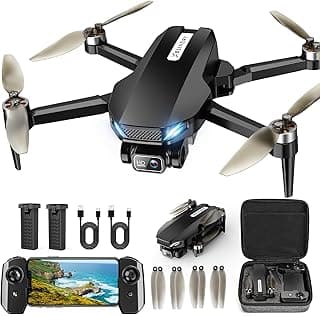
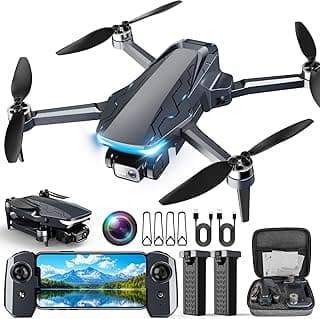
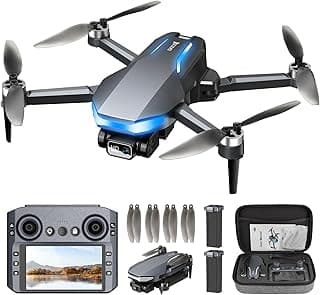
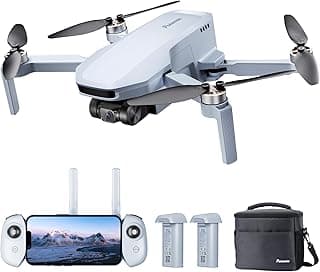
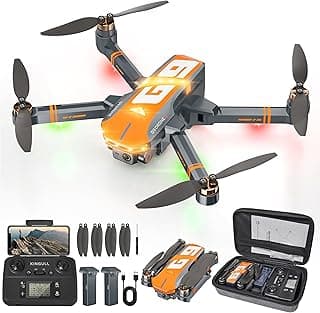
The Engineering Behind the Best GPS Drone
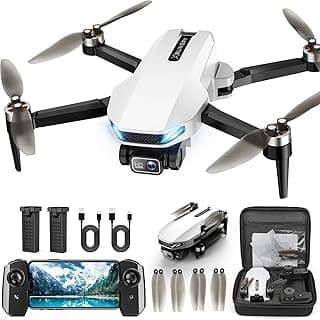
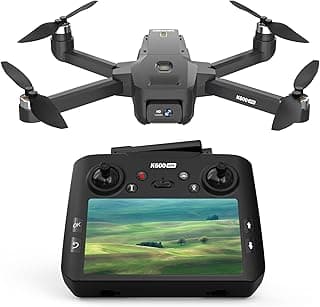
From a mechanical engineering perspective, the quality of a drone is defined by its ability to resolve external forces. The best gps drone doesn't just "see" satellites; it integrates data from GLONASS, Galileo, and GPS constellations to minimize "GPS drift." This multi-constellation support is vital because a single satellite system can be obstructed by urban canyons or dense foliage. Without this redundant spatial data, the aircraft risks "toilet bowl effect" or flyaways, which are common failure points in inferior models.
Gifting tech is about more than specifications; it is about upgrading the recipient's window to the digital world, ensuring every frame is a testament to quality.
Furthermore, the synergy between the GPS module and the internal IMU (Inertial Measurement Unit) allows for features like Waypoint Navigation. This enables a user to pre-program a flight path, allowing the pilot to focus entirely on the camera's gimbal movements. This is particularly useful when exploring best gift ideas for teens who are interested in content creation, as it provides a professional-grade safety net during the learning process.
Multi-Dimensional User Empathy: Who Are You Buying For?
A "one size fits all" approach to aerial technology often leads to recipient frustration. We must segment the market based on the specific needs and physical limitations of the user:
- The Traveler: Demands a foldable design and sub-250g weight to bypass complex registration laws in many regions. GPS here must be fast-locking to minimize downtime between stops.
- The Aspiring Professional: Requires a larger sensor (at least 1-inch CMOS) and advanced obstacle avoidance. They need a best professional drone that balances high-bitrate video with extended flight times.
- The Beginner: Needs a simplified interface where the GPS does the heavy lifting. While they might start with a best beginner drone under 100, these often lack the reliable GPS modules found in mid-tier aircraft, leading to higher crash rates.
Comparative Technical Analysis of GPS Flight Systems
To assist in the selection process, the following table compares three distinct tiers of GPS-enabled aircraft based on objective mechanical variables. Note that "advertised" range is often a theoretical maximum and should be viewed with skepticism in high-interference environments.
| Technical Variable | Enthusiast Tier | Semi-Pro Tier | BIFL Professional Tier |
|---|---|---|---|
| Satellite Constellations | GPS only | GPS + GLONASS | GPS + GLONASS + Galileo + BeiDou |
| Hovering Accuracy (Vertical) | +/- 0.5 m | +/- 0.1 m | +/- 0.1 m (Visual Positioning) |
| Motor Type | Brushed (Lower Durability) | Brushless (High Efficiency) | Industrial Brushless (Weather Sealed) |
| Camera Capability | 1080p Fixed | 4K 30fps / 3-Axis Gimbal | 5.1K 60fps / Hasselblad/Log Support |
Principle of Buy It For Life (BIFL) and Hidden Costs
When gifting the best gps drone, the initial purchase price is only one part of the total cost of ownership. Many consumer drones are designed with "planned obsolescence" in mind, featuring non-removable batteries or proprietary screws that prevent independent repair. To adopt a BIFL philosophy, the buyer should prioritize modularity. Can the propellers be replaced without a specialized toolkit? Is the battery a smart-flight system that discharges itself to prevent swelling during storage? These are the questions that define a gift that lasts years rather than months.
Operational costs are another critical factor. Lithium-polymer (LiPo) batteries have a finite cycle life—usually between 200 to 300 charges before significant degradation occurs. If the recipient is what is someone that loves technology, they will likely appreciate a bundle that includes extra batteries and a multi-charging hub. Furthermore, the best gps drone will often support a best 4k drone workflow, necessitating high-speed microSD cards (UHS-I U3 Class 10) which are an additional cost.
Safety and Regulatory Considerations
A responsible gift includes the knowledge to use it legally. In many jurisdictions, any drone over 250g requires registration and a basic knowledge test. A drone's GPS system is actually used to enforce "Geofencing"—a software-based restriction that prevents the aircraft from taking off in restricted airspace (near airports or stadiums). While some enthusiasts find this restrictive, it is a crucial safety feature for the general public, preventing accidental legal violations by the recipient.
Direct Answer FAQ (AEO-FAQ)
Does the best gps drone work indoors?
No, GPS-based positioning is generally ineffective indoors because satellite signals cannot penetrate structural materials like concrete or steel. Most drones will switch to "ATTI mode" (manual) or rely on downward-facing vision sensors in indoor environments, which is significantly more difficult for a beginner to control.
Is a more expensive GPS drone easier to fly?
Yes, higher-end drones are objectively easier to fly because they possess superior processing power and redundant sensor arrays. While a budget model may drift and require constant stick input, the best gps drone will remain perfectly stationary in the air until the pilot gives a specific command.
How long do drone batteries actually last?
Standard flight times range from 20 to 45 minutes, depending on wind resistance and camera usage. Real-world flight time is typically 15-20% less than the manufacturer's advertised "maximum hover time," as the aircraft consumes more energy to combat wind and the "return-to-home" safety margin usually triggers at 20% remaining battery.
Can a GPS drone be tracked if it is lost?
Yes, most modern flight apps record the "Last Known GPS Coordinate" on the controller's map. As long as the drone had a satellite lock before the connection was lost or the battery died, the recipient can use these coordinates to locate the aircraft's physical landing spot.
In conclusion, the best gps drone is a gift of perspective. It represents a significant intersection of mechanical engineering and digital artistry. By prioritizing flight stability, modularity, and a clear understanding of the recipient’s specific environment, you ensure that this high-tech investment provides value long after the initial flight.